Environmental Health
Endocrine-Disrupting Fragrances: Phthalates, Musks, Labels & Avoidance That Works
“Fragrance” on a U.S. label can hide dozens of chemicals. DEP tracks perfume use; DEHP is a stronger anti-androgen from plastics—and 35% of people report health effects from fragranced products.
Medical disclaimer: Informational editorial synthesis of peer-reviewed and regulatory sources—not personalized medical, legal, or product-safety advice. Associations are not monocausal diagnoses. Regulatory status is time-sensitive; re-verify FDA, ECHA, and Annex updates. Consult licensed clinicians for individual health decisions.
If a product smells like a lifestyle brand, it is probably a multi-chemical concentrate. U.S. labels may hide that concentrate behind one word: Fragrance. Inside can sit phthalate solvents, synthetic musks, terpene VOCs, and co-formulants such as parabens—plus secondhand emissions that trigger asthma and migraine in a large minority of people even when endocrine proof for a single molecule is incomplete.
This guide separates chemistry and congeners, maps exposure routes, grades male and female endpoints, compares EU versus U.S. rules, and ranks avoidance by return on effort. It sits in the environmental health cluster beside PFAS and microplastics, which often co-travel with plastics and packaging.
Key takeaway: Name congeners correctly (DEP ≠ DEHP). Kill plug-ins and perfume before obsessing over one rinse-off shampoo. Fragrance-free ≠ unscented. Expect biomarker wins in days for MEP; do not promise fertility cures.
What chemicals hide in fragrance systems?
Phthalates: DEP is the fragrance-relevant solvent that elevates urinary MEP; Just et al. linked perfume use to roughly 2.3× higher MEP. DEHP, DBP, BBP, and related compounds are stronger anti-androgens and are more heavily restricted in the EU; residual uses, imports, dust, and plastics still matter in the U.S. Always name parent and metabolite. Never treat “phthalates” as one toxicity coefficient.
Synthetic musks: HHCB (galaxolide) and AHTN (tonalide) dominate polycyclic musks, persist in the environment, and partition into human lipid compartments including adipose tissue and milk. In vitro and aquatic endocrine activity appear in the literature; human fertility data remain thinner (often grade C). Nitromusks face more restrictions. ANSES has proposed reproductive toxicity classification steps for galaxolide under CLP—watch regulatory leading indicators.
Parabens: Methyl through butyl parabens preserve many lotions and cosmetics; weak estrogen receptor agonism generally increases with chain length but remains far below estradiol potency. High detection frequency plus mixture context matter more than single-chemical “safe at limit” rhetoric.
Undisclosed mixtures: Steinemann’s emission work shows fragranced products release numerous VOCs, including federally hazardous species, with very low hazardous-VOC disclosure rates on labels. Green branding does not guarantee low hazardous air pollutants. Terpene–ozone chemistry can generate secondary pollutants such as formaldehyde indoors.
| Class | Key role in products | Priority signal | Avoidance lever |
|---|---|---|---|
| DEP / fragrance phthalates | Solvent/fixative | MEP rises with perfume/PCPs | Drop perfume & leave-ons |
| DEHP/DBP-class | Plastics + residual uses | Robust male anti-androgen package | Dust, plastics, medical plastics context |
| Polycyclic musks | Long-lasting base notes | Persistence in lipid/milk | Perfume + laundry scent systems |
| Parabens | Preservatives in leave-ons | Weak ER agonism; high detection | Swap leave-on formulas |
| Fragrance VOCs | Scent design | Asthma/migraine/irritation prevalence | Kill air care; FF policy |
How do people get exposed, and who carries more dose?
Personal care is the near-field driver for MEP and many parabens: perfume, cologne, lotion, deodorant, cosmetics—leave-on greater than rinse-off. Women and girls often show higher PCP-related biomarkers from use patterns; men still elevate DEP-class markers with cologne and scented products.
Indoor air care—plug-ins, sprays, candles, diffusers—creates continuous VOC/SVOC sources and involuntary exposure in restrooms and workplaces. About one in five people report health problems from air fresheners in Steinemann’s survey framing.
Laundry and textiles intentionally load fabrics with scent via softeners, dryer sheets, and scent beads, creating all-day dermal and near-nose dose; dryer vents export emissions outdoors.
Biomonitoring tips: urine captures recent phthalates and parabens (adjust for dilution); adipose and milk better reflect musks. High MEP → hunt fragrance and PCPs. High ΣDEHP metabolites → hunt diet, dust, and plastics—usually both pathways coexist. Substitution treadmills replace restricted DEHP with DINP, DINCH, and others; monitor the replacement class rather than celebrating one ban.
What health endpoints are supported for men, women, and scent-sensitive people?
Mechanisms include phthalate suppression of fetal testicular steroidogenesis (strong animal mode of action; human male package grade A/B by congener), weak estrogenic activity of parabens, mixed receptor activity of musks, and parallel VOC irritation/neurogenic inflammation pathways. The Endocrine Society frames EDCs as agents that interfere with hormones, including concerns about low-dose and mixture effects debated across regulatory cultures.
Male axis: Multi-cohort associations between prenatal DEHP/DBP-class metabolites and shorter anogenital distance (Swan, Bornehag, Jensen and related literature) are a developmental anti-androgen signal. Semen quality, testosterone, and time-to-pregnancy associations exist with heterogeneity. DEP is high relevance for fragrance exposure but only slight on the male anti-androgen evidence ladder—still a mixture courier and VOC co-exposure marker. Practical protocol: reduce multi-source anti-androgens (fragrance + dust + plastics), especially preconception; do not claim cologne alone causes clinical hypogonadism.
Female axis: Reviews report associative signals for pubertal timing shifts, menstrual disruption, endometriosis, ovarian dysfunction, infertility pathways, and preterm-related outcomes—generally grade B associative with experimental support, less congener-uniform than male AGD packages for DEHP/DBP. Higher fragrance/PCP use can elevate dose in female cohorts (exposure equity). Pregnancy and lactation: reduce sources; milk detection is not automatic feeding cessation without clinical context.
Respiratory and quality of life: High-prevalence irritant and asthma/migraine effects justify fragrance-free policies in clinics and workplaces without waiting for molecular EDC proof for every VOC. Contact allergy is a distinct pathway where EU allergen naming helps dermatitis more than VOC asthma.
How should you read labels and cut exposure without detox scams?
US vs EU decision rules in brief: neither requires full fragrance formula disclosure on pack; EU names many allergens and restricts more CMR phthalates in cosmetics and sets 0.1% article limits for a four-phthalate package under REACH; U.S. rules remain more trade-secret tolerant with MoCRA as partial modernization; air-care disclosure has been historically poor under CPSC-era frameworks.
Label decoder:
- Fragrance-free — target (still read full list).
- Unscented — suspect masking.
- Phthalate-free — incomplete.
- Natural/organic scented — may still emit HAPs.
- Prop 65 — sometimes a red flag, never a green light alone.
- IFRA compliant — industry standard, not EDC-free.
Ranked avoidance protocol:
- Remove plug-ins, sprays, scented candles, oil diffusers.
- Stop perfume/cologne/body mist; switch leave-on products to disclosed fragrance-free.
- Fragrance-free detergent; eliminate dryer sheets/scent beads; re-wash bedding.
- Fragrance-free cleaners (Safer Choice or full disclosure).
- Workplace/clinic fragrance-free policy + fragrance-free soap.
- Dust control + reduce vinyl/personal plastics co-exposures.
- Prefer stricter EU-market formulas when available.
- Quarterly re-audit for gift and sample creep.
Expected wins: days-scale MEP/paraben drops when PCPs dominated (HERMOSA); fewer asthma/migraine triggers for scent-sensitive people. Not claimed: reversal of completed in-utero programming; guaranteed fertility restoration; “FDA approved this scent” as safety proof.
For plastics particle dose, see the microplastics guide. For water-borne chemicals sometimes confused with personal-care EDCs, see PFAS and the filtration guide. Metabolic hormone context lives under metabolic health.
Primary anchors include FDA fragrances in cosmetics, Steinemann 2016, Just et al. 2010, HERMOSA / Harley 2016, Radke 2018 EPA male reproductive systematic review, Endocrine Society EDC pages, and EU allergen/REACH references. Mixtures add; congeners matter; policy beats perfume panic alone.
Sources & citations
- U.S. FDA — Fragrances in Cosmetics
- Steinemann 2016 (PMC) — Fragranced consumer products: exposures and effects from emissions
- Just et al. 2010 (PMC) — Urinary concentrations of phthalate metabolites in relation to perfume use
- Harley et al. 2016 (PMC) — Reducing Phthalate, Paraben, and Phenol Exposure from Personal Care Products in Adolescent Girls: The HERMOSA Study
- Endocrine Society — Endocrine-Disrupting Chemicals
Frequently asked
Questions & answers
Why is “fragrance” or “parfum” a problem on ingredient labels?
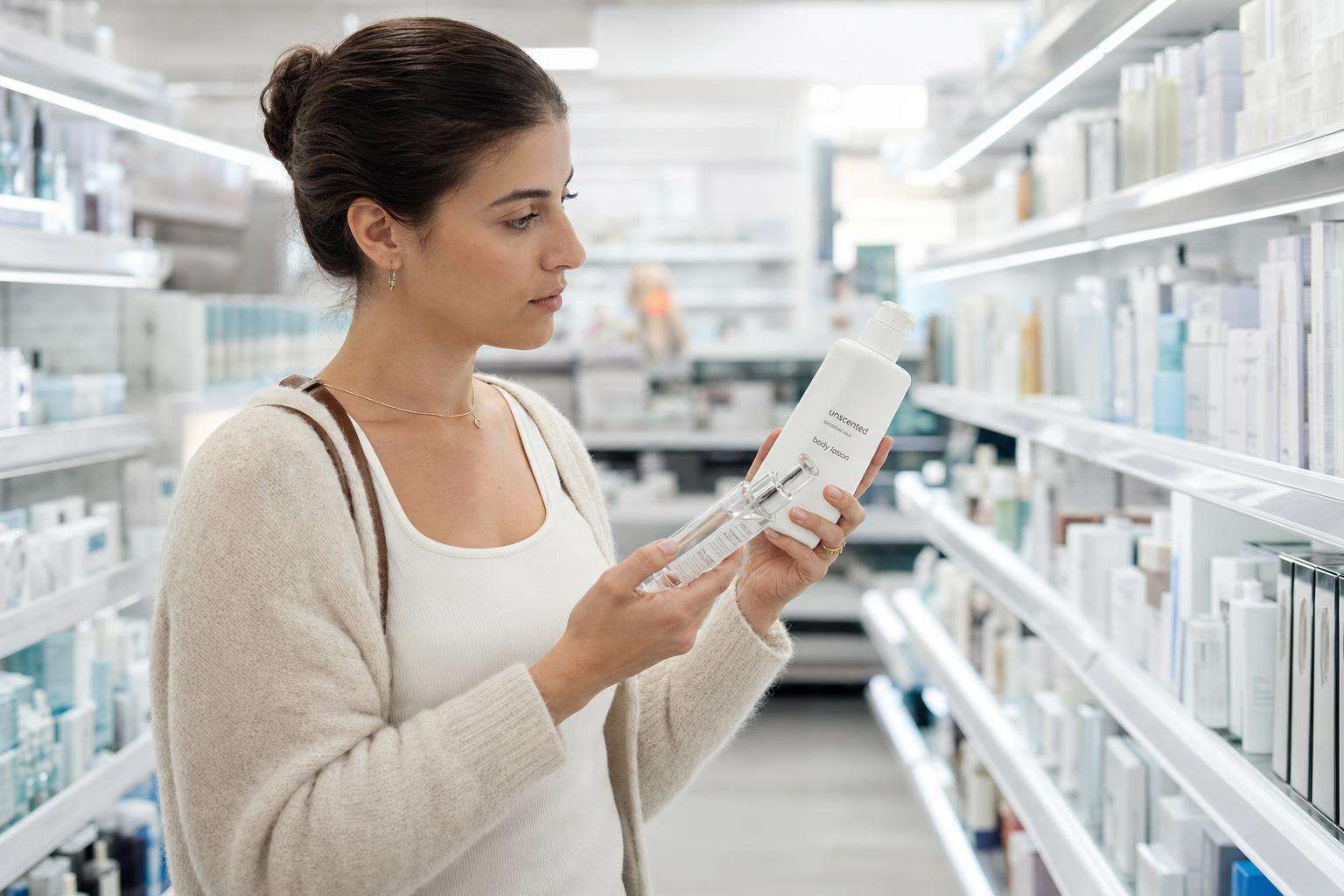
In the United States, cosmetics law has long allowed manufacturers to list the single word Fragrance or Parfum as a trade secret rather than disclosing every component of a scent mixture. A fragrance concentrate can contain dozens to hundreds of chemicals drawn from roughly three thousand materials in commercial use. That opacity means you cannot read “fragrance” as one benign botanical. Cleaning products and air care have historically been even less transparent. The European Union requires naming of many fragrance allergens above concentration thresholds and restricts numerous CMR substances in cosmetics more aggressively, but still does not force full formula disclosure. MoCRA is modernizing U.S. cosmetics oversight, including allergen labeling pathways, without achieving EU parity overnight. Always treat fragrance as a mixture black box until proven otherwise.
Which phthalates are in fragrances and do they affect hormones?
Not all phthalates are equal. DEP (diethyl phthalate) is a common fragrance solvent/fixative; its metabolite MEP rises with perfume and personal-care use—about 2.3× higher MEP with perfume use in Just and colleagues’ work. Stronger male anti-androgens include DEHP and DBP, graded robust for male reproductive endpoints in EPA systematic review work by Radke and colleagues, with DINP/BBP moderate and DiBP/DEP slight on the anti-androgen ladder. DEHP metabolites more often fingerprint plastics, dust, and diet than perfume alone—so do not swap congeners when citing male developmental data. Animal and multi-cohort human evidence links prenatal DEHP/DBP-class exposure to anti-androgen signals such as shorter anogenital distance. Fragrance elevates DEP most, while mixture co-exposures still deliver stronger anti-androgens from plastics and dust.
Can fragranced products trigger asthma or migraines without being “hormone disruptors”?
Yes—and that second harm tier is high-prevalence even when endocrine proof for a specific VOC is incomplete. Steinemann’s 2016 U.S. survey found 99.1% weekly exposure to fragranced products, 34.7% reporting any adverse effect, 18.6% respiratory problems, 8.0% asthma attacks, 15.7% migraine, and 20.4% health problems from air fresheners; 15.1% reported lost workdays or a job due to workplace fragrance. These survey endpoints are not the same evidence grade as multi-cohort phthalate developmental epidemiology, but they are valid for irritant, asthma, and access policy. Fragrance-free clinical and workplace environments are first-line environmental control for scent-sensitive populations. You do not need endocrine proof before reducing secondhand scent that triggers asthma or migraine.
What is the difference between fragrance-free and unscented?
Fragrance-free is the target claim: no perfume systems added for scent (still verify the full INCI list for parfum, essential-oil scenting, or masking agents). Unscented can legally include masking fragrances that cover base odors—FDA notes this distinction, so “unscented” is not a free pass. “Phthalate-free” is incomplete because other EDCs and VOC irritants may remain. “Natural” or green-branded scented products can still emit hazardous air pollutants; Steinemann’s analyses found very low disclosure rates of hazardous VOCs on labels (under 3% in tested sets). IFRA compliance is an industry standard, not an EDC-free badge. Prefer fully disclosed formulas, EPA Safer Choice or EU Ecolabel where criteria fit, and EU-market formulations when available.
How quickly can avoiding scented products lower phthalate biomarkers?
Phthalate monoesters clear on a hours-scale half-life, so urine biomarkers reflect recent dose—not lifetime body burden like some persistent pollutants. The HERMOSA intervention in adolescent girls showed about a 27% reduction in MEP within three days after switching personal-care products—proof that source control moves exposure fast when PCPs dominate. Synthetic musks such as HHCB (galaxolide) and AHTN (tonalide) are more persistent in adipose tissue and milk, so musk body burden falls slower than DEP metabolites. Practical implication: expect days-scale wins for MEP/parabens after cutting perfume and leave-on lotions; expect slower change for musks and continued plastics/dust co-exposures. Do not claim that product swaps reverse completed in-utero programming or guarantee fertility restoration.
What is the highest-ROI order for cutting fragrance exposures?
Rank interventions by involuntary dose and continuous emission: (1) remove plug-ins, sprays, scented candles, and oil diffusers; (2) stop perfume, cologne, and body mist and switch leave-on lotions/deodorant to fragrance-free disclosed products; (3) use fragrance-free detergent and eliminate dryer sheets and scent beads, then re-wash bedding; (4) switch household cleaners to fragrance-free or fully disclosed options; (5) push workplace or clinic fragrance-free policy with fragrance-free soap supply; (6) reduce dust and vinyl/personal plastics that co-deliver stronger anti-androgens; (7) prefer stricter EU-market formulas when shopping; (8) re-audit quarterly because gifts and samples reintroduce scent. This order prioritizes continuous indoor sources and leave-on dermal dose before perfectionism about a single shampoo.