Environmental Health
Mold & Damp Buildings: Health Evidence, Testing Limits & Remediation That Works
Dampness—not a magic spore number—is the risk signal. WHO and IOM link moldy buildings to respiratory disease; CDC does not recommend routine home mold testing. Fix water first.
Medical disclaimer: Editorial environmental-health information only—not medical advice, building-code certification, or a substitute for licensed clinicians, industrial hygienists, or remediation professionals. Damp buildings can harm health; “toxic mold” marketing often overreaches. Grade claims and fix moisture.
Mold is not a single toxin with a blood test and a detox kit. It is a moisture-driven multi-agent mixture—spores, fragments, allergens, β-glucans, endotoxin, microbial volatile organic compounds, material degradation chemicals, and sometimes mycotoxins—living in buildings that stay wet. The World Health Organization and the Institute of Medicine put the risk indicator on dampness: visible mold, musty odor, water history, and condensation. There is no universal safe spore count for homes, and CDC does not recommend routine home mold testing as the main decision tool.
This pillar grades respiratory evidence, separates foodborne mycotoxins from residential air claims, dismantles testing theater (ERMI, urine mycotoxins), walks EPA-scaled remediation, and keeps contested CIRS framing honest. It belongs with other indoor and chemical topics in the environmental health hub—especially when water damage co-occurs with poor ventilation or fragranced “cover-up” products.
Key takeaway: Fix water, remove moldy porous materials, dry thoroughly. Respiratory harm from damp buildings is well supported. Routine spore counts, ERMI “diagnosis,” urine mycotoxin panels, and CIRS protocols are not substitutes for building science and standard medical differential diagnosis.
What health effects of damp buildings are actually well supported?
Two twin anchors organize the evidence:
- IOM 2004 (Damp Indoor Spaces and Health): sufficient evidence for upper respiratory symptoms, cough, wheeze, asthma symptoms in asthmatics, and hypersensitivity pneumonitis in susceptibles. Inadequate evidence for many systemic neurologic “toxic mold” claims.
- WHO 2009 (Dampness and Mould): damp/mouldy buildings increase respiratory symptoms, infections, and asthma exacerbation; some evidence for rhinitis and asthma; clinical recognition of rarer conditions (HP, certain fungal syndromes); no microbial numeric limits as primary health standards.
Epidemiology numbers worth remembering: Fisk et al. 2007 meta-analyses found roughly 30–50% increases across respiratory and asthma-related outcomes associated with dampness/mold. Current-asthma odds ratios near 1.56 appear in impact summaries citing that work. Quansah et al. 2012 supported residential dampness/molds as a risk for developing asthma. Musty odor alone can be a useful indicator in some childhood asthma analyses (example OR ~1.60). Common indoor genera include Cladosporium, Penicillium, and Aspergillus.
High-stakes hosts: people with asthma/allergy (exacerbation), HP-susceptible individuals (immune interstitial disease), immunocompromised patients and those with chronic lung disease (infection), and households in low-income damp housing (equity priority in WHO framing).
| Claim | Evidence grade | Anchor |
|---|---|---|
| Damp/mold ↔ respiratory symptoms & asthma exacerbation | A | IOM / WHO / Fisk |
| Damp/mold ↔ asthma development | A/B | Quansah meta; CDC notes |
| Hypersensitivity pneumonitis in susceptibles | A association | IOM |
| Infection risk if immunocompromised | A clinical | CDC |
| Food aflatoxin → liver cancer (dietary) | A | WHO / IARC |
| Residential air → classical multi-system mycotoxicosis | D–C | Toxicology critiques |
| CIRS as established diagnosis | D consensus | Academic clinical caution |
| ERMI diagnoses personal illness | D as Dx | EPA not validated |
| Urine mycotoxins diagnose indoor mold disease | D | CDC MMWR |
How do mycotoxins in food differ from mold in home air?
Classical mycotoxin toxicology is primarily a food safety story. WHO lists mycotoxins in cereals, nuts, spices, dried fruit, coffee, dairy (AFM1), and apple products (patulin). Aflatoxin causes acute liver injury and is a Group 1 liver carcinogen with Codex-class limits often in the 0.5–15 µg/kg range depending on commodity. Ochratoxin A targets kidney; Fusarium toxins (DON, ZEN, fumonisins) carry GI, immune, estrogenic, and cancer-association stories that are toxin-specific. Patulin in juice has example maximum levels around 50 µg/L in many frameworks.
Inhalation mycotoxin risk becomes clearest in occupational high-dust settings—grain handling, some agriculture, certain demolition or waste work—with industrial hygiene and PPE as first controls. Residential air may show detectable mycotoxins in research sampling, but that is not established as the primary driver of food-style organ toxicology at typical home doses. Transferring dietary zearalenone estrogenicity tables onto apartment air without dose is an editorial anti-pattern.
Stachybotrys narrative discipline: chronic water-damage flag; potent lab/agricultural toxin contexts; Cleveland AIPH history as hypothesis, not universal law. Action remains dry + remove + fix water, species-agnostic. Biomonitoring trap: urine mycotoxins reflect diet ± other exposures; CDC MMWR has cautioned against using these tests as clinical diagnostics for indoor mold illness.
How should you assess a building and remediate without making it worse?
Assess first with eyes, nose, and moisture tools: visual growth, musty odor, water history, moisture meters, and infrared for wet assemblies. Target indoor relative humidity at or under about 50%. After floods, dry within 24–48 hours when possible. Do not sample while active leaks continue if the goal is remediation planning rather than litigation theater.
Testing roles and limits:
- Visual/moisture — primary; may miss hidden cavities.
- Air spore traps — snapshots with outdoor bias.
- Culture — viable subset only; misses fragments.
- ERMI MSQPCR — research moldiness ranking with asthma correlations; not validated clinical diagnosis (EPA).
- Urine mycotoxins — research/exposure confusion; not indoor disease diagnosis (CDC).
Remediation hierarchy:
- Stop water.
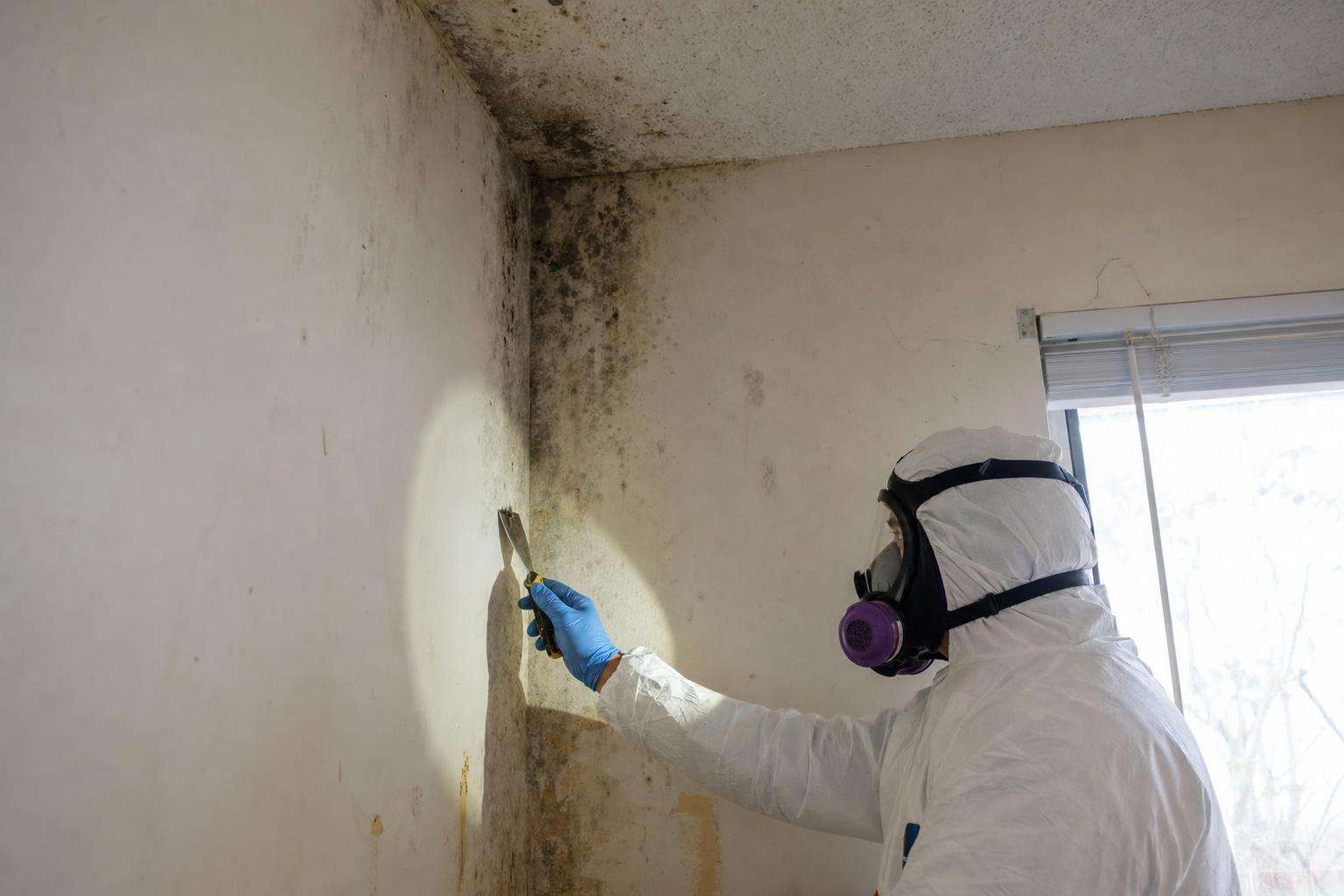
- Protect people (PPE; relocate vulnerables when needed).
- Contain, scaled to size.
- Remove porous colonized materials; clean nonporous.
- Dry to goal moisture.
- Rebuild only when dry.
- HVAC inspection/cleaning if involved.
EPA size tiers (<10 / 10–100 / >100 ft²) guide whether small cleanups are reasonable DIY versus professional containment. Optional bleach on hard surfaces only (about 1 cup/gallon maximum dilution in many consumer guides); never mix bleach with ammonia. Failures: ozone as primary treatment, fog-only approaches, paint-over of wet mold, large demo without containment.
Prevention is building science: envelope, flashing, drainage, insulation continuity, exhaust bath/kitchen/dryer outdoors, control dew point (warm surfaces + limit RH), and avoid carpet in chronically wet zones.
How should contested CIRS claims and sex differences be handled?
Lock the distinction in every conversation:
- Established: dampness–respiratory links; moisture remediation; host-specific HP/infection; food mycotoxin regulation.
- Contested: CIRS as formal diagnosis; Shoemaker biomarker cascade as specialty standard of care; ERMI/urine as proof of biotoxin illness; binder/VIP protocols as first-line without differential diagnosis.
Mainstream clinical path: exposure history and red flags → spirometry/allergy/HP/infection workups by presentation → environmental prescription equals fix the building → transparent discussion if the patient brings a CIRS label, completing the differential rather than dismissing real asthma in damp homes.
Sex-axis deltas: adult women carry higher asthma burden; some studies suggest stronger damp-housing symptom links (time at home and/or susceptibility). Pregnancy prioritizes asthma control and safe remediation—avoid heroic DIY chemical and dust loads. Men may face higher occupational grain/ag dust exposure and DIY flood-demo PPE gaps. Immunocompromise outranks sex as a risk modifier. Do not transfer food zearalenone estrogenicity to indoor air without dose.
Anti-patterns: “safe spore count is X”; only black mold matters; urine panel as courtroom proof; detox before leak repair; HLA destiny narratives; gaslighting real asthma; protocol sales without building fix.
Related reading: indoor chemical irritants in the fragrance EDC guide; particle air quality overlaps with microplastics for dust control habits; recovery and sleep under light and recovery when damp-home stress compounds insomnia; metabolic inflammation framing under metabolic health.
Primary sources include WHO dampness and mould guidelines, IOM Damp Indoor Spaces and Health, CDC mold health pages, Fisk 2007, EPA mold remediation guidance, EPA ERMI fact sheet caveats, and CDC MMWR on urine mycotoxin tests. Moisture is the lever; marketing is not medicine.
Sources & citations
- World Health Organization — WHO Guidelines for Indoor Air Quality: Dampness and Mould
- Institute of Medicine / National Academies — Damp Indoor Spaces and Health
- CDC — About Mold and Your Health
- U.S. EPA — Mold Remediation in Schools and Commercial Buildings
- Fisk et al. 2007 — Meta-analyses of the associations of respiratory health effects with dampness and mold in homes
Frequently asked
Questions & answers
Is there a safe level of mold in indoor air?
No numeric indoor mold concentration is established as a health-based “safe level.” The World Health Organization’s dampness and mould guidelines emphasize that damp and mouldy buildings increase respiratory risks and that microbial numeric limits for healthy buildings are not supported as primary tools. CDC does not recommend routine home mold testing for healthy-building clearance. Practical risk indicators are visible mold, musty odor, water intrusion history, condensation, and measured moisture—not a single spore-trap number. Outdoor air, season, and sampling time can swing air counts dramatically, which is why snapshot tests mislead homeowners into false reassurance or false alarm. Fix the water and remove colonized materials; do not chase a universal spore threshold.
What health problems are linked to damp and moldy buildings?
The strongest evidence is respiratory. The Institute of Medicine (2004) found sufficient evidence linking damp indoor spaces to upper respiratory symptoms, cough, wheeze, asthma symptoms in people with asthma, and hypersensitivity pneumonitis in susceptible individuals. WHO (2009) concludes damp/mouldy buildings increase respiratory symptoms, infections, and asthma exacerbation, with evidence also for rhinitis and asthma development in some analyses. Fisk and colleagues’ meta-analyses found roughly 30–50% increases across several respiratory and asthma-related outcomes; current-asthma odds ratios around 1.5 appear in impact papers citing that work, and Quansah et al. (2012) linked residential dampness/molds to developing asthma. Immunocompromised people face infection risk. Many systemic “toxic mold” neurologic claims remain inadequately supported relative to respiratory findings.
Are black mold and Stachybotrys uniquely dangerous?
Stachybotrys chartarum (“black mold” in popular media) grows on chronically wet cellulose and can produce trichothecene mycotoxins under some conditions. It is a flag for serious water damage—but health response should be species-agnostic: stop water, protect occupants, contain, remove colonized porous materials, clean nonporous surfaces, and dry. The 1990s Cleveland infant acute idiopathic pulmonary hemorrhage investigations raised hypotheses; they are not settled universal proof that every black-mold home causes that syndrome. Focusing only on black mold while ignoring Aspergillus, Penicillium, and Cladosporium growth misses most indoor problems. Color is not a toxicity assay. Moisture control and remediation quality matter more than mold-branding.
Should I get an ERMI test or urine mycotoxin panel?
Use extreme caution. ERMI (Environmental Relative Moldiness Index) is a research MSQPCR ranking of home dust moldiness with some asthma correlations; EPA materials state it is not validated as a medical diagnostic tool for individual illness. Air spore traps are snapshots biased by time and outdoor air. Cultures miss nonviable fragments. Urine mycotoxin tests largely reflect diet and other exposures; CDC has warned they are not FDA-approved clinical diagnostics for indoor mold disease and are not recommended for that purpose. AAAAI notes that presence of mycotoxins does not identify a specific disease. Spend money on moisture diagnostics, building investigation, and remediation—not courtroom-grade theater from unvalidated panels.
What is the correct order for mold remediation?
Follow a building-science hierarchy: (1) stop the water source; (2) protect occupants and remediators with PPE appropriate to scale, relocating vulnerable people when needed; (3) contain the work area, scaling containment with size; (4) remove porous colonized materials and clean nonporous surfaces; (5) dry to goal moisture; (6) rebuild only when dry; (7) address HVAC if involved. EPA size tiers commonly guide intensity: under 10 ft², 10–100 ft², and over 100 ft². Bleach solutions (up to about 1 cup per gallon) are optional on hard surfaces only—never mix with ammonia. Failures include ozone machines as primary “treatment,” fogging without removal, painting over wet mold, and large DIY demolition without containment. Keep indoor relative humidity at or under about 50% and dry wet materials within 24–48 hours after floods when possible.
Is CIRS a real medical diagnosis for mold illness?
Chronic Inflammatory Response Syndrome (CIRS) as popularized in some functional protocols is not an established diagnosis in mainstream specialty consensus; major academic health systems (for example UCLA Health communications) caution that it is not considered established. The Shoemaker protocol and related biomarker cascades are contested proponent care, not equal to WHO/IOM/CDC dampness frameworks or standard allergy/pulmonology pathways. That does not gaslight real disease in damp buildings: asthma exacerbation, allergic disease, hypersensitivity pneumonitis in susceptibles, and opportunistic infection risk in immunocompromised patients are established. Mainstream path: exposure history, appropriate differential diagnosis (spirometry, allergy evaluation, HP/infection workups as indicated), and environmental remediation. Transparent discussion is appropriate if a patient brings a CIRS label—complete the differential rather than selling binders before fixing leaks.