Nutrition
Dirty Dozen as a Budget Tool: Prioritizing Organic Without Panic
EWG’s Dirty Dozen is a residue-ranking heuristic—not a proof that conventional produce is toxic. Use it to spend organic dollars where detects cluster.
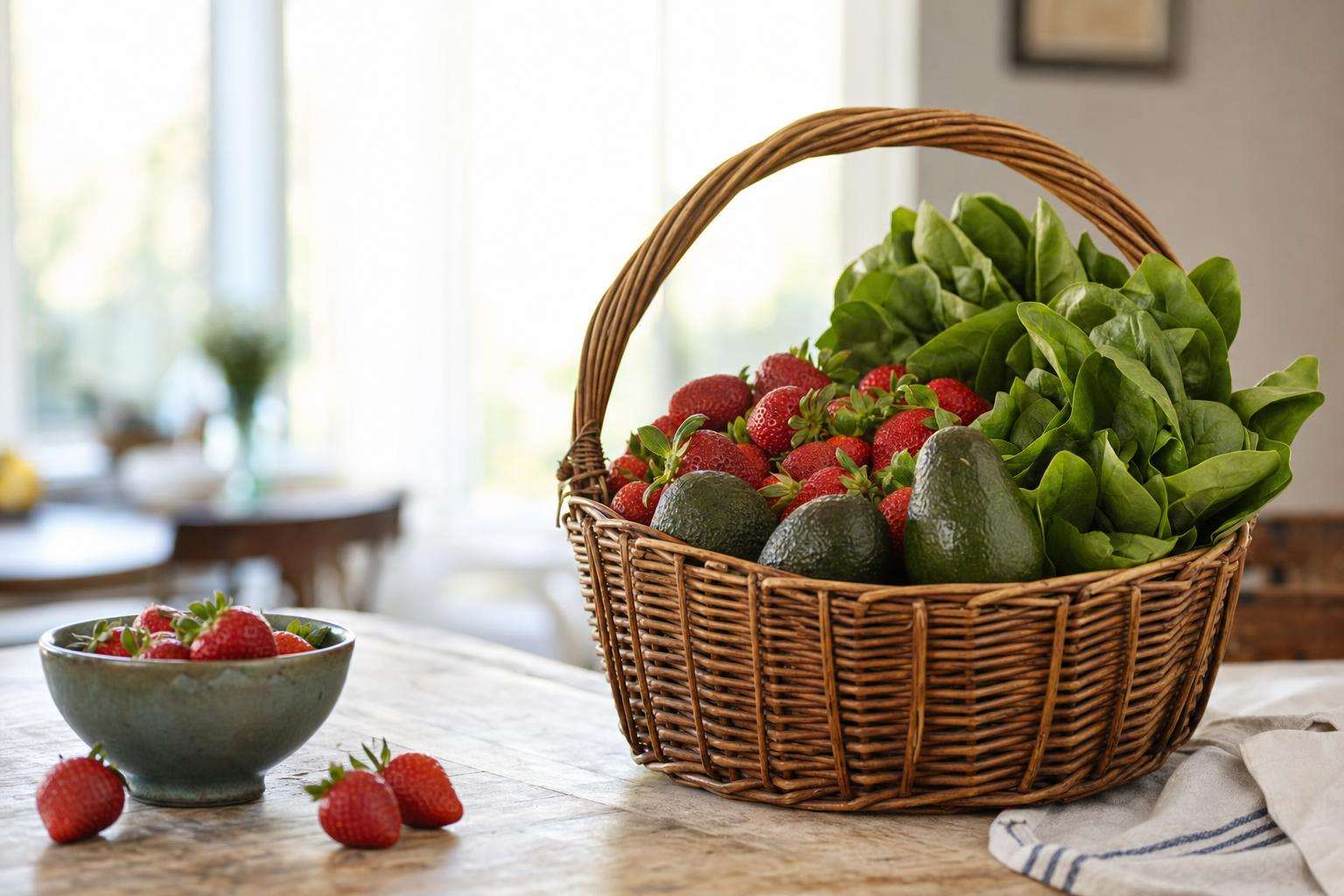
Treat the Dirty Dozen / Clean Fifteen as a budget prioritization heuristic, not a poison list. Organic often lowers residue detects; toxicology-weighted analyses (e.g., Winter & Katz) often find negligible chronic risk for common residues. Conventional produce still beats no produce.
Organic premiums are real. Anxiety is also real. A good tool lowers both without shrinking the produce half of the plate.
This article is informational and editorial only. It is not medical advice, diagnosis, or a treatment plan. Numbers and literature ranges cited here are not personal prescriptions. Consult a qualified clinician before changing medications, supplements, diet, equipment, or management of a diagnosed condition. Seek urgent care for emergencies.
What does EWG’s Shopper’s Guide actually measure?
EWG’s Dirty Dozen and Clean Fifteen rank conventional produce using USDA Pesticide Data Program–derived patterns: detection frequency, multiple residues, and concentration metrics. Recent EWG release messaging has claimed on the order of ~96% of Dirty Dozen samples showing residues versus roughly ~60% of Clean Fifteen samples with no detects—figures that move yearly. See the live EWG Dirty Dozen page for the current commodity set.
Disclose EWG’s advocacy mission when citing: transparency, not automatic dismissal. Cross-check ranks yearly; strawberries and spinach recurring is common, but lists are not eternal scripture.
| Priority tier | Action | Rationale |
|---|---|---|
| 1 | Buy and eat more FV overall | Largest health return |
| 2 | Organic for frequent Dirty Dozen items if budget allows | Residue reduction preference |
| 3 | Conventional Clean Fifteen without guilt | Lower relative detects in EWG method |
| 4 | Frozen/canned (low sugar/salt) conventional | Cost and waste control |
| 5 | Wash; peel when appropriate | Practical exposure reduction |
How do critics and risk analyses push back?
Winter & Katz (2011) applied dietary exposure and hazard quotient methods to Dirty Dozen commodities and concluded chronic risk from the studied residues was negligible under their framework (PMC3135239). Industry groups emphasize that roughly 99% of PDP samples fall within tolerances in common talking points. Those critiques do not erase consumer interest in lower residues; they do police “toxic strawberry” headlines that may reduce fruit intake.
Smith-Spangler et al. 2012 found organic foods often had lower detectable pesticide residues without consistent large nutrient or clinical outcome advantages across endpoints—supporting selective organic purchasing as a preference, not a moral absolute.
What should risk communication optimize for?
The metric that matters is not rhetorical purity—it is whether the message increases or decreases fruit and vegetable intake. A prioritization tool that helps a family buy organic apples and conventional avocados while keeping five produce servings is outperforming a scare article that returns them to packaged snacks.
- Label Dirty Dozen as heuristic, not hazard law.
- Pair every list share with “conventional FV still wins vs none.”
- Prefer toxicology-weighted language when claiming “risk.”
- Wash produce; ignore detox powder upsells.
- Remember animal products and ultra-processed diets may dominate chemical and metabolic risk more than a conventional banana.
How does this fit a broader organic decision framework?
Organic certification also tracks synthetic pesticide rules, some environmental co-benefits, and production standards beyond residue charts. Budget tools like Dirty Dozen address only one consumer question: where the organic dollar stretches if residue reduction is the goal. Cadmium, mycotoxins, and nutrition density are separate evidence files—do not pretend one ranking answers every food-system question.
What should careful readers do with this evidence?
Use primary sources linked in this article before changing household systems, training plans, or clinical conversations. Prefer measurements—lab panels, water tests, training logs, or certified product listings—over marketing claims. When evidence is observational, say so out loud: associations can guide research priorities and low-regret habits without becoming promises of disease prevention. When guidance bodies publish cutoffs or MCLs, treat them as the public reference layer and verify whether your situation is inside that legal or clinical scope. Re-check living agency pages because regulations and practice guidelines update. If two reputable sources disagree, dual-source the claim and prefer the document that states methods, units, and populations clearly. Finally, keep sex, age, pregnancy, and comorbidity modifiers in view whenever the underlying literature is limited to one demographic group.
Health Canon’s editorial standard ranks large controlled trials and codified regulations above single cohorts; cohorts above mechanism speculation; marketing last. The goal of densifying this topic cluster is enough depth that a reader can act without outsourcing judgment to a headline. If you only remember one habit from this page, make it the habit of asking for units, sample, and maintenance or adherence conditions before trusting a number.
What should careful readers do with this evidence?
Use primary sources linked in this article before changing household systems, training plans, or clinical conversations. Prefer measurements—lab panels, water tests, training logs, or certified product listings—over marketing claims. When evidence is observational, say so out loud: associations can guide research priorities and low-regret habits without becoming promises of disease prevention. When guidance bodies publish cutoffs or MCLs, treat them as the public reference layer and verify whether your situation is inside that legal or clinical scope. Re-check living agency pages because regulations and practice guidelines update. If two reputable sources disagree, dual-source the claim and prefer the document that states methods, units, and populations clearly. Finally, keep sex, age, pregnancy, and comorbidity modifiers in view whenever the underlying literature is limited to one demographic group.
Health Canon’s editorial standard ranks large controlled trials and codified regulations above single cohorts; cohorts above mechanism speculation; marketing last. The goal of densifying this topic cluster is enough depth that a reader can act without outsourcing judgment to a headline. If you only remember one habit from this page, make it the habit of asking for units, sample, and maintenance or adherence conditions before trusting a number.
Sources & citations
- Environmental Working Group — EWG Shopper’s Guide to Pesticides in Produce: Dirty Dozen
- PMC / Winter & Katz 2011 — Dietary exposure to pesticide residues from commodities on the Dirty Dozen list
- Ann Intern Med / Smith-Spangler 2012 — Are organic foods safer or healthier than conventional?
- EWG — EWG 2026 Shopper’s Guide release
Frequently asked