Evidence-dense health optimization

Health Canon

Nutrition

Cooking With (and Around) Seed Oils: The Rules (2026)

Practical kitchen rules for linoleic-rich oils: heat, reuse, whole-food fats, and evidence without culture war.
14 MIN READ 3 SOURCES
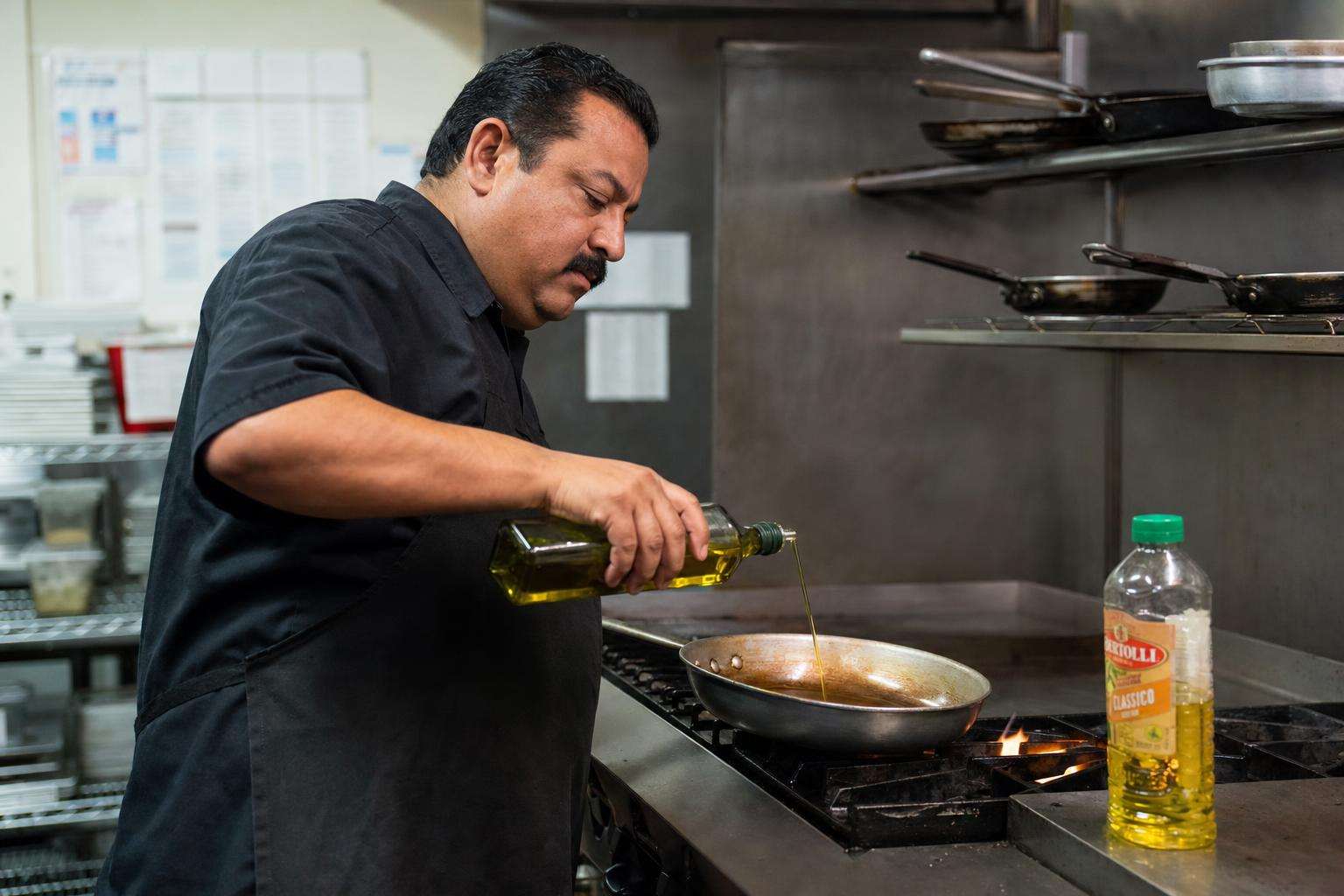
Nutrition Bottles of cooking oils beside a skillet on a stove, no people
Illustration: Health Canon

smoke pointreuseolive oilpatternoxidation

Bottom line

Pattern first, heat match, limit abused fry oil—no purity cult.

  • Judge overall dietary pattern before single-oil purity tests — Cardiometabolic outcomes track patterns more than one bottle in the pantry.
  • Stop reusing deep-fry oil until it is dark, foamy, or reeking — Free quality upgrade: thermal abuse drives off-flavors and oxidation products.
  • Pick heat-stable fats and avoid smoking pans — Method match reduces burnt-oil exposure better than brand ideology.

How we built this guide

Ranked by kitchen practicality, oxidation control, dietary-pattern evidence hierarchy, and resistance to unfalsifiable seed-oil panic.

  • Dose / clinical impact. Likely effect on exposure or health decision quality.
  • Evidence base. Agency guidance, trials, or consensus statements.
  • Adherence cost. Money, time, and household friction.
  • Harm of misuse. Whether bad execution creates new risks.

Key takeaways

  1. Your overall dietary pattern outranks any single oil
  2. Match the fat to your cooking temperature and time
  3. Limit deep-fry oil reuse and heavy restaurant-fryer load
  4. Emphasize whole-food fats and omega-3 balance
  5. Store oils cool, dark, and sealed, and mind shelf life
  6. Separate mechanisms, epidemiology, and anecdotes

Your overall dietary pattern outranks any single oil

Bottles don’t beat vegetables and calories

Debates about seed oils often ignore whether the eater’s pattern is fried fast food three times daily or a home Mediterranean-style plate with olive oil, fish, legumes, and vegetables. Ranked first because swapping oil brands while leaving ultra-processed calorie surplus intact rarely moves hard outcomes. Heart-association style guidance emphasizes replacing saturated fat with unsaturated fats in many contexts while still centering overall quality. Essential linoleic acid needs are real; deficiency is uncommon in mixed diets, but that fact does not bless infinite fried calories. Track restaurant fryer frequency separately from teaspoon-level home cooking. If lipids are high, work with a clinician on pattern and medications when indicated rather than only oil tribes. This rule keeps seed-oil discourse falsifiable and proportionate. Document changes and reassess after several weeks so habits stick rather than cycling novelty. Coordinate with household members when shared products or schedules determine adherence. Prefer primary agency and clinical guidance over social-media summaries when stakes are high.

Who this is for: Anyone rewriting their pantry ideology

Do

  • Aligns with pattern-level evidence thinking
  • Prevents purity theater
  • Compatible with clinical lipid care
  • Separates fryer-heavy UPF from home cooking

Watch out

  • Does not settle every contested trial interpretation

Match the fat to your cooking temperature and time

Do not smoke the pan on purpose

Different fats tolerate heat differently based on refinement, fatty-acid profile, and minor components. Home cooks should avoid prolonged smoking, charring oil, and heating any fat until the kitchen fills with acrid fumes—regardless of whether the bottle says seed, olive, or animal. Ranked high because thermal abuse is a controllable kitchen behavior. Use gentler heats for delicate unrefined oils many people prefer for flavor finishing; use appropriate fats for searing without treating smoke point charts as moral law. Stir-fries need preheated pans and short times; deep frying needs temperature control. Discard oil that polymerizes on pan walls into sticky varnish. This rule is physics-forward and brand-agnostic. Pair with ventilation for indoor air quality beyond fatty-acid debates. Document changes and reassess after several weeks so habits stick rather than cycling novelty. Coordinate with household members when shared products or schedules determine adherence. Prefer primary agency and clinical guidance over social-media summaries when stakes are high. Escalate to a qualified clinician when red-flag symptoms appear rather than indefinite self-experimentation.

Who this is for: Home cooks who sear and stir-fry often

Do

  • Reduces burnt-oil exposure
  • Improves food flavor
  • Brand-agnostic and teachable
  • Works across cuisines

Watch out

  • Exact smoke points vary by brand and refinement

Limit deep-fry oil reuse and heavy restaurant-fryer load

Abused oil is the practical villain class

Commercial and home deep frying that reuses oil until dark, foamy, bitter, or smoking increases thermal degradation products and off-flavors. Ranked as best-value kitchen rule because it targets a high-heat, high-reuse exposure without requiring a total oil ban. Filter crumbs, keep temperatures controlled, and replace oil on a schedule based on use intensity—not only on cost savings. Prefer oven roasting or air-crisp methods when you want crunch with less oil volume. At restaurants, frequency of deep-fried meals matters more than decoding every fryer blend. This is not a claim that one French fry is toxic; it is dose and abuse control. Home small-batch frying for occasional celebrations can still follow freshness rules. Track how often fried meals appear weekly as a simple metric. Document changes and reassess after several weeks so habits stick rather than cycling novelty. Coordinate with household members when shared products or schedules determine adherence. Prefer primary agency and clinical guidance over social-media summaries when stakes are high.

Who this is for: Households that deep-fry or eat fried food often

Do

  • Targets high-abuse scenarios
  • Actionable at home and when dining out
  • Improves taste and kitchen smell
  • Dose-based rather than puritan

Watch out

  • Restaurant practices are opaque—frequency still helps

Emphasize whole-food fats and omega-3 balance

Nuts, fish, olive oil patterns still win attention

Nuts, seeds, avocados, olive oil, and fatty fish deliver fats inside broader nutrient packages. Ranked high because chasing seed-oil elimination while ignoring seafood omega-3s and fiber-rich plants misses higher-yield moves. NIH ODS materials on omega-3s support attention to EPA/DHA from fish or alternatives when indicated. Ground flax and chia help ALA intake but convert incompletely to EPA/DHA. This rule is additive: improve seafood and plant diversity rather than only subtracting bottles. People with allergies or ethical constraints need tailored substitutes. Cooking sprays and hidden oils in packaged foods still matter for calorie control. Keep portions sane—olive oil is not zero-calorie wisdom water. Combine with anti-inflammatory lifestyle levers for pattern coherence. Document changes and reassess after several weeks so habits stick rather than cycling novelty. Coordinate with household members when shared products or schedules determine adherence. Prefer primary agency and clinical guidance over social-media summaries when stakes are high. Escalate to a qualified clinician when red-flag symptoms appear rather than indefinite self-experimentation.

Who this is for: Shoppers building a sustainable fat pattern

Do

  • Raises nutrient density
  • Supports omega-3 attention
  • Positive framing beats fear-only
  • Fits common guideline patterns

Watch out

  • Cost of fish and specialty oils varies

Store oils cool, dark, and sealed, and mind shelf life

Rancidity is a pantry problem

Light, heat, and oxygen accelerate oil rancidity. Buy sizes you finish, recap tightly, and store away from the stove’s heat plume. Ranked mid-pack because rancid oil tastes bad and signals degradation regardless of seed-oil politics. Nut and seed oils with delicate flavors often deserve cooler storage; refrigeration can cloud some oils without meaning spoilage—check producer guidance. Smell tests catch many failures: paint-like or putrid notes mean discard. Date bottles after opening. Bulk restaurant-style containers for a one-person apartment are false economy if oil oxidizes half-used. This rule is pure logistics and applies to olive oil too. Pair with clean pour spouts to reduce contamination from food debris. Document changes and reassess after several weeks so habits stick rather than cycling novelty. Coordinate with household members when shared products or schedules determine adherence. Prefer primary agency and clinical guidance over social-media summaries when stakes are high. Escalate to a qualified clinician when red-flag symptoms appear rather than indefinite self-experimentation.

Who this is for: Home kitchens with multiple oil bottles

Do

  • Cheap quality control
  • Applies to all oil types
  • Improves flavor outcomes
  • Reduces waste from bulk mistakes

Watch out

  • Does not address industrial processing debates

Separate mechanisms, epidemiology, and anecdotes

Pathway slides are not outcome trials

Online seed-oil content often jumps from oxidation chemistry to certain disease claims without proportional human outcome evidence, or conversely dismisses all concerns because linoleic acid is essential. Ranked last as epistemic hygiene: hold mechanism hypotheses lightly, weigh trials and high-quality observational data carefully, and notice when anecdotes drive certainty. Industry funding and anti-industry funding both bias narratives—read methods. If you change oils, pre-specify what outcome you expect in three months (lipids, reflux, cooking satisfaction) so you can evaluate. Do not harass relatives over canola while shared smoking or inactivity dominate risk. Update views as evidence evolves rather than joining permanent factions. This rule keeps the kitchen practical and the science honest. Document changes and reassess after several weeks so habits stick rather than cycling novelty. Coordinate with household members when shared products or schedules determine adherence. Prefer primary agency and clinical guidance over social-media summaries when stakes are high. Escalate to a qualified clinician when red-flag symptoms appear rather than indefinite self-experimentation.

Who this is for: Readers deep in seed-oil internet debates

Do

  • Reduces overclaim both directions
  • Encourages outcome tracking
  • Resists faction identity
  • Improves family peace at dinner

Watch out

  • Requires scientific literacy effort

Frequently asked

Should I eliminate all seed oils?

Most people gain more from improving overall diet pattern, reducing deep-fried ultra-processed meals, and cooking with heat-appropriate methods than from absolute elimination. Individual preferences and lipid care plans can still motivate oil swaps—track outcomes rather than identity. Confirm details with a qualified clinician or primary guidance document when your situation is high-stakes.

Is olive oil always safer for high heat?

Extra-virgin olive oil is excellent for many uses; high-heat cooking should still avoid smoking and burning any fat. Refined oils and other fats are used for high heat in many cuisines. Technique and time at temperature matter. Confirm details with a qualified clinician or primary guidance document when your situation is high-stakes.

How often can I reuse frying oil?

Reuse should be limited by visual, smell, and foaming cues plus load of food debris—not infinite thrift. Heavily used oil should be discarded. When in doubt, replace more often for household small fryers. Confirm details with a qualified clinician or primary guidance document when your situation is high-stakes.

Are seed oils inflammatory by definition?

Linoleic acid is an essential fatty acid; inflammatory outcomes depend on overall diet, calories, health status, and evidence from human studies—not a single meme pathway. Focus on pattern quality and cooking abuse control. Confirm details with a qualified clinician or primary guidance document when your situation is high-stakes.

What is one change to make this week?

Cut one repeated deep-fried restaurant meal, stop using oil past rancid or heavily darkened states, and cook two vegetable-forward meals with olive oil or another preferred fat using controlled heat. Confirm details with a qualified clinician or primary guidance document when your situation is high-stakes.