Metabolic Health
Hemochromatosis Screening: Family Cascade vs Population Genetics
Screen first-degree relatives with iron studies plus HFE testing. Societies recommend against universal population genotype screening because penetrance is incomplete.
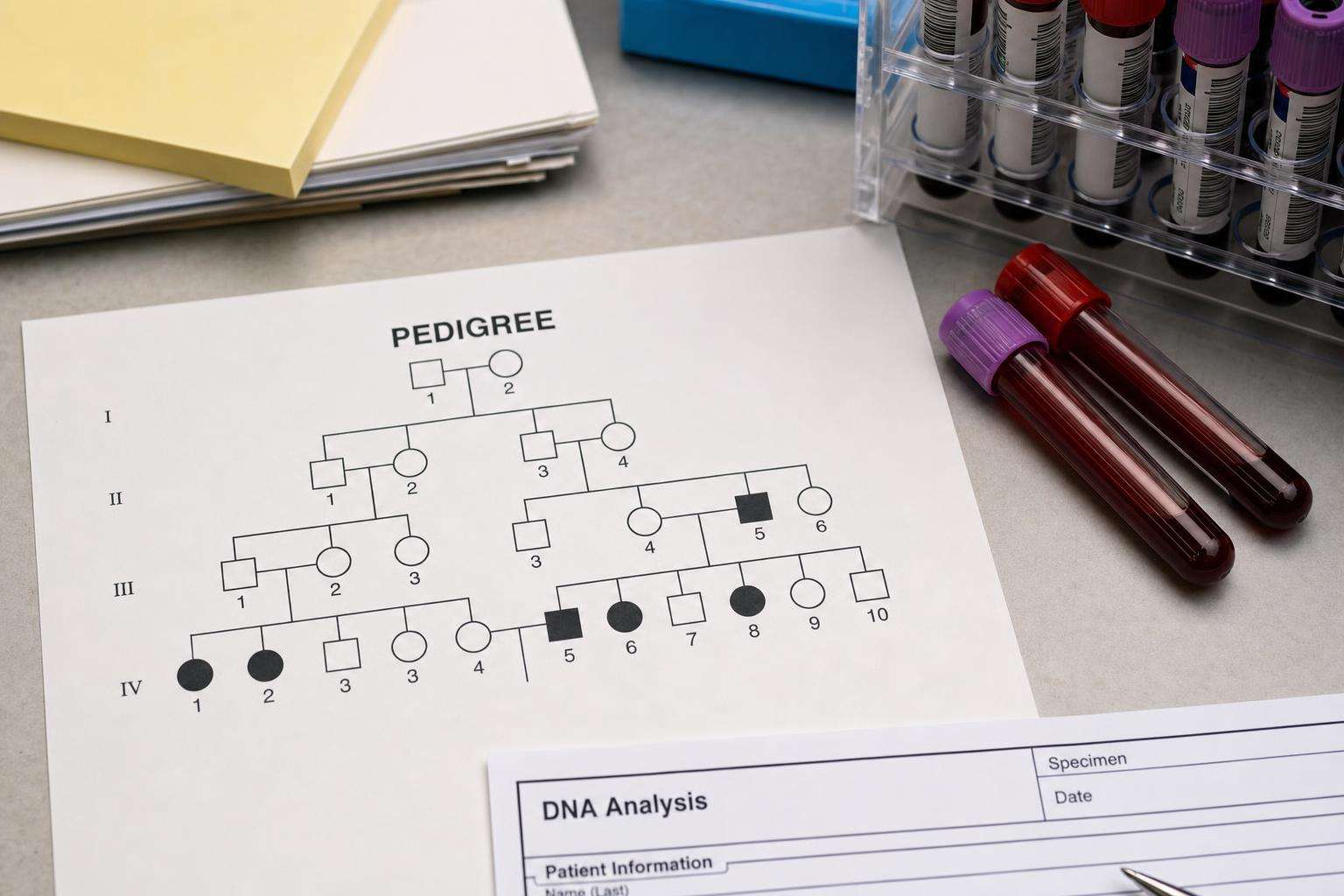
Cascade first-degree relatives with iron studies and HFE testing. Evaluate abnormal iron studies and liver disease for HH. Do not run universal population HFE genotyping as public-health standard—incomplete penetrance (many homozygotes never progress) drives that policy across AASLD/ACG/EASL.
Hereditary hemochromatosis is common enough in some ancestries to tempt mass genetic screening—and incompletely penetrant enough to make that temptation a policy error.
This article is informational and editorial only. It is not medical advice, diagnosis, or a treatment plan. Numbers and literature ranges cited here are not personal prescriptions. Consult a qualified clinician before changing medications, supplements, diet, equipment, or management of a diagnosed condition. Seek urgent care for emergencies.
What do guidelines recommend for family cascade?
AASLD Recommendation 5: screen first-degree relatives with iron studies and HFE mutation analysis (strong recommendation). Recommendations 1–2 push evaluation of abnormal iron studies even without symptoms and evaluation of liver disease for possible hereditary hemochromatosis. Recommendation 4 targets high-risk groups with family history or suspected organ involvement.
The CDC advises people with a family history of hemochromatosis to talk with a clinician about testing, emphasizing that early diagnosis prevents complications. Cascade is where prevention is cheapest: siblings and adult children of a known case, not every stranger with fatigue.
Why do societies oppose general population genetic screening?
AASLD Liver Fellow Network synthesis notes ACG, AASLD, and EASL against general population genetic screening while supporting first-degree relative testing and selective case-finding (for example porphyria cutanea tarda, chondrocalcinosis, HCC, type 1 diabetes contexts, and abnormal iron studies). Incomplete penetrance is the core reason.
Pooled screening tables in the AASLD guideline illustrate the tension: C282Y/C282Y prevalence near 1 in 240 on average in some tables, yet roughly 30 percent of homozygotes with normal ferritin. High genotype frequency is not a mandate to genotype everyone.
| Population | Recommended approach | Rationale |
|---|---|---|
| First-degree relatives of HH | Iron studies + HFE | Higher yield; cascade prevention |
| Abnormal TSAT/ferritin | Case-find → HFE | Phenotype gate |
| Chronic liver disease | Evaluate for HH | Modifiable contributor |
| General population genotype | Not recommended | Incomplete penetrance |
What did HEIRS add to the policy debate?
The multi-ethnic HEIRS study of about 99,711 North American participants, published in the New England Journal of Medicine, mapped genotype prevalence by ancestry and informed how aggressively societies should push population genetics. It did not erase the need for family cascade; it clarified that ancestry changes prior probability without converting genetics into a universal mandate.
Documented disease expression still skews by sex—Australian cohort figures often cited as about 28 percent of male versus 1 percent of female C282Y homozygotes—another reason unisex “screen all genotypes” rhetoric overpromises clinical yield.
What anti-patterns should public messaging avoid?
Everyone should get an HFE gene test. Not offering testing to siblings of a known C282Y/C282Y patient. Screening only men because women supposedly never get disease. Ignoring ancestry when communicating absolute risk. Treating direct-to-consumer results without iron panel follow-up as complete care.
Codified practice: cascade first; combine phenotype and genotype for relatives; do not recommend DTC mass HFE screening as public-health standard; case-find via primary care iron panels when liver disease or classic symptoms present. Northern European ancestry raises prior probability—still not a standalone population mandate for unselected genotyping of healthy adults without risk markers.
Primary HEIRS report: NEJM HEIRS screening study.
Editorial note: ranges and protocol bands cited here are literature and guideline context for shared decision-making with clinicians—not self-directed treatment schedules, home lab targets, or substitute care for emergencies or progressive organ disease.
Editorial note: ranges and protocol bands cited here are literature and guideline context for shared decision-making with clinicians—not self-directed treatment schedules, home lab targets, or substitute care for emergencies or progressive organ disease.
Editorial note: ranges and protocol bands cited here are literature and guideline context for shared decision-making with clinicians—not self-directed treatment schedules, home lab targets, or substitute care for emergencies or progressive organ disease.
Editorial note: ranges and protocol bands cited here are literature and guideline context for shared decision-making with clinicians—not self-directed treatment schedules, home lab targets, or substitute care for emergencies or progressive organ disease.
Editorial note: ranges and protocol bands cited here are literature and guideline context for shared decision-making with clinicians—not self-directed treatment schedules, home lab targets, or substitute care for emergencies or progressive organ disease.
Editorial note: ranges and protocol bands cited here are literature and guideline context for shared decision-making with clinicians—not self-directed treatment schedules, home lab targets, or substitute care for emergencies or progressive organ disease.
Editorial note: ranges and protocol bands cited here are literature and guideline context for shared decision-making with clinicians—not self-directed treatment schedules, home lab targets, or substitute care for emergencies or progressive organ disease.
Editorial note: ranges and protocol bands cited here are literature and guideline context for shared decision-making with clinicians—not self-directed treatment schedules, home lab targets, or substitute care for emergencies or progressive organ disease.
Editorial note: ranges and protocol bands cited here are literature and guideline context for shared decision-making with clinicians—not self-directed treatment schedules, home lab targets, or substitute care for emergencies or progressive organ disease.
Sources & citations
Frequently asked