Evidence-dense health optimization

Health Canon

Metabolic Health

The Metabolic Labs Worth Requesting (2026)

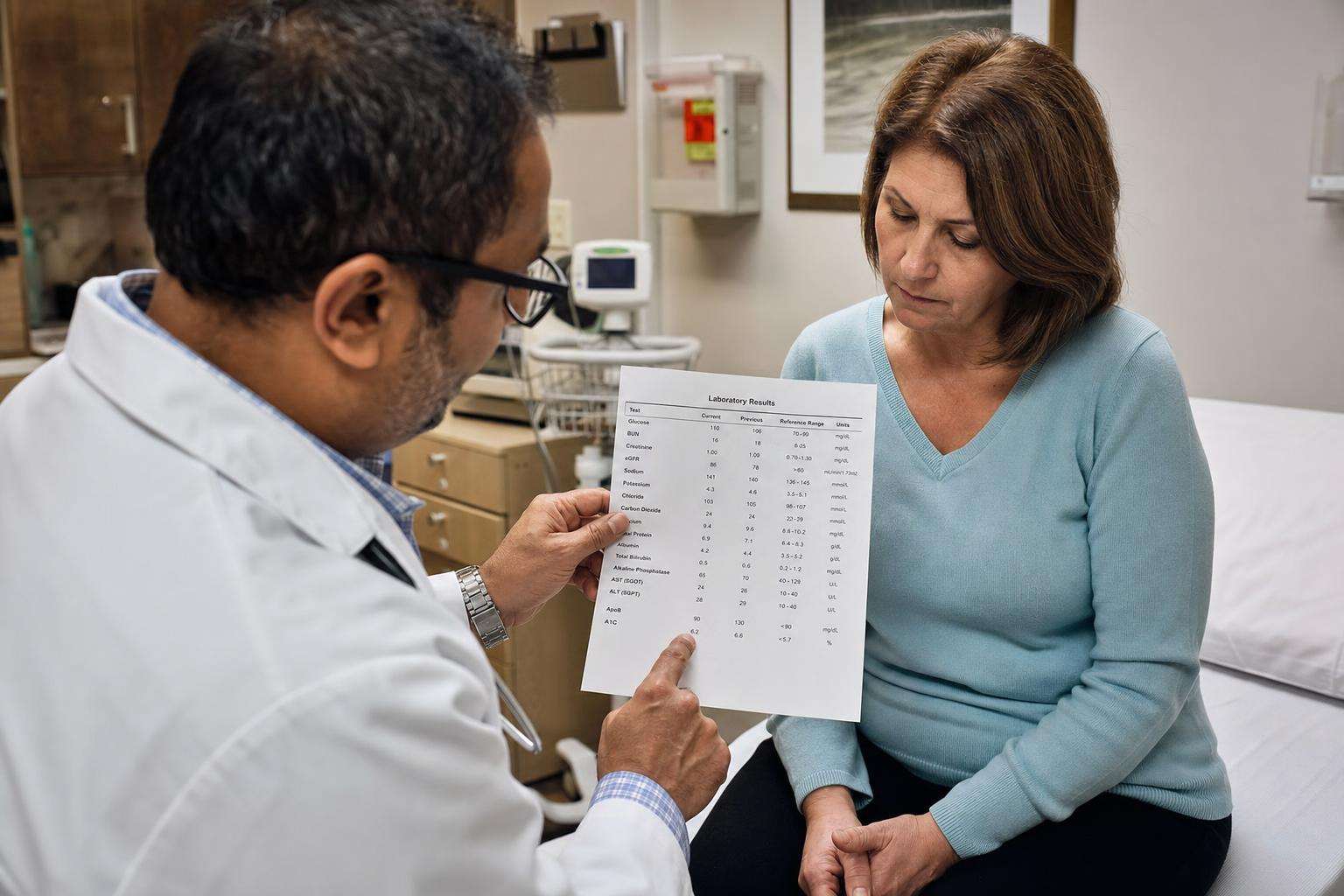
Decision-grade lab roundup: glycemic criteria, HOMA-IR context, ApoB, iron studies, hs-CRP, and foundational CMP/TSH—without wellness panel maximalism.
14 MIN READ 3 SOURCES
Metabolic Health Clinical laboratory blood draw tubes and requisition form on clean counter, no people
Illustration: Health Canon

HOMA-IRApoBHbA1cferritin TSATmetabolic panel

Bottom line

Order labs that change decisions: glycemia, insulin resistance context, ApoB-era lipids, iron studies, inflammation—then stop panel maximalism.

  • Glycemic triad: A1C, fasting glucose, contextual OGTT — ADA diagnostic bands still run through glucose and A1C; these tests define prediabetes and diabetes care pathways.
  • Fasting insulin with HOMA-IR context (not a solo diagnosis) — Cheap add-on that estimates insulin resistance when interpreted with glucose—without replacing ADA criteria.
  • ApoB (with standard lipid panel) — ApoB counts atherogenic particles and often refines risk when triglycerides are high or LDL-C underestimates burden.

How we built this guide

We ranked metabolic laboratory requests by decision impact, guideline anchoring, cost/availability, and misuse risk. This is educational—not an order set. Clinicians individualize.

  • Decision value. Whether results change lifestyle, diagnosis, or referral.
  • Guideline anchor. ADA, lipid, iron, and related society framing.
  • Misuse risk. False diagnosis from single cutoffs or wellness panels.
  • Access. Commonly orderable without exotic send-outs first.

Key takeaways

  1. The glycemic triad: A1C, fasting glucose, and a contextual OGTT
  2. Fasting insulin with HOMA-IR context, not a solo diagnosis
  3. ApoB alongside a standard lipid panel
  4. Ferritin plus transferrin saturation (iron-overload screen)
  5. hs-CRP as adjunct inflammation and risk context
  6. A CMP, liver enzymes, and TSH when clinically indicated

The glycemic triad: A1C, fasting glucose, and a contextual OGTT

The diagnostic backbone—not optional influencer labs

American Diabetes Association diagnostic criteria still center on plasma glucose and hemoglobin A1C: fasting plasma glucose, two-hour 75-gram OGTT glucose, and A1C bands that separate normal, prediabetes, and diabetes ranges when confirmed appropriately. A1C under about 5.7 percent, 5.7–6.4 percent, and 6.5 percent or higher map to those categories alongside fasting glucose under 100, 100–125, and 126 mg/dL or higher, and two-hour OGTT under 140, 140–199, and 200 mg/dL or higher. Random glucose of 200 mg/dL or higher with classic symptoms can also diagnose diabetes. A1C has pitfalls in hemoglobinopathies, anemia, and altered red-cell turnover—prefer glucose tests when discordant. Ranked first because every metabolic conversation that skips diagnosis-grade glycemia is cosplay. OGTT is underused in pregnancy contexts and in people with high suspicion but normal fasting values; it is not mandatory for every healthy adult annually. Fasting status and lab quality matter. Lifestyle and pharmacologic prevention decisions (including DPP-class risk reduction evidence) hang on these categories. Request as a set when screening, then trend the markers that changed management. Do not diagnose from a single wearable glucose spike without laboratory confirmation.

Who this is for: Adults due for diabetes screening or anyone with central obesity, PCOS, or strong family history

Do

  • Guideline-anchored diagnostic power
  • Widely available and relatively inexpensive
  • Directly changes prevention and treatment pathways
  • OGTT catches isolated post-load hyperglycemia fasting can miss

Watch out

  • A1C can mislead in certain blood disorders; OGTT is time-consuming and less convenient

Fasting insulin with HOMA-IR context, not a solo diagnosis

Cheap IR estimate—population cutoffs are not universal law

HOMA-IR estimates insulin resistance from fasting insulin and fasting glucose: commonly (insulin µU/mL × glucose mg/dL) / 405, or divide by 22.5 if glucose is in mmol/L. Matthews et al. introduced the homeostasis model in 1985; it remains a research and clinical surrogate, not an ADA diagnostic test for diabetes. Analytic cutoffs such as 2.0 or 2.5 appear in literature but are population-bound—ethnicity, assay, sex, and adiposity distributions differ. Ranked as best value because adding fasting insulin to a draw already including glucose is inexpensive and can flag hyperinsulinemic patterns before fasting glucose rises. Misuse is rampant: labeling someone diseased from a single HOMA number without context, or selling supplements off the result. Interpret alongside waist, triglycerides, HDL, blood pressure, family history, and glycemic criteria. Clamp studies remain research gold standards; HOMA is practical not perfect. Medications and acute illness alter insulin. Use trends more than one-off panic. If diabetes diagnostic criteria are already met, management follows those pathways more than HOMA cosmetics.

Who this is for: People investigating insulin resistance patterns with a clinician, especially with metabolic syndrome features

Do

  • Low incremental cost on a fasting draw
  • Captures hyperinsulinemia fasting glucose can miss early
  • Simple formula clinicians and patients can discuss
  • Useful research-aligned surrogate when not over-interpreted

Watch out

  • No universal clinical cutoff; assay variability; not an ADA diagnostic criterion

ApoB alongside a standard lipid panel

Particle number refines risk when LDL-C under-calls burden

A standard lipid panel (total cholesterol, LDL-C, HDL-C, triglycerides) remains foundational, but apolipoprotein B measures the number of atherogenic particles and is increasingly emphasized in modern lipid risk discussions when discordance exists. High triglycerides and insulin-resistant phenotypes can show relatively higher particle burden than LDL-C alone suggests. Non-HDL cholesterol is a useful related metric when ApoB is unavailable. Ranked high because atherosclerotic risk management is a core metabolic outcome, not a side quest. Lifestyle, statins, and other therapies are titrated using risk estimation plus lipid targets individualized by guidelines and clinician judgment—this article does not set personal targets. Fasting is more important for triglycerides than for some other lipid fractions depending on protocol. Family history of premature ASCVD, personal risk enhancers, and diabetes status change urgency more than internet optimal ranges. Lp(a) is a one-time genetic risk marker worth discussing separately; it is not ApoB. Do not chase every advanced lipid subclass panel before acting on smoking, blood pressure, and LDL-C/ApoB basics. Request ApoB when it will change intensity of lifestyle or pharmacologic discussion.

Who this is for: Adults with mixed hyperlipidemia, diabetes risk, or family early heart disease patterns

Do

  • Improves risk refinement versus LDL-C alone in discordant phenotypes
  • Increasingly available in clinical labs
  • Ties metabolic health to ASCVD prevention
  • Pairs with actionable therapy classes

Watch out

  • Not everywhere first-line; can distract from blood pressure and smoking if over-fetishized

Ferritin plus transferrin saturation (iron-overload screen)

High ferritin ≠ overload until TSAT and context agree

Hereditary hemochromatosis and secondary iron overload can damage liver, joints, heart, and endocrine organs, yet ferritin alone is a noisy screening test because inflammation, alcohol, and fatty liver raise ferritin without iron overload. Transferrin saturation (TSAT) improves the algorithm: high TSAT with high ferritin raises pretest probability of iron overload and may lead to HFE genetics or MRI liver iron per clinical pathways. Men and post-menopausal women are classic hereditary hemochromatosis demographic patterns; premenopausal women may present later due to menstrual iron loss. Ranked high in metabolic lists because iron overload is treatable and often missed when only a CMP is ordered. Do not start aggressive phlebotomy off a single ferritin in an acute inflammatory illness. Conversely, do not ignore TSAT elevation with suggestive symptoms or family history. Fasting morning draws are preferred for TSAT in many protocols. Vitamin C with iron supplements can worsen overload phenotypes—another reason measurement beats guessing. This is not a biohacker iron optimization game; both deficiency and overload harm. Coordinate with a clinician before donating blood therapeutically outside indicated care.

Who this is for: People with unexplained high ferritin, family hemochromatosis, or suggestive multi-system clues

Do

  • Corrects ferritin-only misreads common in NAFLD and inflammation
  • Opens a treatable disease pathway when overload is real
  • Sex-aware epidemiology helps targeting
  • Relatively standard lab tests

Watch out

  • Interpretation is contextual; genetics and imaging sometimes required; deficiency and overload both possible across life

hs-CRP as adjunct inflammation and risk context

Useful risk spice—not a root-cause oracle

High-sensitivity CRP can refine atherosclerotic risk categories in some intermediate-risk adults and flags systemic inflammation when markedly elevated, but it is nonspecific: infection, injury, and autoimmune flares all raise CRP. Metabolic syndrome and visceral adiposity associate with higher average hs-CRP, which tempts over-interpretation as a standalone lifestyle score. Ranked mid because it sometimes changes statin-benefit conversations historically and can motivate risk factor control, yet it rarely diagnoses a precise disease alone. Do not order daily CRP to micromanage sleep debt. Repeat when acute illness confounds. Pair with the glycemic and lipid stack rather than using CRP as a detox scoreboard. Other inflammatory markers (IL-6, etc.) are mostly research or specialty tools. If CRP is very high, look for clinical infection or inflammatory disease before blaming seed oils on Twitter. Useful teaching lab for patients who need a concrete number alongside waist and A1C. Lowest misuse occurs when clinicians pre-specify how the result will change care.

Who this is for: Intermediate-risk adults where inflammation context may alter prevention intensity—clinician directed

Do

  • Inexpensive and widely available
  • Can refine intermediate ASCVD risk discussions
  • Tracks broadly with adiposity-related inflammation
  • Motivates modifiable risk work for some patients

Watch out

  • Highly nonspecific; acute illness confounds; easy wellness over-interpretation

A CMP, liver enzymes, and TSH when clinically indicated

Foundational metabolic scenery—not always every year forever

A comprehensive metabolic panel supplies electrolytes, kidney function, and liver enzymes that contextualize fatty liver risk, medication safety, and volume status. ALT/AST elevations commonly accompany metabolic dysfunction-associated steatotic liver disease and alcohol use—follow-up is clinical, not a supplement stack by default. TSH (with free T4 when indicated) evaluates hypo- and hyperthyroidism that can mimic or worsen metabolic symptoms; universal annual TSH for every asymptomatic adult is more debatable than targeted testing for symptoms, atrial fibrillation risk, pregnancy planning, or other indications. Ranked as a contextual sixth item because these labs are essential infrastructure but are not the sharpest “metabolic optimization” differentiators versus glycemia and ApoB. Abnormal liver enzymes need pattern recognition (AST:ALT ratio, alkaline phosphatase, bilirubin) and sometimes imaging. Kidney function adjusts medication doses that affect metabolic care. Avoid ordering thirty esoteric hormones before CMP and glycemia. Discuss cadence with a clinician based on age, meds, and prior results. These tests prevent missing boring, important disease while you chase boutique panels. They also establish baselines before starting new pharmacotherapy for diabetes or lipids.

Who this is for: Baseline adult care, medication monitoring, and symptom-driven thyroid evaluation

Do

  • Detects common, actionable liver and kidney issues
  • TSH catches thyroid mimics of metabolic symptoms when indicated
  • Widely available and familiar to clinicians
  • Baselines for medication safety

Watch out

  • Nonspecific enzyme elevations; TSH over-testing in asymptomatic people can create cascades

Frequently asked

Is HOMA-IR enough to diagnose prediabetes?

No. Prediabetes and diabetes diagnosis use ADA glucose and A1C criteria (and sometimes OGTT), not HOMA-IR alone. HOMA-IR estimates insulin resistance from fasting insulin and glucose and can add context, especially when fasting glucose is still normal. Population cutoffs vary. Use it as a conversation tool with a clinician, not a standalone internet diagnosis.

Should everyone get an ApoB test?

Not necessarily as a first step for every low-risk young adult, but ApoB is increasingly useful when triglycerides are high, when LDL-C seems discordant with risk, or when refining therapy intensity. A standard lipid panel remains foundational. Discuss with a clinician who will act on the result rather than collecting numbers for their own sake.

Why is my ferritin high if I do not have hemochromatosis?

Ferritin rises with inflammation, alcohol intake, cell damage, and fatty liver disease even when iron overload is absent. Transferrin saturation, clinical history, and sometimes genetics or MRI liver iron complete the picture. Do not start self-phlebotomy from a single ferritin value during an acute illness without medical guidance.

How often should metabolic labs be repeated?

Cadence depends on baseline results, medications, weight trajectory, and clinical risk. Newly abnormal glycemia may be confirmed quickly; stable lifestyle patients might trend yearly or as advised. After major diet or medication changes, clinicians often recheck in months, not days. Avoid weekly lab shopping that creates noise without decisions.

Are continuous glucose monitors required for metabolic health?

CGMs are valuable in diabetes care and sometimes in intensive coaching contexts, but they are not required to diagnose or improve metabolic health for most nondiabetic adults. A1C, fasting glucose, OGTT when indicated, and lifestyle fundamentals still carry the evidence base. CGM curiosity should not replace laboratory diagnosis or proven interventions.