Evidence-dense health optimization

Health Canon

Metabolic Health

Reading an Iron Panel: Step by Step (2026)

Read ferritin with TSAT, separate inflammation from overload, know when HFE genetics help, and avoid ferritin-only panic.
14 MIN READ 3 SOURCES
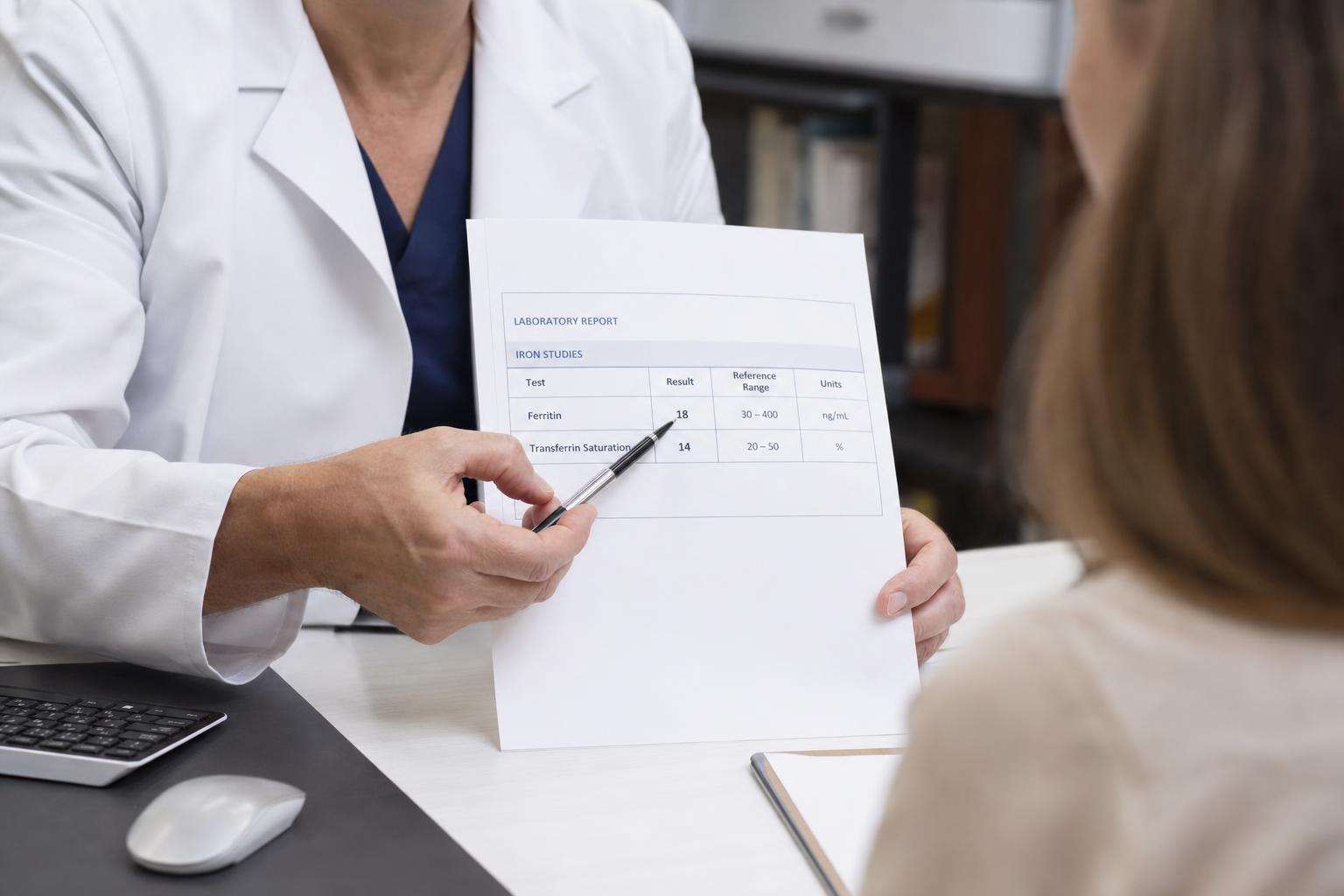
Metabolic Health Lab report showing ferritin and iron studies on a desk with a pen, no people
Illustration: Health Canon

ferritinTSATHFEanemiaoverload

Bottom line

Ferritin+TSAT, inflammation, genetics only when indicated—no portal panic.

  • Always read ferritin with transferrin saturation — TSAT helps separate iron overload patterns from many high-ferritin inflammatory states.
  • Screen for inflammation and alcohol/liver context — Often explains high ferritin without expensive genetics—using history and basic labs you may already have.
  • Follow overload workup path (consider HFE/specialty) — That pattern raises hereditary hemochromatosis probability and needs structured evaluation, not iron pills.

How we built this guide

Ranked interpretation steps by error prevention (especially iron pills in overload), marker pairing, and guideline-aligned escalation.

  • Dose / clinical impact. Likely effect on exposure or health decision quality.
  • Evidence base. Agency guidance, trials, or consensus statements.
  • Adherence cost. Money, time, and household friction.
  • Harm of misuse. Whether bad execution creates new risks.

Key takeaways

  1. Always pair ferritin with transferrin saturation (TSAT)
  2. Read high ferritin against inflammation and liver factors
  3. Work up iron deficiency as a cause-finding process
  4. Escalate suspected iron overload on a structured path
  5. Use HFE genetics when the pattern indicates, not as a wellness panel
  6. Set recheck intervals and treatment-response criteria

Always pair ferritin with transferrin saturation (TSAT)

One number is not a panel

Ferritin reflects iron stores but also rises as an acute-phase reactant during inflammation, alcohol use, fatty liver, and other stressors. Transferrin saturation—calculated from serum iron and total iron-binding capacity or transferrin—helps characterize whether high ferritin occurs with iron-overloaded saturation patterns versus inflammatory hyperferritinemia. Ranked first because portal messages that show only ferritin drive both unnecessary fear and dangerous self-supplementation. Fasting morning draws can reduce some diurnal and dietary noise for iron studies; follow your lab’s instructions. Low ferritin remains a relatively specific signal of low iron stores in many contexts, yet anemia workups still need red-cell indices and clinical bleeding or absorption history. High ferritin with low-to-normal TSAT often points away from classic hemochromatosis toward inflammation or liver disease evaluation. High ferritin with high TSAT raises overload concern and should not be treated with iron supplements. Sex, age, menstruation, pregnancy, and endurance sports change base rates. Bring the full iron panel PDF to visits, not a single screenshot. This pairing step is the load-bearing habit of iron literacy.

Who this is for: Anyone reading outpatient iron results

Do

  • Prevents ferritin-only misreads
  • Separates common inflammatory patterns
  • Cheap incremental labs when missing
  • Blocks inappropriate iron pills

Watch out

  • Reference ranges vary; fasting/compliance affect iron/TIBC

Read high ferritin against inflammation and liver factors

Fatty liver and alcohol commonly raise ferritin

Before labeling iron overload, review recent infection, inflammatory disease, metabolic dysfunction–associated steatotic liver disease, obesity, alcohol intake, and medications. Ferritin can climb substantially without body iron overload. Ranked as best value because history and basic labs such as ALT/AST, CBC, and sometimes hs-CRP or clinical exam often explain the number without genetic testing. Do not assume normal TSAT plus high ferritin needs phlebotomy. Conversely, do not ignore true overload because “fatty liver is common.” Pattern recognition requires both markers and story. Cancer and rare hyperferritinemic syndromes exist but are not the first hypothesis for modest elevations in primary care. Stop self-started iron and multivitamins with iron during evaluation unless a clinician confirmed deficiency. Repeat testing after acute illness resolves before cascading into specialty imaging. Document alcohol accurately—underreporting sabotages interpretation. This step is where patient portals create the most anxiety and where good primary care shines. Document changes and reassess after several weeks so habits stick rather than cycling novelty.

Who this is for: Patients with isolated high ferritin and metabolic risk

Do

  • Explains many high-ferritin cases cheaply
  • Uses history patients can provide
  • Reduces unnecessary genetics
  • Integrates liver metabolic workups

Watch out

  • Can delay overload diagnosis if pattern ignored; history may be incomplete

Work up iron deficiency as a cause-finding process

Low stores are a clue, not a multivitamin ad

Iron deficiency and iron-deficiency anemia require confirmation with appropriate labs and then a search for causes: menstrual blood loss, gastrointestinal bleeding, malabsorption including celiac disease and post-bariatric anatomy, pregnancy demands, and dietary insufficiency in context. Ranked high because treating with iron without asking why misses cancers and fixable GI sources in the right age and risk groups. Guidelines for who needs bidirectional endoscopy vary by age and sex—this is clinician territory. Oral iron has adherence issues from GI side effects; intravenous iron has indications when oral therapy fails or is not tolerated or when rapid repletion is needed. Avoid taking iron next to calcium, tea, or certain meds that impair absorption without guidance. Recheck labs to confirm response rather than infinite empiric dosing. Athletes with low ferritin but normal hemoglobin may still warrant sports-medicine nuance. Do not use iron “for energy” when stores are normal. Pair with our metabolic labs roundup when broader fatigue workups are underway.

Who this is for: Low ferritin, iron-deficiency anemia, or high-risk bleeding groups

Do

  • Connects labs to actionable causes
  • Prevents missed GI pathology
  • Structures repletion and recheck
  • Discourages wellness iron misuse

Watch out

  • Workups can be invasive; side effects limit oral iron

Escalate suspected iron overload on a structured path

High ferritin + high TSAT is not a gym supplement cue

When transferrin saturation is elevated with high ferritin, evaluate for hereditary hemochromatosis and secondary overload causes rather than celebrating “high iron.” CDC and clinical resources outline family history, examination for liver disease, and consideration of HFE genetic testing (commonly C282Y and H63D variants) when appropriate. Ranked as the critical safety path because phlebotomy therapy and family cascade testing differ completely from anemia care. Penetrance of genotypes is incomplete—genetics inform probability, not destiny. Liver enzymes, fibrosis assessment, and specialist referral thresholds depend on severity and organ involvement. Avoid vitamin C megadoses with meals if they meaningfully increase iron absorption in overload phenotypes without clinician OK. Do not donate blood as unsupervised self-phlebotomy when medical phlebotomy protocols are indicated—coordinate care. Secondary overload from transfusions is a hematology context. Document all iron-containing supplements and stop them. This step saves livers and hearts when executed; it harms when replaced by influencer “iron optimization.” Document changes and reassess after several weeks so habits stick rather than cycling novelty.

Who this is for: High ferritin with elevated TSAT or known family hemochromatosis

Do

  • Safety-critical branch for overload
  • Links to genetics and family counseling
  • Opens phlebotomy pathways correctly
  • Stops dangerous self-supplementation

Watch out

  • Incomplete penetrance confuses patients; specialist access varies

Use HFE genetics when the pattern indicates, not as a wellness panel

Genotype is not a fitness score

HFE testing is most useful when biochemical iron studies suggest overload or when a first-degree relative has confirmed hereditary hemochromatosis. Ordering HFE on asymptomatic people with normal iron studies as a curiosity panel creates counseling burdens without clear benefit. Ranked after biochemical pattern recognition because genes without phenotype lead to false reassurance or false alarm. Genetic counseling may be appropriate when results affect family members. Other rare genetic iron disorders exist beyond HFE and need specialty input. Direct-to-consumer raw data interpretations are often inadequate for medical decisions—confirm in clinical labs. Insurance coverage and privacy considerations deserve discussion before testing. If genotype is homozygous high-risk but iron studies are normal, clinicians may still set monitoring schedules rather than immediate phlebotomy. If studies show overload with negative common HFE variants, do not stop the workup—secondary causes and rarer genetics remain. Keep copies of results for future clinicians. This is precision when indicated, not identity via SNPs. Document changes and reassess after several weeks so habits stick rather than cycling novelty.

Who this is for: Biochemically suggestive cases or first-degree relative cascades

Do

  • Reduces recreational genetics waste
  • Focuses counseling on high-yield cases
  • Supports cascade family testing
  • Avoids DTC misreads

Watch out

  • Access and counseling quality vary; non-HFE disease exists

Set recheck intervals and treatment-response criteria

One lab is a snapshot

Iron status changes with illness, supplementation, bleeding, and phlebotomy. Interpretation quality depends on planned follow-up: confirm deficiency correction, ensure overload therapy is working, and re-evaluate unexplained hyperferritinemia after inflammation settles. Ranked last among core steps not because it is unimportant but because intervals are individualized—weekly during some IV iron courses differs from annual monitoring in stable hemochromatosis maintenance. Ask your clinician what success looks like in numbers and symptoms. Keep a simple table of dates, ferritin, TSAT, hemoglobin, and interventions. Avoid lab shopping across different assays without noting method changes. During pregnancy, iron physiology and thresholds shift—use perinatal guidance rather than general wellness blogs. After bariatric surgery, lifelong nutrition follow-up includes iron among other micronutrients. If results swing wildly, check for lab error, nonfasting iron draws, or unreported supplements. Closing the loop is how interpretation becomes care rather than a PDF anxiety event. Document changes and reassess after several weeks so habits stick rather than cycling novelty.

Who this is for: Anyone starting iron therapy or overload monitoring

Do

  • Converts snapshots into trajectories
  • Catches nonresponse early
  • Documents therapy effects
  • Reduces one-off portal panic

Watch out

  • Interval uncertainty; adherence to follow-up is hard

Frequently asked

Can ferritin be high without iron overload?

Yes. Ferritin rises with inflammation, infection, alcohol use, and common liver conditions such as fatty liver. Transferrin saturation and clinical context help separate these patterns from iron overload. Do not start iron supplements based on high ferritin alone. Confirm details with a qualified clinician or primary guidance document when your situation is high-stakes.

What TSAT level is concerning for hemochromatosis?

Clinicians often pay attention to sustained elevated transferrin saturation alongside high ferritin, with exact thresholds and fasting conditions depending on lab and guideline context. A single mildly abnormal value needs confirmation. High TSAT with high ferritin warrants medical evaluation, not self-phlebotomy.

Should I take iron if I am tired and ferritin is normal?

Usually no. Fatigue has many causes. Extra iron when stores are adequate can be harmful, especially if undiagnosed overload exists. Ask for a proper workup rather than using iron as a generic energy supplement. Confirm details with a qualified clinician or primary guidance document when your situation is high-stakes.

Is HFE testing recommended for everyone?

No. It is most useful when iron studies suggest overload or when a close relative has hereditary hemochromatosis. Routine wellness genotyping without biochemical indication creates counseling noise and is not a substitute for iron panels. Confirm details with a qualified clinician or primary guidance document when your situation is high-stakes.

Can I treat high ferritin by donating blood on my own?

Do not replace medical care with unsupervised donation. If phlebotomy is indicated for iron overload, it should be clinician-directed with target ferritin/TSAT goals and liver risk assessment. Donation eligibility rules also differ from therapeutic phlebotomy protocols. Confirm details with a qualified clinician or primary guidance document when your situation is high-stakes.