Men's Health
Protein Targets for Men in Resistance Training: g/kg Evidence
ISSN 1.4–2.0 g/kg/day covers most; Morton meta-regression breakpoints near ~1.6 g/kg/day average FFM returns—higher often in deficits.
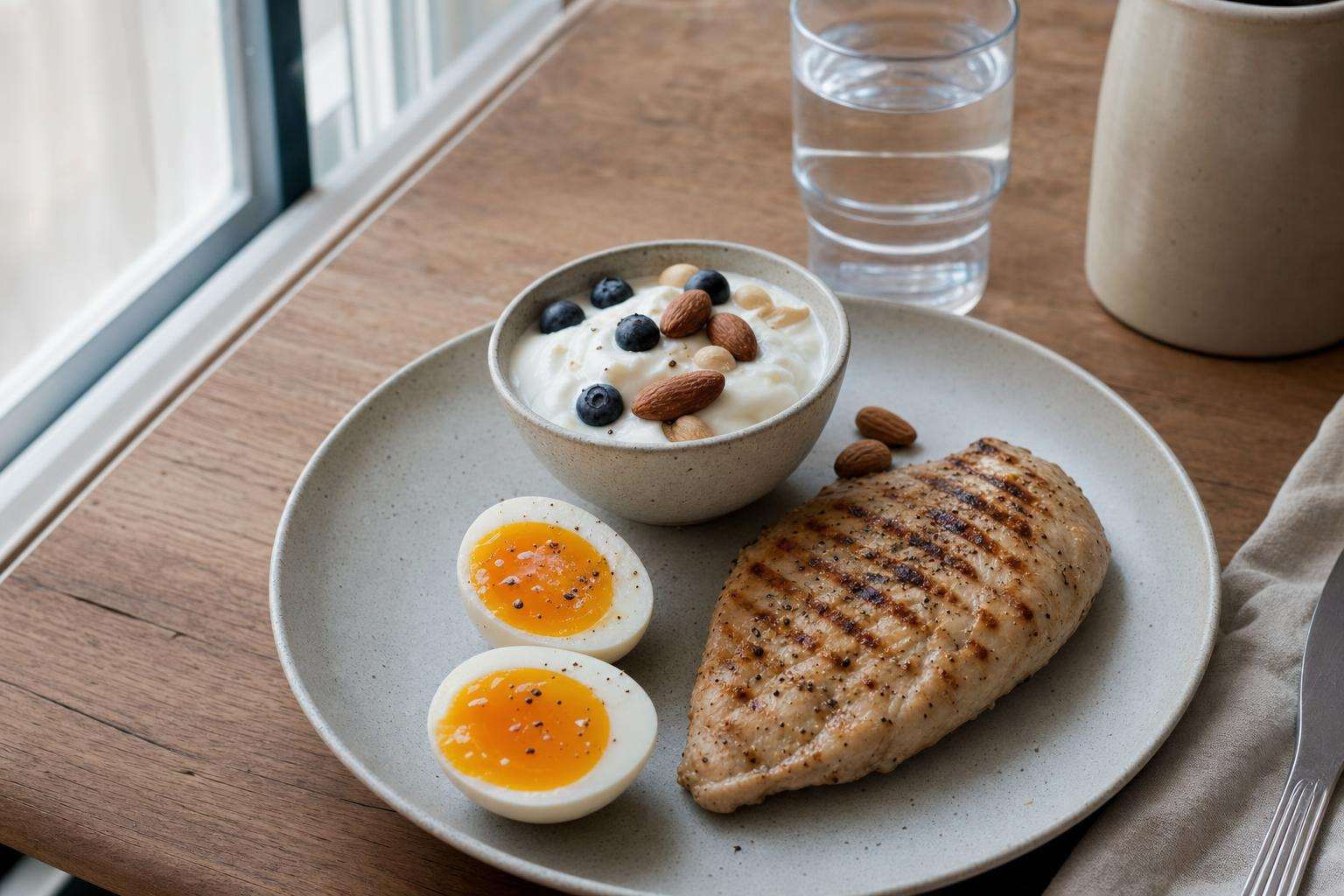
For healthy men lifting weights, ~1.4–2.0 g protein/kg/day (ISSN) covers most needs. Meta-regression suggests average FFM returns flatten near ~1.6 g/kg/day when not dieting. Use 20–40 g quality protein per meal; raise intake in deficits. Training stimulus still leads.
Protein discourse swings between fear and powder maximalism. The trial literature is calmer—and more useful.
This article is informational and editorial only. It is not medical advice, diagnosis, or a treatment plan. Numbers and literature ranges cited here are not personal prescriptions. Consult a qualified clinician before changing medications, supplements, diet, equipment, or management of a diagnosed condition. Seek urgent care for emergencies.
What daily targets does evidence support for men in RET?
ISSN (Jäger et al. 2017) positions 1.4–2.0 g/kg/day as sufficient for most exercising people (PubMed 28642676). Morton et al. 2018 meta-regression (49 RCTs, n=1,863) found protein supplementation enhanced strength and size with resistance training; modeled intakes above about 1.62 g/kg/day provided no further average fat-free mass gains in the breakpoint analysis, with larger effects in trained participants and smaller effects with age (PMC5867436).
Example: a 90 kg man at 1.4–2.0 g/kg needs about 125–180 g/day.
| Context | Typical target | Notes |
|---|---|---|
| General RET, energy balance | 1.4–2.0 g/kg/day | ISSN band |
| Default intermediate anchor | ~1.6 g/kg/day | Near Morton average breakpoint |
| Energy deficit / high stress | Upper ISSN or higher | Preserve lean mass |
| Contest prep (specialized) | ~2.3–3.1 g/kg FFM (Helms) | Not a default bulk diet |
| Per meal | 0.25 g/kg or 20–40 g | 3–5 feedings |
How much do timing and supplements move the needle?
Distribute protein through the day; the anabolic window is less magical than daily total for most men. Mean effects in Morton’s meta included about +0.30 kg FFM and +2.49 kg on 1RM-type strength outcomes for supplementation versus control—real but modest beside progressive training itself. Whey is a tool for adherence, not a hormone.
What changes in a cut, with age, or with plant-forward diets?
In a deficit, raise protein before crushing carbohydrates to zero—performance and lean-mass retention usually suffer when both energy and protein collapse. Older men show anabolic resistance; bias toward the higher end of the range and adequate per-meal leucine. Plant-forward patterns work with larger portions, complementary proteins, and occasional fortified or supplemental protein if totals lag.
What anti-patterns should men drop?
- 300+ g/day “just in case” with no outcome rationale.
- Protein bars in a junk-food surplus calling itself a bulk.
- One 60 g dinner and near-zero daytime protein.
- Fear-mongering kidney risk in healthy athletes without clinical disease.
- Protein without progressive overload or sleep.
Note on creatine: creatine monohydrate has its own strong ISSN-backed literature for strength and high-intensity performance, but this page stays on the protein research files available in the network corpus. Stack decisions should be independent evidence lines, not a single mega-supplement identity.
What should careful readers do with this evidence?
Use primary sources linked in this article before changing household systems, training plans, or clinical conversations. Prefer measurements—lab panels, water tests, training logs, or certified product listings—over marketing claims. When evidence is observational, say so out loud: associations can guide research priorities and low-regret habits without becoming promises of disease prevention. When guidance bodies publish cutoffs or MCLs, treat them as the public reference layer and verify whether your situation is inside that legal or clinical scope. Re-check living agency pages because regulations and practice guidelines update. If two reputable sources disagree, dual-source the claim and prefer the document that states methods, units, and populations clearly. Finally, keep sex, age, pregnancy, and comorbidity modifiers in view whenever the underlying literature is limited to one demographic group.
Health Canon’s editorial standard ranks large controlled trials and codified regulations above single cohorts; cohorts above mechanism speculation; marketing last. The goal of densifying this topic cluster is enough depth that a reader can act without outsourcing judgment to a headline. If you only remember one habit from this page, make it the habit of asking for units, sample, and maintenance or adherence conditions before trusting a number.
What should careful readers do with this evidence?
Use primary sources linked in this article before changing household systems, training plans, or clinical conversations. Prefer measurements—lab panels, water tests, training logs, or certified product listings—over marketing claims. When evidence is observational, say so out loud: associations can guide research priorities and low-regret habits without becoming promises of disease prevention. When guidance bodies publish cutoffs or MCLs, treat them as the public reference layer and verify whether your situation is inside that legal or clinical scope. Re-check living agency pages because regulations and practice guidelines update. If two reputable sources disagree, dual-source the claim and prefer the document that states methods, units, and populations clearly. Finally, keep sex, age, pregnancy, and comorbidity modifiers in view whenever the underlying literature is limited to one demographic group.
Health Canon’s editorial standard ranks large controlled trials and codified regulations above single cohorts; cohorts above mechanism speculation; marketing last. The goal of densifying this topic cluster is enough depth that a reader can act without outsourcing judgment to a headline. If you only remember one habit from this page, make it the habit of asking for units, sample, and maintenance or adherence conditions before trusting a number.
Sources & citations
Frequently asked