Men's Health
AFFF and Firefighter PFAS Exposure: Foam, Gear, and Serum Signals
Aqueous film-forming foam left multi-decade groundwater plumes at bases and airports. Firefighters show sulfonate-dominant serum patterns—what the evidence supports for testing and take-home exposure.
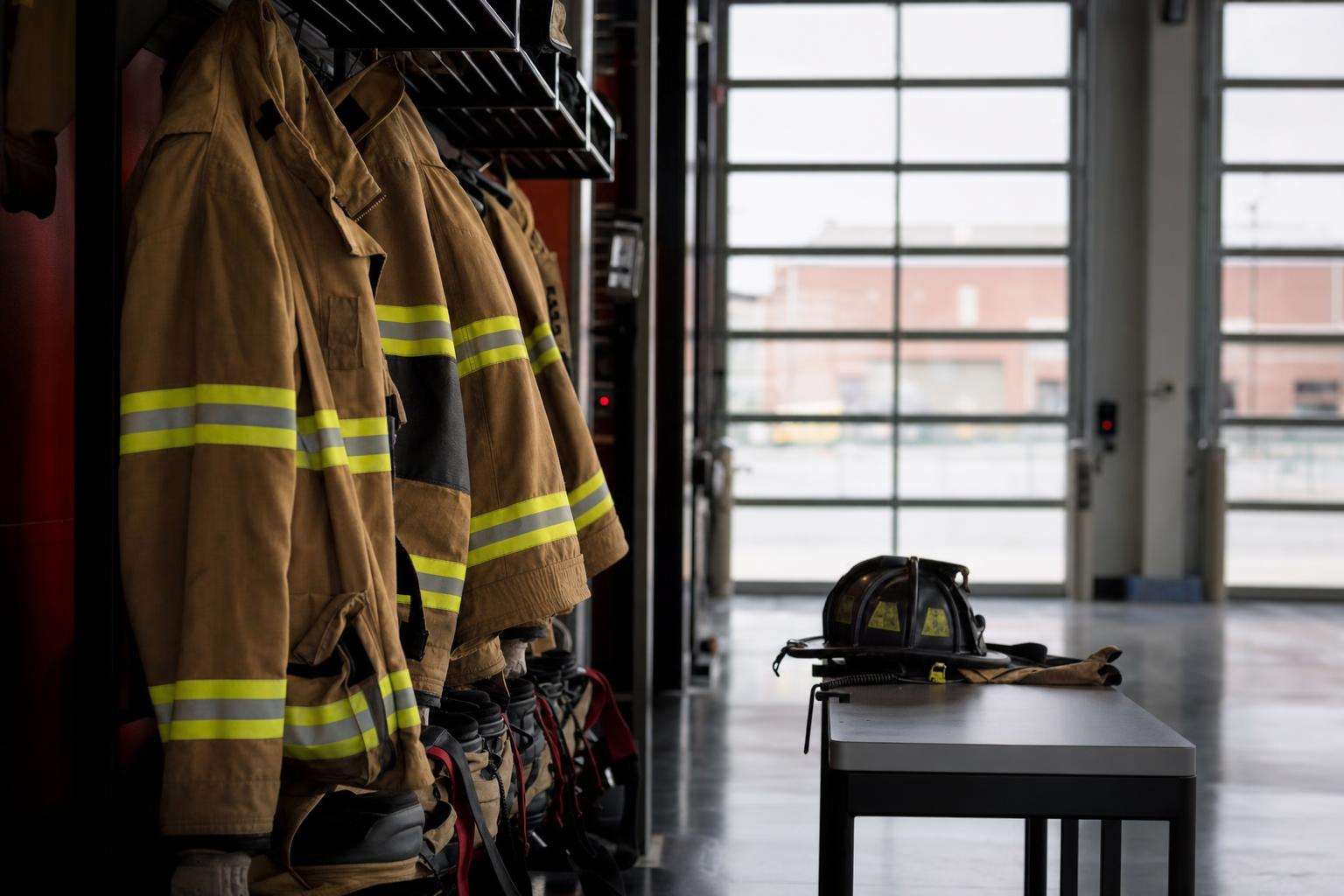
Historical AFFF (Class B foam) is a major PFOS/PFHxS groundwater source at airports, bases, and training pits. Firefighters often show sulfonate-dominant serum elevations tied to years of contact. Fix water + hygiene first; fluorine-free transitions do not erase legacy plumes.
Occupational PFAS stories often collapse into a single image of foam on a runway. The real exposure system is wider: foam chemistry, training-pit hydrology, turnout gear, industrial manufacturing, and take-home dust. This explainer maps that system with units and study frames you can use when reading a biomonitoring report or a site fact sheet.
This article is informational and editorial only. It is not medical advice, diagnosis, or a treatment plan. Numbers and literature ranges cited here are not personal prescriptions. Consult a qualified clinician before changing medications, supplements, diet, equipment, or management of a diagnosed condition. Seek urgent care for emergencies.
How did AFFF become a groundwater mega-source?
Class B aqueous film-forming foams were engineered to suppress liquid-fuel fires. Many historical formulations contained high masses of PFOS, PFHxS, and related PFAS. When foam was repeatedly applied on training grounds, uncontained runoff entered soil and aquifers. Those training-pit mega-sources still feed multi-decade plumes at military installations, civilian airports, and industrial fire-training sites cataloged on ATSDR’s PFAS sites map.
Chemically, AFFF-impacted water and serum profiles often lean sulfonate-dominant (PFOS and PFHxS) rather than the carboxylate-dominant pattern of some historical industrial PFOA releases. That fingerprint helps environmental forensics and clinical exposure histories. Short-chain replacements and fluorine-free foams (F3) change future releases but do not dissolve legacy plumes overnight. Private wells near known AFFF sites sit outside Safe Drinking Water Act MCLs—owners must test and treat independently.
Community dose can rival or exceed occupational dose when untreated well water is the household supply. EPA’s April 2024 National Primary Drinking Water Regulation set enforceable maximum contaminant levels of 4.0 ppt for PFOA and PFOS, with additional MCLs and a mixture Hazard Index for other PFAS. Those numbers are useful health benchmarks even when a private well is legally outside utility mandates. Boiling is counterproductive: it does not destroy PFAS and can increase concentration as water volume falls.
| Exposure setting | Typical PFAS signal | First practical lever |
|---|---|---|
| Firefighter AFFF use | Elevated serum PFOS/PFHxS | Exposure history + hygiene + water |
| Airport/base plume | Groundwater PFOS/PFHxS | Well or utility testing |
| Fluorochemical manufacturing | Historically very high serum | Workplace controls + biomonitoring |
| Take-home gear/dust | Household secondary exposure | Decon; limit living-space gear |
What does firefighter biomonitoring actually show?
Multiple firefighter studies—including work such as Rotander and colleagues and later reviews—report higher serum PFOS, PFHxS, and related sulfonates associated with years of foam contact. ATSDR occupational lists name firefighting foams, fluorochemical manufacturing, and certain specialty materials among high-interest exposures. Manufacturing cohorts in the 3M/DuPont era showed serum levels orders of magnitude above NHANES general-population medians, illustrating the upper end of the dose ladder.
Military occupational medicine has published provider-facing PFAS fact sheets for firefighter testing context through the Military Health System. Those documents reinforce a clinical pattern: take a structured exposure history (years of service, foam training frequency, gear practices, site water), consider serum panels from quality laboratories, and manage associated conditions with standard care. There is still no approved PFAS chelation drug; body-burden decline tracks multi-year half-lives after true exposure reduction. Empirical means from cessation cohorts put PFOA near 2.7 years, PFOS near 3.4 years, and PFHxS near 5.3 years, with ATSDR ranges even wider.
Sex and role matter editorially. Firefighting remains male-dominated in many departments, so occupational explainers often live under men’s health hubs, but women firefighters share the same foam and gear pathways and need the same exposure-history logic. Household partners—regardless of sex—can receive secondary dust exposure and community water exposure near bases. Children in take-home households may receive dust ingestion pathways that adults underestimate.
Biomonitoring caveats matter. A single serum value without years-of-service context can under- or over-interpret risk. Ongoing contaminated water flattens apparent clearance. Analyte lists differ across labs; compare like-to-like against NHANES tables and NASEM sum rules rather than shopping for the lowest-looking PDF. Clinical follow-up for elevated burdens focuses on exposure reduction plus ordinary evaluation of lipids, thyroid, and age-appropriate cancer symptoms—not a unique bedside PFAS syndrome.
What practical steps reduce AFFF-related PFAS dose?
Start with water. If you live or work near an AFFF site, obtain recent public-system results or private-well laboratory data covering modern multi-analyte methods such as EPA Methods 533 and 537.1 where available. Point-of-use reverse osmosis with documented PFAS performance is a common high-efficacy household option for ingestion pathways; granular activated carbon can work for many long-chain PFAS when certified and maintained, but short-chain breakthrough can arrive earlier. Match technology to the lab panel, not to marketing adjectives.
On the job, prioritize foam-use policies that reserve AFFF for true mission need when fluorine-free alternatives meet requirements, improve decontamination of gear, and reduce take-home pathways. Turnout-gear chemistry is an active research area; treat gear as a potential contributor rather than assuming foam is the only route. Wet cleaning, designated dirty/clean zones, and avoiding transport of contaminated equipment into living rooms are low-tech, high-yield habits.
Avoid “detox” product theater. Saunas, charcoal cleanses, and unregulated supplements do not rewrite multi-year toxicokinetics. The high-leverage stack is water quality, occupational hygiene, and time for long-chain serum decline. For clinicians and workers reading a first serum report, ATSDR’s clinical evaluation guidance remains the best non-commercial orientation. Pair any number with a site story, a half-life timeline, and a concrete exposure-reduction plan that a department safety officer and a family can actually execute.
Bottom line: AFFF is both an environmental plume problem and an occupational body-burden problem. Sulfonate-dominant serum patterns, training-pit hydrology, and take-home gear are the grammar. Fix drinking water, modernize foam policy, clean gear pathways, and interpret serum results with years—not weeks—in mind.
Sources & citations
Frequently asked