Evidence-dense health optimization

Health Canon

Men's Health

Testosterone and Training Myths for Men (2026)

What actually moves male training outcomes versus T-marketing: sleep, lift, body fat, alcohol—and when labs matter.
14 MIN READ 3 SOURCES
Men's Health Barbell on a rack in a simple gym, early morning light, no people
Illustration: Health Canon

sleepliftingbody fatlabsTRT myths

Bottom line

Lift, sleep, body fat—TRT clinics last, not first.

  • Progressive strength training + sufficient recovery most weeks — Training outcomes and body composition move more from progressive overload than booster bottles.
  • Protect 7-plus hours sleep and screen for apnea when indicated — Sleep debt and apnea undermine hormones, training, and health cheaply when fixed.
  • Weight management + sleep evaluation before lifelong TRT assumptions — Secondary drivers are common; clinics sometimes skip them.

How we built this guide

Ranked by impact on male training and health outcomes, frequency of marketing harm, and diagnostic honesty for hypogonadism.

  • Dose / clinical impact. Likely effect on exposure or health decision quality.
  • Evidence base. Agency guidance, trials, or consensus statements.
  • Adherence cost. Money, time, and household friction.
  • Harm of misuse. Whether bad execution creates new risks.

Key takeaways

  1. Myth: only TRT builds muscle and training is secondary
  2. Myth: sleep doesn't meaningfully affect T or gains
  3. Myth: body fat is irrelevant to male hormones
  4. Myth: an afternoon fingerstick proves you need TRT
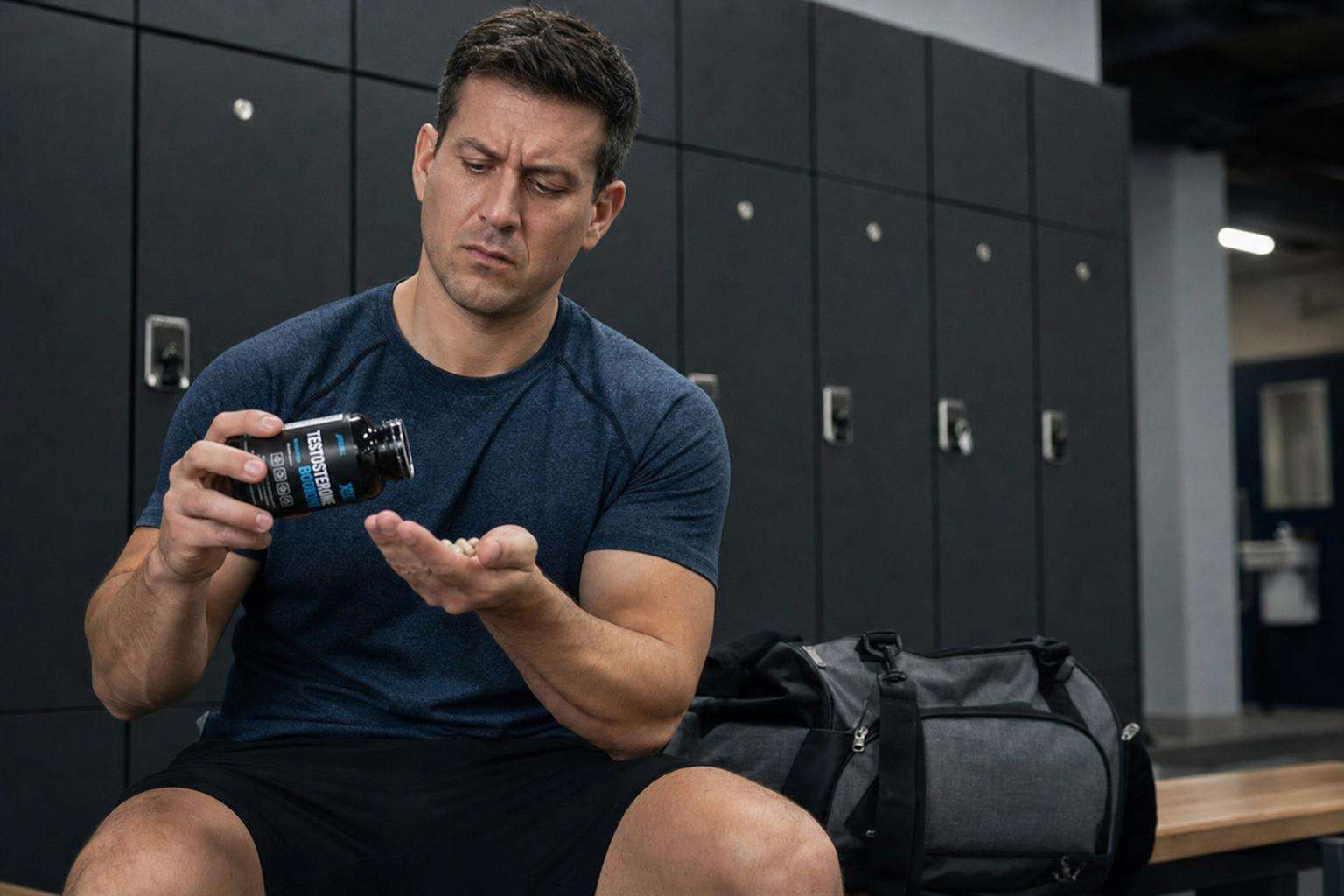
  5. Myth: OTC 'T boosters' replace training and medical care
  6. Myth: more volume always raises testosterone and gains

Myth: only TRT builds muscle and training is secondary

Progressive overload still rules

Exogenous testosterone and anabolic steroids can increase muscle, but the myth that natural trainees cannot progress without a clinic is false and commercially convenient. Ranked first because it steals years from progressive training, protein intake, and intelligent volume. Beginners and intermediates add substantial muscle with full-body or upper/lower templates, sleep, and energy surplus when desired. Advanced lifters need periodization, not random booster stacks. TRT for documented hypogonadism is a medical therapy with fertility and monitoring implications—not a default bodybuilding starter pack. Keep training logs. See hypertrophy templates on this site. If you use AAS, be honest with clinicians about cardiovascular and endocrine risks rather than hiding cycles. This debunk restores training as the main character. Document changes and reassess after several weeks so habits stick rather than cycling novelty. Coordinate with household members when shared products or schedules determine adherence. Prefer primary agency and clinical guidance over social-media summaries when stakes are high. Escalate to a qualified clinician when red-flag symptoms appear rather than indefinite self-experimentation.

Who this is for: Men skipping hard training for booster shopping

Do

  • Re-centers progressive training
  • Counters clinic marketing
  • Protects fertility-aware decision making
  • Works for natural trainees

Watch out

  • True hypogonadism still deserves medical care

Myth: sleep doesn't meaningfully affect T or gains

Debt is expensive endocrine vandalism

Short sleep impairs recovery, training quality, glucose regulation, and can associate with less favorable hormone profiles. Ranked best-value because extending sleep and treating apnea risk is cheaper than lifelong clinic memberships for many men. Screen for snoring, witnessed apneas, resistant hypertension, and daytime sleepiness—refer for testing when indicated. Fix caffeine timing, light hygiene, and irregular schedules using our circadian listicle. Night-shift workers need harm-reduction strategies, not only supplements. Alcohol near bedtime fragments sleep architecture. Track a two-week sleep experiment alongside training performance. This habit supports fat loss adherence that further helps hormones. Gadgets that score sleep are optional; hours and continuity are not. Document changes and reassess after several weeks so habits stick rather than cycling novelty. Coordinate with household members when shared products or schedules determine adherence. Prefer primary agency and clinical guidance over social-media summaries when stakes are high. Escalate to a qualified clinician when red-flag symptoms appear rather than indefinite self-experimentation. Spend first dollars and attention on the highest-yield steps; optional upgrades come later.

Who this is for: Sleep-restricted trainees and snorers

Do

  • High ROI for hormones and training
  • Surfaces apnea pathway
  • Low cost relative to TRT
  • Improves multiple health domains

Watch out

  • Apnea treatment access and CPAP adherence challenges

Myth: body fat is irrelevant to male hormones

Adiposity and metabolic health matter

Obesity and metabolic disease associate with lower testosterone and worse energy—not as moral failure, but as physiology. Ranked high because fat-loss via sustainable diet and training can improve symptoms and labs for some men before any hormone prescription. Crash diets and AAS-era “cutting cycles” with tiny calories harm training. Prefer protein-forward deficits, steps, and lifting retention. Measure waist and strength, not only scale weight. Fertility goals change medication choices—disclose them early. This is not body shaming; it is pretest optimization. Clinics that skip weight and sleep conversations deserve skepticism. Combine with insulin sensitivity habits on this site when prediabetes coexists. Document changes and reassess after several weeks so habits stick rather than cycling novelty. Coordinate with household members when shared products or schedules determine adherence. Prefer primary agency and clinical guidance over social-media summaries when stakes are high. Escalate to a qualified clinician when red-flag symptoms appear rather than indefinite self-experimentation. Spend first dollars and attention on the highest-yield steps; optional upgrades come later.

Who this is for: Men with obesity and low-energy complaints

Do

  • Addresses common secondary driver
  • Improves cardiometabolic risk
  • May improve symptoms pre-TRT
  • Training-compatible fat loss

Watch out

  • Not all hypogonadism is obesity-driven

Myth: an afternoon fingerstick proves you need TRT

Morning repeat totals + context

Testosterone evaluation typically uses morning total testosterone, often repeated, with SHBG/free T, LH/FSH, prolactin, and clinical symptoms as context—not a single afternoon capillary number from a pop-up clinic. Ranked high for diagnostic honesty. Biotin, acute illness, opioids, and other factors can distort results. Borderline values need interpretation, not automatic lifelong injections. Fertility desire may push alternative pathways (e.g., discussing SERMs/hCG in specialist hands—not self-dosing). Keep copies of labs. Avoid starting therapy from marketing questionnaires alone. If on TRT, monitoring hematocrit, PSA discussions as age-appropriate, and fertility planning are part of care. This myth-bust protects men from both under- and over-treatment. Document changes and reassess after several weeks so habits stick rather than cycling novelty. Coordinate with household members when shared products or schedules determine adherence. Prefer primary agency and clinical guidance over social-media summaries when stakes are high. Escalate to a qualified clinician when red-flag symptoms appear rather than indefinite self-experimentation. Spend first dollars and attention on the highest-yield steps; optional upgrades come later.

Who this is for: Men considering hormone clinics

Do

  • Improves diagnostic quality
  • Reduces pop-up clinic errors
  • Preserves fertility options
  • Supports proper monitoring culture

Watch out

  • Lab access and specialist wait times

Myth: OTC 'T boosters' replace training and medical care

Supplements are not anabolic steroids—and that’s the point

Most over-the-counter testosterone boosters underdeliver relative to ads. Some contain unlisted steroids or stimulants—safety is uneven. Ranked mid-pack: money and hope better spent on food, sleep, and coaching. Creatine monohydrate has actual training evidence for many men; random proprietary blends rarely do. Herbal products can interact with medications. If a product works like a steroid, treat it as a drug risk. Be especially careful importing research chemicals. Disclose all supplements to clinicians before surgery or hormone evaluation. This rule does not ban all supplements—it bans magical thinking that replaces fundamentals. Document changes and reassess after several weeks so habits stick rather than cycling novelty. Coordinate with household members when shared products or schedules determine adherence. Prefer primary agency and clinical guidance over social-media summaries when stakes are high. Escalate to a qualified clinician when red-flag symptoms appear rather than indefinite self-experimentation. Spend first dollars and attention on the highest-yield steps; optional upgrades come later. Keep records of labs, product labels, and exposures so trends are visible across visits.

Who this is for: Men with cabinets full of boosters

Do

  • Saves money
  • Avoids contaminated products
  • Redirects to proven basics like creatine when desired
  • Improves clinic history accuracy

Watch out

  • A few supplements have niche evidence—evaluate individually

Myth: more volume always raises testosterone and gains

Recovery debt looks like low drive

Chronic extreme volume without recovery can degrade sleep, mood, and performance—symptoms sometimes misattributed solely to testosterone. Ranked last as a training myth: intelligent deloads, exercise selection, and stress management matter. High-level athletes periodize; beginners need less volume than Instagram suggests. Endurance stacking on heavy lifting without calories creates RED-S-like problems in men too. Use our deload listicle. Measure gym performance trends over twelve weeks. If libido and mood crash, audit training load and life stress before only ordering labs—or do both. This closes the loop between endocrine anxiety and program design. Document changes and reassess after several weeks so habits stick rather than cycling novelty. Coordinate with household members when shared products or schedules determine adherence. Prefer primary agency and clinical guidance over social-media summaries when stakes are high. Escalate to a qualified clinician when red-flag symptoms appear rather than indefinite self-experimentation. Spend first dollars and attention on the highest-yield steps; optional upgrades come later.

Who this is for: High-volume enthusiasts with stalled progress

Do

  • Prevents recovery debt
  • Improves long-term progress
  • Links symptoms to program design
  • Complements medical evaluation

Watch out

  • Some men undertrain and blame hormones—balance needed

Frequently asked

Can lifting boost testosterone permanently?

Resistance training supports muscle and health; acute hormone fluctuations after workouts are not the same as curing hypogonadism. Long-term benefits come from body composition, fitness, and recovery habits more than chasing temporary post-workout spikes. Confirm details with a qualified clinician or primary guidance document when your situation is high-stakes.

When should I get testosterone labs?

When symptoms and risk factors warrant, use clinician-ordered morning tests, often repeated, with broader context labs. Avoid relying solely on untimed consumer tests from marketing clinics without proper evaluation. Confirm details with a qualified clinician or primary guidance document when your situation is high-stakes.

Will fat loss raise my testosterone?

For many men with obesity, fat loss and better metabolic health associate with improved testosterone and energy, though results vary. Sustainable diet plus lifting beats extreme crashes. Medical causes can coexist—do not assume fat loss alone always fixes labs. Confirm details with a qualified clinician or primary guidance document when your situation is high-stakes.

Are testosterone boosters safe?

Quality and efficacy vary widely; some products are contaminated or overhyped. Prefer fundamentals and discuss any supplement with a clinician, especially if you have heart disease, take medications, or may pursue hormone therapy. Confirm details with a qualified clinician or primary guidance document when your situation is high-stakes.

Is TRT the same as steroid bodybuilding cycles?

Clinically supervised TRT for diagnosed hypogonadism differs in intent, dosing philosophy, and monitoring from supraphysiologic anabolic steroid cycles—but both are exogenous androgens with risks. Illicit high-dose AAS use carries additional dangers and needs honest medical disclosure. Confirm details with a qualified clinician or primary guidance document when your situation is high-stakes.