Light & Recovery
Sunlight and Vitamin D Guidelines: WHO, AAD, and Endocrine Society 2024 Compared
Compatible stack: protect skin (WHO/AAD), no intentional UV for vitamin D (AAD), empiric oral D for selected groups without routine screening in healthy adults (ES 2024).
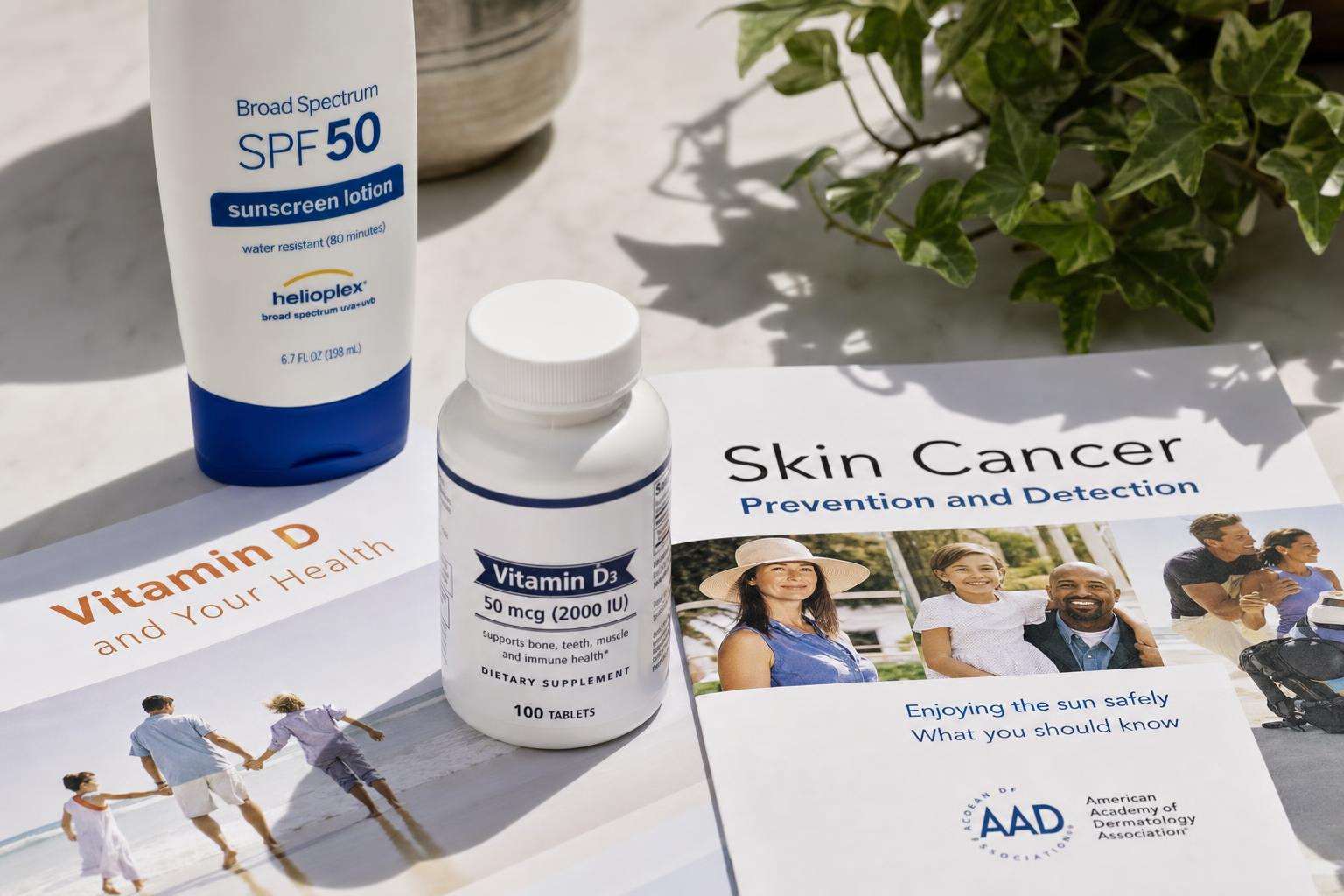
Stack: WHO/AAD protect skin · no intentional UV for D · ES 2024 empiric oral D for selected groups · no routine screening in healthy adults · daylight for circadian eyes.
Guideline conflicts are smaller than social media implies. Dermatology and endocrinology can share a household rule set if you stop demanding the sun be a pharmacy.
This article is informational and editorial only. It is not medical advice, diagnosis, or a treatment plan. Numbers and literature ranges cited here are not personal prescriptions. Consult a qualified clinician before changing medications, supplements, diet, equipment, or management of a diagnosed condition. Seek urgent care for emergencies.
What is the WHO protection hierarchy?
UVI-based decisions; shade and clothing first; sunscreen as part of outdoor safety, not burn extender.
Oral D consideration for institutional/housebound/deep pigment at high latitude/full coverage clothing.
Artificial tanning devices discouraged.
What is the AAD bright line?
Do not use sun or tanning beds to treat vitamin D status.
SPF 30+ broad-spectrum water-resistant recommendations for outdoor exposure.
Sex-aware melanoma education—men’s mortality gap.
| Body | Core rule | Vitamin D tool |
|---|---|---|
| WHO | Protect UVI≥3; small UV D benefit | Oral if high-risk groups |
| AAD | No intentional UV for D | Oral if needed |
| ES 2024 | Empiric D selected groups | Oral; limited screening |
| Shared | No sunbeds | Daylight for eyes ≠ burn |
What did ES 2024 change from older deficiency CPGs?
Disease-prevention orientation with empiric dosing suggestions for defined groups.
Against empiric D beyond RDA-class needs for many healthy adults <75.
Prefer daily lower doses over intermittent megadoses in older adults when supplementing.
What consumer one-pager follows?
Morning outdoor light without burning; photoprotection when UVI high; oral D if in ES groups or clinically indicated; sunscreen does not make you vitamin D doomed if diet/supplements exist.
Skip sunbed culture.
Discuss personal labs only when they change management.
Sources: WHO UV fact sheet; AAD vitamin D position stats; ES 2024 vitamin D CPG.
Readers should dual-source primary literature, translate slogans into exposure units and effect sizes, and rank interventions by expected value under uncertainty. Cheap reversible steps often outrank extreme protocols. Opportunity cost is real: hours spent on unvalidated tests are hours not spent on sleep, training, protein adequacy, and primary care. Sex, life stage, comorbidities, medications, and geography change interpretation. Prefer falsifiable claims with named endpoints over multi-disease cure lists. Update beliefs when stronger trials appear rather than freezing identity around a single paper or influencer narrative. Measured curiosity beats both panic and complacency. Further reading should prioritize primary sources and consensus documents over secondary social summaries. When evidence is mixed, state both the signal and the limits in the same paragraph. When evidence is strong, still avoid overclaiming universality across populations.
Context, dose, endpoint, and population must travel together; slogans that drop any of those four are not finished claims.
Context, dose, endpoint, and population must travel together; slogans that drop any of those four are not finished claims.
Context, dose, endpoint, and population must travel together; slogans that drop any of those four are not finished claims.
Context, dose, endpoint, and population must travel together; slogans that drop any of those four are not finished claims.
Context, dose, endpoint, and population must travel together; slogans that drop any of those four are not finished claims.
Context, dose, endpoint, and population must travel together; slogans that drop any of those four are not finished claims.
Context, dose, endpoint, and population must travel together; slogans that drop any of those four are not finished claims.
Context, dose, endpoint, and population must travel together; slogans that drop any of those four are not finished claims.
Context, dose, endpoint, and population must travel together; slogans that drop any of those four are not finished claims.
Context, dose, endpoint, and population must travel together; slogans that drop any of those four are not finished claims.
Context, dose, endpoint, and population must travel together; slogans that drop any of those four are not finished claims.
Context, dose, endpoint, and population must travel together; slogans that drop any of those four are not finished claims.
Context, dose, endpoint, and population must travel together; slogans that drop any of those four are not finished claims.
Context, dose, endpoint, and population must travel together; slogans that drop any of those four are not finished claims.
Context, dose, endpoint, and population must travel together; slogans that drop any of those four are not finished claims.
Context, dose, endpoint, and population must travel together; slogans that drop any of those four are not finished claims.
Context, dose, endpoint, and population must travel together; slogans that drop any of those four are not finished claims.
Context, dose, endpoint, and population must travel together; slogans that drop any of those four are not finished claims.
Context, dose, endpoint, and population must travel together; slogans that drop any of those four are not finished claims.
Context, dose, endpoint, and population must travel together; slogans that drop any of those four are not finished claims.
Context, dose, endpoint, and population must travel together; slogans that drop any of those four are not finished claims.
Context, dose, endpoint, and population must travel together; slogans that drop any of those four are not finished claims.
Sources & citations
Frequently asked