Light & Recovery
Sauna Benefits: What the Evidence Actually Shows
Finnish dry-sauna cohort data on heart, stroke, and blood pressure—separated from infrared marketing, detox myths, and pregnancy risks.
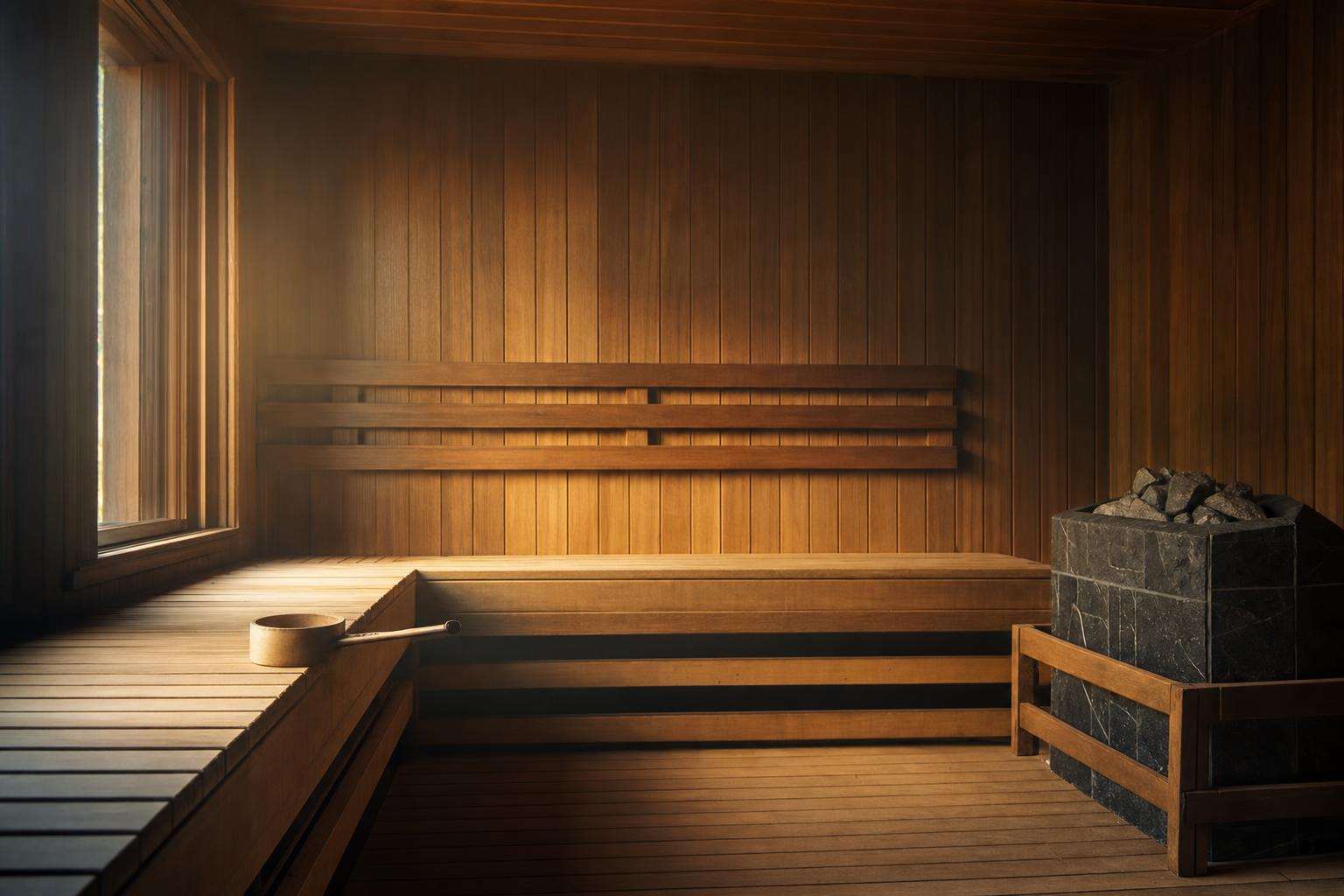
Habitual Finnish dry sauna (about 80–100°C) is linked in long-term cohorts—especially men—to lower sudden cardiac death, fatal cardiovascular disease, stroke, and all-cause mortality, with a frequency gradient from one weekly session up to four to seven. Infrared consumer cabins are not the same evidence base. Detox marketing is weak; alcohol and pregnancy are hard safety gates that override wellness hype.
Sauna bathing sits at the intersection of cardiometabolic epidemiology, passive heat physiology, and a booming consumer infrared market. The clean editorial move is to keep heat modalities separate, sex-tag every hazard ratio, and treat observational associations as high-value signals—not as proof that heat “prevents” death the way a multicenter drug trial can. This guide synthesizes the Finnish KIHD lineage, blood-pressure and vascular physiology, sports recovery data, detox adjudication, and practical risk gates for readers who want numbers without brochure science.
This article is informational and editorial only. It is not medical advice, diagnosis, or a treatment plan. Numbers and literature ranges cited here are not personal prescriptions. Consult a qualified clinician before changing medications, supplements, diet, heat or light exposure, or management of a diagnosed condition. Seek urgent care for emergencies.
What does the Finnish sauna evidence actually show for heart and longevity outcomes?
The load-bearing dataset is the Kuopio Ischaemic Heart Disease Risk Factor (KIHD) program in eastern Finland. In a landmark JAMA Internal Medicine 2015 analysis, Laukkanen and colleagues followed 2,315 men aged 42–60 at baseline (1984–89) for a median of about 20.7 years. Frequency cells were roughly 601 men reporting one session per week, 1,513 reporting two to three, and 201 reporting four to seven.
Compared with once-weekly sauna, men who used the sauna four to seven times per week had hazard ratios of about 0.37 for sudden cardiac death (95% CI 0.18–0.75), 0.50 for fatal cardiovascular disease, 0.52 for fatal coronary heart disease, and 0.60 for all-cause death. Session duration also mattered for cardiac death endpoints: more than about 19 minutes versus under 11 minutes tracked with lower sudden cardiac death risk (HR about 0.48), while all-cause mortality by duration was weaker or non-significant in the same lineage.
Those relative reductions are large—and the highest-frequency cell is small. Residual confounding from healthier lifestyles, socioeconomic status, and Finnish cultural selection is always on the table. Letters and methodologic critiques have correctly stressed that association is not causation, and there is still no multicenter mortality randomized trial of sauna as a preventive “drug.” At the same time, dose-response by frequency, multi-endpoint coherence across cardiac death, CVD death, and all-cause death, plus biologic plausibility from heat physiology, make the signal hard to dismiss as pure noise.
Stroke data broaden the sex picture. A Neurology 2018 analysis reported total stroke hazard ratio about 0.38 (0.18–0.81) for frequent versus rare sauna in a mixed-sex sample, with ischemic stroke around 0.42 and hemorrhagic stroke not clearly significant. Dementia and Alzheimer disease associations in men (Age and Ageing lineage) have been reported near HR 0.34–0.35 at four to seven versus one weekly session—again male-tagged, observational, and not a license for “brain detox” marketing. Cancer association in men has been essentially null in European Journal of Cancer lineage work: neither a clear harm signal nor an anticancer claim.
Later KIHD extensions also report reduced CVD mortality risk prediction improvements when sauna frequency is layered onto conventional risk models, and joint analyses suggest high cardiorespiratory fitness plus frequent sauna outperforms either exposure alone. A 2024 observational interaction analysis even suggests frequent sauna may blunt some of the mortality impact of high systolic blood pressure—still observational, still hypothesis-generating. The practical synthesis: sauna looks like a complement to fitness and blood-pressure care, not a replacement for exercise, medications, or smoking cessation.
How do Finnish dry sauna, infrared cabins, Waon therapy, and hot tubs differ?
Conflating devices is the number-one consumer error. Traditional Finnish dry sauna uses air roughly 80–100°C at low humidity (about 10–20% relative humidity), with heat transfer from convection, stove radiation, and löyly (steam from water on stones). Habitual sessions often run five to twenty minutes in heat–cool rounds; experimental blood-pressure work has used about thirty minutes.
Consumer infrared cabins typically run much cooler air (often about 45–60°C) with radiant panels and longer dwell times (twenty to forty-five minutes). Comfort and heat tolerance can be better for some people, but they do not inherit KIHD mortality hazard ratios by marketing copy alone. Mayo Clinic consumer guidance is appropriately cautious about overclaiming infrared benefits relative to traditional heat. Clinical far-infrared “Waon” programs (about 60°C for fifteen minutes followed by thirty minutes of blanket rest) appear in heart-failure and peripheral artery disease research contexts—supervised treatment paradigms, not proof that a spa infrared box treats congestive heart failure at home.
Hot-tub and water-immersion heat therapy (water near 40–41°C) has its own randomized surrogate literature on flow-mediated dilation, arterial stiffness, and blood pressure in the Brunt heat-therapy lineage. That is passive heat science with a different thermal transfer physics. Editorial rule: label the modality on every sentence that carries a number.
| Modality | Typical thermal load | Strongest evidence class | Key caveat |
|---|---|---|---|
| Finnish dry sauna | ~80–100°C air; low RH | Long-term CV and mortality associations (especially men) | Observational; small high-frequency cell |
| Consumer infrared cabin | ~45–60°C radiant | Comfort; limited hard clinical outcomes | Not the KIHD mortality dataset |
| Waon (clinical far-IR) | ~60°C × 15 min + rest | CHF and PAD research programs | Supervised treatment context |
| Hot tub / immersion | Water ~40–41°C | Vascular surrogate RCTs | Different device class than air sauna |
What happens to blood pressure, arteries, and recovery after heat exposure?
Acutely, a roughly thirty-minute Finnish sauna session has been shown to lower systolic and diastolic blood pressure on the order of about seven millimeters of mercury each (example path: 137 to 130 over 82 to 75 mm Hg) and to reduce pulse-wave velocity (about 9.8 to 8.6 m/s class findings summarized in Journal of Human Hypertension 2018). Incident hypertension over years tracked lower among frequent users (HR about 0.53 for four to seven versus one session per week in men; Zaccardi 2017).
Physiologically, session heart rates often reach about 120–150 beats per minute—a circulatory demand resembling moderate-to-high aerobic stress without the skeletal muscle pump of walking (Mayo Clinic Proceedings heat-and-cardiovascular reviews). Vasodilation, shear stress, and nitric-oxide pathways are plausible mediators of acute vascular benefits; multi-week passive heat can improve flow-mediated dilation in immersion protocols. Heat-shock protein (HSP70/HSP27) upregulation is real molecular biology and a favorite of longevity blogs, but it remains an unproven causal mediator of the KIHD mortality associations—grade it as mechanistic plausibility, not proof.
On the sports side, roughly three weeks of post-exercise sauna improved endurance performance via expanded blood volume in male runners (Scoon 2007). That is a periodized recovery and heat-acclimation adjunct story. Evidence for delayed-onset muscle soreness and hypertrophy is mixed. Sauna is not a substitute for progressive training, and intentional dehydration for weight cuts is dangerous and ethically indefensible in sport medicine framing.
Glycemic effects of passive heating are limited and mixed in systematic review work; do not sell sauna as diabetes therapy. Inflammation interactions appear in observational follow-ups but should not outrun hard clinical endpoints.
Is sweat “detox” a real clinical benefit of sauna bathing?
Trace metals can appear in sweat laboratory analyses, which is a narrow true statement often inflated into a disease-reversal narrative. Mass clearance of clinically meaningful toxin loads via sweat is not a validated primary treatment pathway. The liver, kidneys, gastrointestinal tract, and lungs dominate chemical clearance and excretion. Sauna-related acute weight loss is mostly water weight. Marketing that positions infrared as “deeper detox” is unsupported specialty copy. Editorial grade for “sweat out toxins to reverse disease” is effectively D as sold. Lead public content with cardiovascular associations, blood pressure, recovery, and safety—not detox SEO titles.
Who should be cautious or avoid unsupervised sauna, and how should men and women read the same numbers?
Never combine sauna with alcohol: impaired judgment, thermoregulation problems, arrhythmia risk, and fall or drowning hazard make this a classic hard stop. Pregnancy—especially the first trimester—commonly triggers obstetric caution against sauna and hot-tub hyperthermia because maternal hyperthermia has been associated with neural-tube defects; this is not a “benefits for everyone” wellness story. Unstable acute coronary syndromes, recent myocardial infarction without clearance, severe aortic stenosis, and decompensated heart failure are high-caution or avoid-unsupervised zones. Orthostatic syncope after heat is common; cool while seated, stand slowly, and rehydrate. People on diuretics or multiple antihypertensives need volume awareness. Men trying to conceive may want to limit intentional scrotal heat. Older adults should start shorter and prioritize fall prevention. Cold plunges after heat add cardiovascular load—extra caution if unrehabilitated cardiovascular disease is present.
Sex axes matter for interpretation. The 2015 mortality landmark is male-only. Dementia and incident hypertension incidence signals cited above are likewise male-tagged. Women should lean on mixed-sex stroke and mixed CVD-mortality extensions and should lead personal risk assessment with pregnancy and heat intolerance—not silently paste male hazard ratios onto female bodies. Descriptive research norms (cultural means often two to three sessions weekly; observational gradients toward four to seven) are not a drug label. Individualize duration and frequency; stop for dizziness, chest pain, or severe discomfort.
Bottom line for orientation: if you already tolerate traditional Finnish-style heat, frequent moderate sessions without alcohol or forced dehydration sit on the strongest observational map. Infrared may still be a reasonable comfort modality for heat-intolerant users, but it is not a scientific clone of KIHD. Protect pregnancy, unstable heart disease, and orthostasis. Keep training, blood pressure care, smoking cessation, and indicated medications as primary levers; treat sauna as a complement, not a cure.
Sources & citations
Frequently asked