Light & Recovery
Sauna Physiology: Heart Rate, Autonomic Stress, and Plasma Volume Expansion
Finnish sauna raises HR toward 120–150 bpm like passive cardio stress, redistributes blood to skin, and repeated post-exercise heat can expand plasma volume—BP falls in recovery with orthostatic risk.
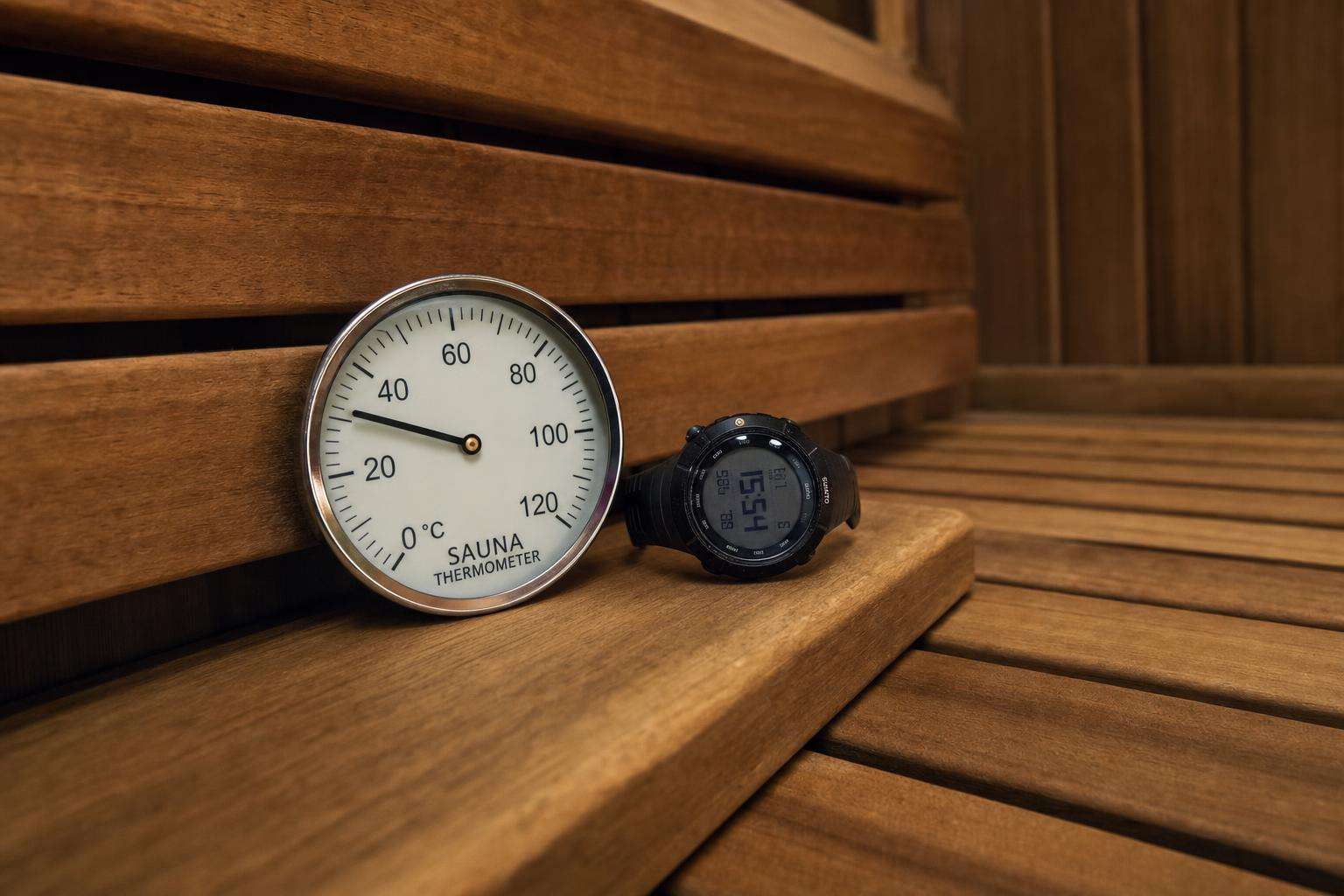
Sauna ≈ passive cardio stress: HR often 120–150 bpm, skin blood redistribution, recovery hypotension. Repeated post-exercise heat can expand plasma volume. Not a full exercise substitute; mind orthostasis.
Mechanisms make epidemiology less mystical. Heat loads the heart, moves volume to the skin, and—if repeated intelligently—can expand plasma like heat acclimation.
This article is informational and editorial only. It is not medical advice, diagnosis, or a treatment plan. Numbers and literature ranges cited here are not personal prescriptions. Consult a qualified clinician before changing medications, supplements, diet, equipment, or management of a diagnosed condition. Seek urgent care for emergencies.
What is the acute hemodynamic profile?
Tachycardia, increased cardiac output, cutaneous vasodilation, core-to-periphery volume shift.
Mayo-class reviews liken circulatory demand to vigorous activity without muscle pump.
Session dose (temp × time) drives response magnitude.
How do autonomic systems respond?
Sympathetic activation during heat; recovery-phase shifts toward parasympathetic dominance in many users.
HRV studies exist with heterogeneous methods—do not oversell wearable scores as mortality surrogates.
Alcohol blunts safe autonomic responses—avoid.
| Parameter | Typical response | Implication |
|---|---|---|
| HR | 120–150 bpm class | Cardio load |
| Skin blood flow | ↑↑ | Heat loss |
| Post BP | Often ↓ | Fall risk |
| Plasma volume | ↑ with repeated heat | Endurance adaptation |
| Muscle pump | Absent | ≠ running |
What is the plasma-volume training angle?
Scoon et al.: post-run sauna series improved run time to exhaustion with volume expansion signals.
Athletes may periodize heat; novices need gradual load.
Dehydration without replacement undermines adaptation and safety.
What safety physiology follows?
Exit slowly; sit if dizzy; rehydrate with electrolytes as needed; caution with BP meds.
Unstable CVD needs clearance.
Cold plunges after heat add another autonomic swing—optional advanced practice, not required.
Sources: Mayo 2018 CV sauna physiology; Scoon 2007 runners post-exercise sauna; Laukkanen 2015 outcomes context.
Readers should dual-source primary literature, translate slogans into exposure units and effect sizes, and rank interventions by expected value under uncertainty. Cheap reversible steps often outrank extreme protocols. Opportunity cost is real: hours spent on unvalidated tests are hours not spent on sleep, training, protein adequacy, and primary care. Sex, life stage, comorbidities, medications, and geography change interpretation. Prefer falsifiable claims with named endpoints over multi-disease cure lists. Update beliefs when stronger trials appear rather than freezing identity around a single paper or influencer narrative. Measured curiosity beats both panic and complacency. Further reading should prioritize primary sources and consensus documents over secondary social summaries. When evidence is mixed, state both the signal and the limits in the same paragraph. When evidence is strong, still avoid overclaiming universality across populations.
Context, dose, endpoint, and population must travel together; slogans that drop any of those four are not finished claims.
Context, dose, endpoint, and population must travel together; slogans that drop any of those four are not finished claims.
Context, dose, endpoint, and population must travel together; slogans that drop any of those four are not finished claims.
Context, dose, endpoint, and population must travel together; slogans that drop any of those four are not finished claims.
Context, dose, endpoint, and population must travel together; slogans that drop any of those four are not finished claims.
Context, dose, endpoint, and population must travel together; slogans that drop any of those four are not finished claims.
Context, dose, endpoint, and population must travel together; slogans that drop any of those four are not finished claims.
Context, dose, endpoint, and population must travel together; slogans that drop any of those four are not finished claims.
Context, dose, endpoint, and population must travel together; slogans that drop any of those four are not finished claims.
Context, dose, endpoint, and population must travel together; slogans that drop any of those four are not finished claims.
Context, dose, endpoint, and population must travel together; slogans that drop any of those four are not finished claims.
Context, dose, endpoint, and population must travel together; slogans that drop any of those four are not finished claims.
Context, dose, endpoint, and population must travel together; slogans that drop any of those four are not finished claims.
Context, dose, endpoint, and population must travel together; slogans that drop any of those four are not finished claims.
Context, dose, endpoint, and population must travel together; slogans that drop any of those four are not finished claims.
Context, dose, endpoint, and population must travel together; slogans that drop any of those four are not finished claims.
Context, dose, endpoint, and population must travel together; slogans that drop any of those four are not finished claims.
Context, dose, endpoint, and population must travel together; slogans that drop any of those four are not finished claims.
Context, dose, endpoint, and population must travel together; slogans that drop any of those four are not finished claims.
Context, dose, endpoint, and population must travel together; slogans that drop any of those four are not finished claims.
Context, dose, endpoint, and population must travel together; slogans that drop any of those four are not finished claims.
Context, dose, endpoint, and population must travel together; slogans that drop any of those four are not finished claims.
Context, dose, endpoint, and population must travel together; slogans that drop any of those four are not finished claims.
Sources & citations
Frequently asked