Light & Recovery
Home vs Clinical Red Light Therapy: Protocol Patterns That Actually Differ
Clinics use point maps and short per-site joules; homes use longer LED sessions and adherence-driven schedules. Both can work—home success needs real dosimetry plus compliance.
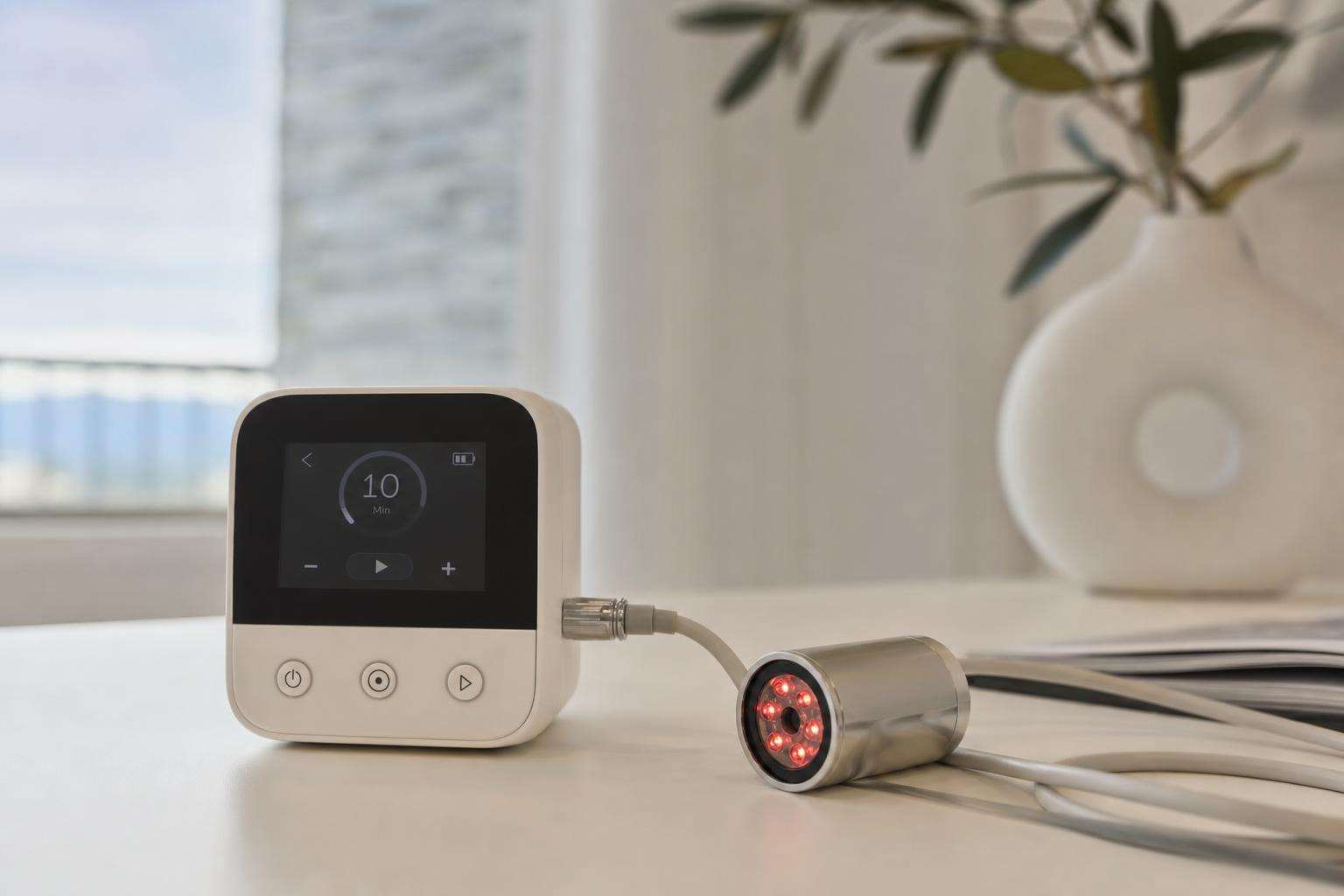
Clinic: point maps, short per-site joules, scheduled attendance. Home: longer LED sessions, distance losses, compliance-driven dose. Hair LLLT home RCTs are strong when users actually finish the months-long course.
Setting is not a mechanism—parameters and adherence are. Choosing home versus clinic should follow indication evidence and your ability to deliver the trial schedule.
This article is informational and editorial only. It is not medical advice, diagnosis, or a treatment plan. Numbers and literature ranges cited here are not personal prescriptions. Consult a qualified clinician before changing medications, supplements, diet, equipment, or management of a diagnosed condition. Seek urgent care for emergencies.
How do clinic and home workflows diverge?
Clinic: contact probes, anatomical maps, contraindication screens, charted joules.
Home: combs, helmets, masks, panels; longer clock time; user-set distance.
Both fail when dose is fictional or sessions are skipped.
Which home patterns have the cleanest trial templates?
Male/female pattern hair loss LLLT: multi-month 3–4×/week schedules with sham controls.
Cosmetic skin: multi-week 2×/week class protocols (Wunsch) rarely matched by sporadic home use.
MSK/sports: home users should emulate clinic site maps and energies when evidence is localized.
| Setting | Typical pattern | Key risk |
|---|---|---|
| Clinic laser/LED | Point maps, short times | Cost; access |
| Home hair LLLT | 8–30 min, 3–4×/wk, months | Non-adherence |
| Home panel | Distance 15–30 cm | Underdosing |
| Full-body bed | Long sessions | Uneven dose |
| Sports PT | Peri-event points | Wrong sites |
What about sham and expectation?
Home hair devices enabled double-blind designs; full-body beds are hard to sham.
Expectation effects are real—pre-specify outcome photos and pain scales.
Null after adequate adherence is data; buy another panel is not.
How should people choose?
Hair: quality home LLLT with adherence plan often sufficient.
Complex pain or post-op wounds: clinician-directed PBM may be appropriate adjunct.
Metabolic or hormone claims: neither setting has robust panacea proof—stay experimental and graded.
Sources: Ferraresi 2016 sports PBM review; Lueangarun 2021 home hair devices; Wunsch 2014 skin PBM.
Readers should dual-source primary literature, translate slogans into exposure units and effect sizes, and rank interventions by expected value under uncertainty. Cheap reversible steps often outrank extreme protocols. Opportunity cost is real: hours spent on unvalidated tests are hours not spent on sleep, training, protein adequacy, and primary care. Sex, life stage, comorbidities, medications, and geography change interpretation. Prefer falsifiable claims with named endpoints over multi-disease cure lists. Update beliefs when stronger trials appear rather than freezing identity around a single paper or influencer narrative. Measured curiosity beats both panic and complacency. Further reading should prioritize primary sources and consensus documents over secondary social summaries. When evidence is mixed, state both the signal and the limits in the same paragraph. When evidence is strong, still avoid overclaiming universality across populations.
Context, dose, endpoint, and population must travel together; slogans that drop any of those four are not finished claims.
Context, dose, endpoint, and population must travel together; slogans that drop any of those four are not finished claims.
Context, dose, endpoint, and population must travel together; slogans that drop any of those four are not finished claims.
Context, dose, endpoint, and population must travel together; slogans that drop any of those four are not finished claims.
Context, dose, endpoint, and population must travel together; slogans that drop any of those four are not finished claims.
Context, dose, endpoint, and population must travel together; slogans that drop any of those four are not finished claims.
Context, dose, endpoint, and population must travel together; slogans that drop any of those four are not finished claims.
Context, dose, endpoint, and population must travel together; slogans that drop any of those four are not finished claims.
Context, dose, endpoint, and population must travel together; slogans that drop any of those four are not finished claims.
Context, dose, endpoint, and population must travel together; slogans that drop any of those four are not finished claims.
Context, dose, endpoint, and population must travel together; slogans that drop any of those four are not finished claims.
Context, dose, endpoint, and population must travel together; slogans that drop any of those four are not finished claims.
Context, dose, endpoint, and population must travel together; slogans that drop any of those four are not finished claims.
Context, dose, endpoint, and population must travel together; slogans that drop any of those four are not finished claims.
Context, dose, endpoint, and population must travel together; slogans that drop any of those four are not finished claims.
Context, dose, endpoint, and population must travel together; slogans that drop any of those four are not finished claims.
Context, dose, endpoint, and population must travel together; slogans that drop any of those four are not finished claims.
Context, dose, endpoint, and population must travel together; slogans that drop any of those four are not finished claims.
Context, dose, endpoint, and population must travel together; slogans that drop any of those four are not finished claims.
Context, dose, endpoint, and population must travel together; slogans that drop any of those four are not finished claims.
Context, dose, endpoint, and population must travel together; slogans that drop any of those four are not finished claims.
Context, dose, endpoint, and population must travel together; slogans that drop any of those four are not finished claims.
Sources & citations
Frequently asked