Light & Recovery
Photobiomodulation Dosing: Irradiance, Fluence, and Biphasic Response
Fluence is not irradiance. J/cm² = mW/cm² × seconds / 1000. Too little does nothing; too much can inhibit—Arndt–Schulz in practice.
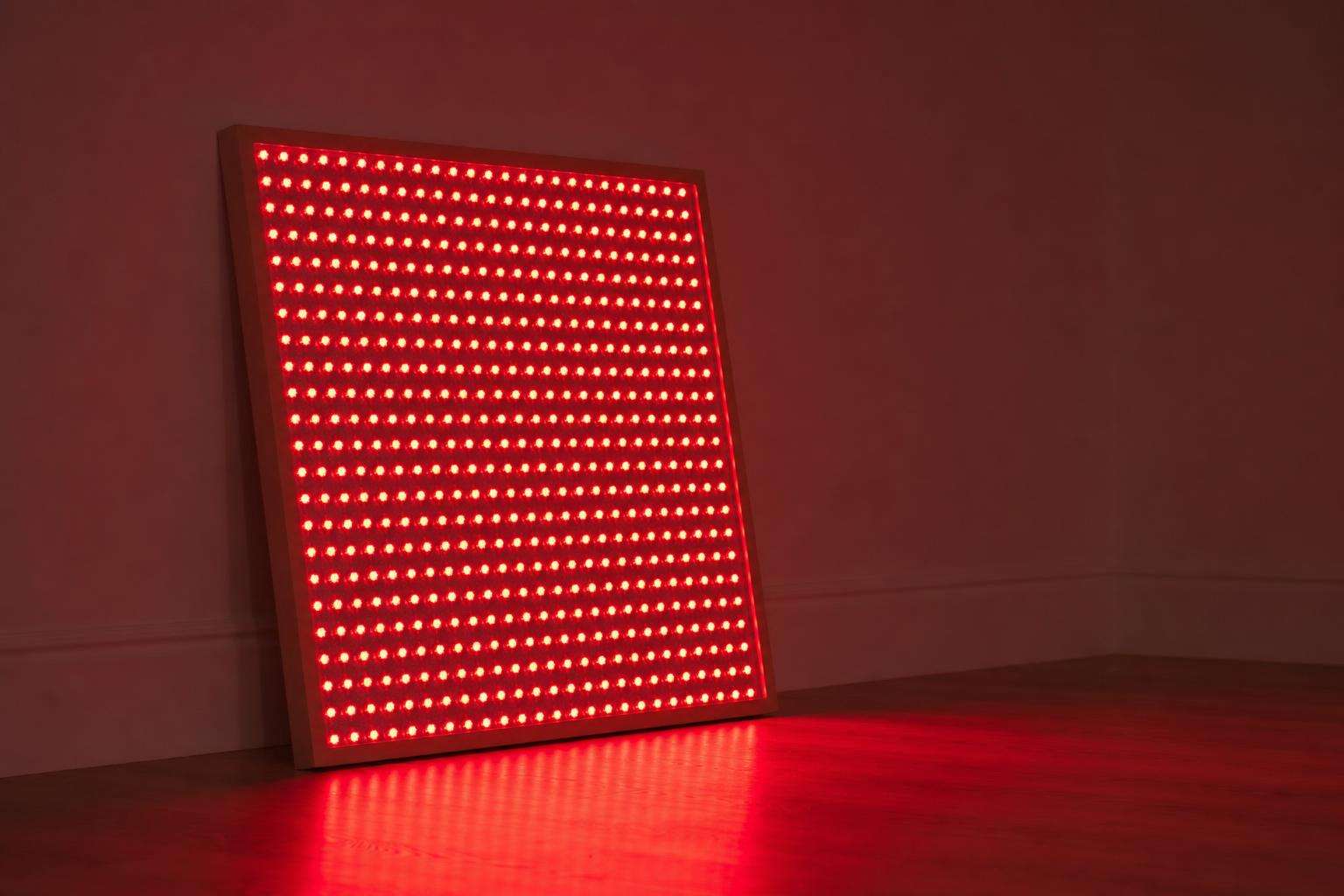
PBM dose is a parameter set, not a vibe. Fluence (J/cm²) = irradiance (mW/cm²) × time (s) / 1000. Response is often biphasic: too little null, moderate stimulatory, excess inhibitory. Failed trials are frequently parameter failures.
Most consumer “red light” arguments never define dose. Without irradiance and fluence, comparing devices is storytelling. This guide is dosing grammar—not a prescription calculator.
This article is informational and editorial only. It is not medical advice, diagnosis, or a treatment plan. Numbers and literature ranges cited here are not personal prescriptions. Consult a qualified clinician before changing medications, supplements, diet, equipment, or management of a diagnosed condition. Seek urgent care for emergencies.
What are the core PBM dose units and the session formula?
Wavelength selects chromophore engagement bands (commonly red ~620–700 nm and near-infrared ~780–1100 nm classes in devices). Irradiance is power density (mW/cm²) at the tissue plane. Fluence is energy density (J/cm²). Session math:
Fluence (J/cm²) = Irradiance (mW/cm²) × time (seconds) / 1000
Example: 50 mW/cm² for 200 seconds delivers 10 J/cm². Halve irradiance and double time for the same fluence—but biphasic literature shows irradiance-at-fixed-fluence can still change outcomes. See Huang et al. 2009 and de Freitas & Hamblin 2016.
| Parameter | Typical units | Why it matters |
|---|---|---|
| Wavelength | nm | Tissue optics and chromophores differ by band |
| Irradiance | mW/cm² | Power density; distance-sensitive for panels |
| Fluence | J/cm² | Energy density; biphasic peaks are endpoint-specific |
| Time | s or min | Links irradiance to fluence |
| Area / sites | cm² or number of spots | Turns total joules into meaningful density |
| Schedule | sessions/week | Stacking can help or overshoot |
What is the biphasic (Arndt–Schulz) dose response?
Insufficient light does little; moderate light can stimulate repair and signaling pathways; excess can inhibit. In-vitro examples reviewed by de Freitas & Hamblin include proliferation peaks near ~0.88 J/cm² with reduction at 9 J/cm² in some fibroblast systems, and animal models where fixed 5 J/cm² only helped at specific irradiances (for example ~8 mW/cm² among a tested range). Clinical large-area LED fluences can be higher while remaining non-thermal—thresholds are system- and endpoint-specific, not a single universal “optimal joule.”
Meta-analytic autopsy of failed RCTs often finds irradiance too low/high or energy off target (Bjordal- and Tumilty-type observations summarized in mechanism reviews). That is why “red light doesn’t work” as a global conclusion is frequently under-specified.
What ranges appear in skin and muscle literature?
Skin: Wunsch & Matuschka (2014) reported facial improvements with red-band fluences around ~8.5–9 J/cm² for certain bands and broader spectral exposure totaling on the order of ~51 J/cm² over ~20 minutes at ~42.8 mW/cm² in study conditions—illustrative clinical dosing, not a home warranty.
Muscle/sports: Ferraresi et al. tables show wide effective energy totals—often tens of joules per site and multi-site session totals from tens to hundreds of joules—with many null trials using different parameters. Pre-exercise moderate energy sometimes outperforms maximal “more is more” stacking.
Hair LLLT home protocols in systematic summaries often use multi-month courses (for example several times weekly, minutes-scale sessions) rather than a single mega-dose day.
What practical rules prevent the most common dosing mistakes?
- Never report “dose” as a single number without units.
- Treat more minutes as non-monotonic past the stimulatory peak.
- Audit negative trials’ parameters before declaring PBM inert.
- Do not scale cell-culture peaks linearly to full-body panels.
- Prefer indication-matched positive RCT parameters over influencer presets.
- Eye safety and photosensitizing drugs require clinician/device-label respect.
What should careful readers do with this evidence?
Use primary sources linked in this article before changing household systems, training plans, or clinical conversations. Prefer measurements—lab panels, water tests, training logs, or certified product listings—over marketing claims. When evidence is observational, say so out loud: associations can guide research priorities and low-regret habits without becoming promises of disease prevention. When guidance bodies publish cutoffs or MCLs, treat them as the public reference layer and verify whether your situation is inside that legal or clinical scope. Re-check living agency pages because regulations and practice guidelines update. If two reputable sources disagree, dual-source the claim and prefer the document that states methods, units, and populations clearly. Finally, keep sex, age, pregnancy, and comorbidity modifiers in view whenever the underlying literature is limited to one demographic group.
Health Canon’s editorial standard ranks large controlled trials and codified regulations above single cohorts; cohorts above mechanism speculation; marketing last. The goal of densifying this topic cluster is enough depth that a reader can act without outsourcing judgment to a headline. If you only remember one habit from this page, make it the habit of asking for units, sample, and maintenance or adherence conditions before trusting a number.
What should careful readers do with this evidence?
Use primary sources linked in this article before changing household systems, training plans, or clinical conversations. Prefer measurements—lab panels, water tests, training logs, or certified product listings—over marketing claims. When evidence is observational, say so out loud: associations can guide research priorities and low-regret habits without becoming promises of disease prevention. When guidance bodies publish cutoffs or MCLs, treat them as the public reference layer and verify whether your situation is inside that legal or clinical scope. Re-check living agency pages because regulations and practice guidelines update. If two reputable sources disagree, dual-source the claim and prefer the document that states methods, units, and populations clearly. Finally, keep sex, age, pregnancy, and comorbidity modifiers in view whenever the underlying literature is limited to one demographic group.
Health Canon’s editorial standard ranks large controlled trials and codified regulations above single cohorts; cohorts above mechanism speculation; marketing last. The goal of densifying this topic cluster is enough depth that a reader can act without outsourcing judgment to a headline. If you only remember one habit from this page, make it the habit of asking for units, sample, and maintenance or adherence conditions before trusting a number.
Sources & citations
- Dose-Response / PMC — Biphasic dose response in low level light therapy
- PMC / de Freitas & Hamblin — Proposed mechanisms of photobiomodulation or low-level light therapy
- PMC / Wunsch & Matuschka — A controlled trial to determine the efficacy of red and near-infrared light
- PMC / Ferraresi et al. — Low-level laser (light) therapy in skeletal muscle
Frequently asked