Light & Recovery
Red Light Therapy Uses, Ranked by Evidence (2026)
Indication-ranked photobiomodulation: hair, skin, selected pain, sports, wounds, and metabolic pilots—with dose honesty.
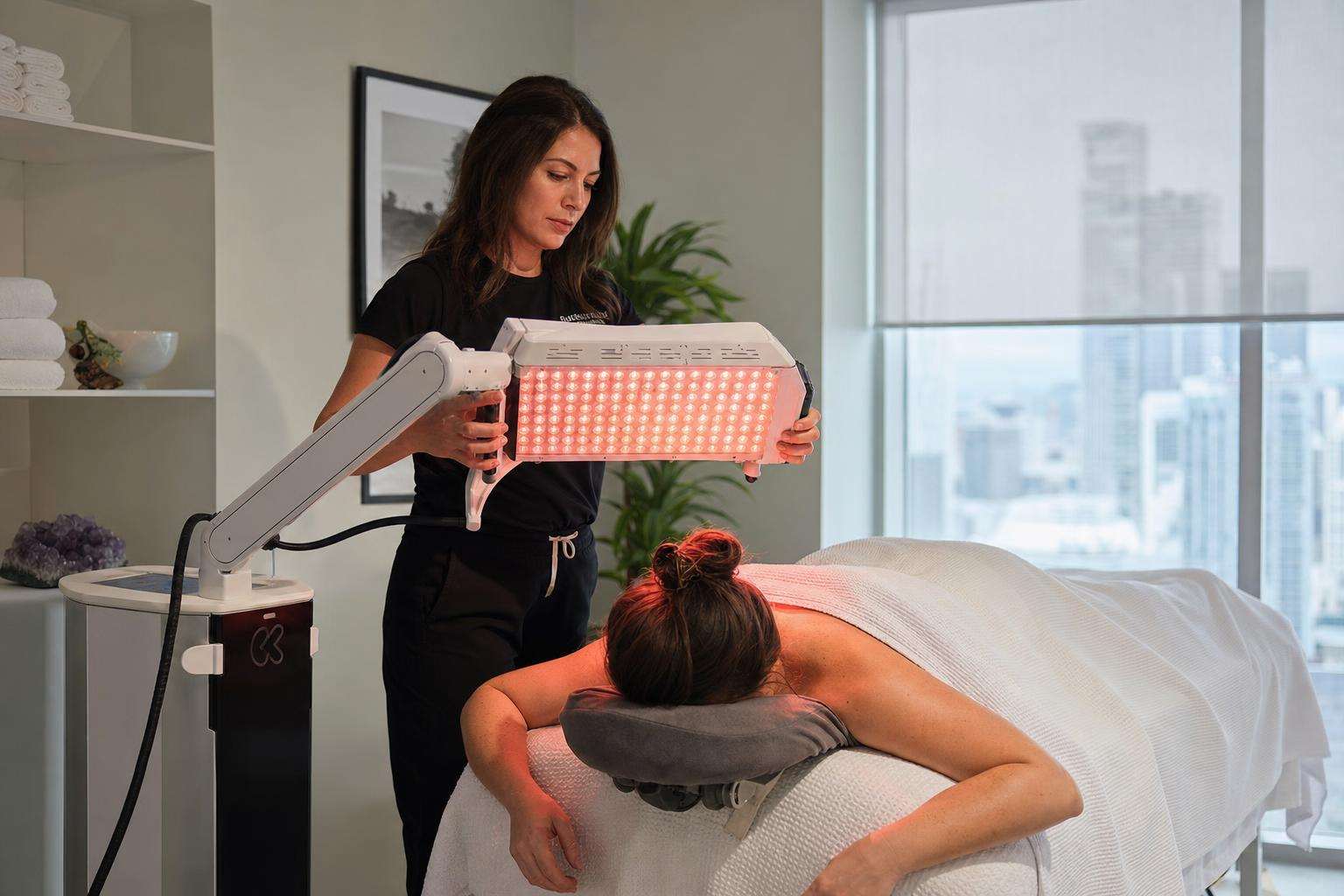
photobiomodulationred light therapyLLLT hairPBM dosingNIR therapy
Bottom line
Photobiomodulation is indication-specific. Hair and some skin/pain uses lead; metabolic marketing lags the pilots.
- Pattern hair loss (home LLLT devices) — Multiple controlled trials and reviews support low-level red light as an adjunct for androgenetic alopecia when used consistently for months.
- Photoaging / skin quality protocols — Office and home red/NIR routines show measurable cosmetic skin changes at moderate fluences without drug costs—effect sizes remain cosmetic-scale.
- Targeted red/NIR PBM for selected MSK pain — Meta-analytic signals exist for some pain sites when dose is adequate; nonspecific low-back pain is a notable null area.
How we built this guide
We graded red/NIR photobiomodulation use-cases by human RCT and meta-analysis strength, parameter reporting (nm, irradiance, fluence), biphasic-dose awareness, and marketing inflation risk.
- Human evidence grade. RCT/meta > open-label > preclinical > anecdote.
- Parameter honesty. Wavelength windows, fluence, irradiance, schedule.
- Clinical role. Adjunct vs replacement of standard care.
- Safety. Eye exposure, photosensitizers, lesions, pregnancy caution.
Key takeaways
Pattern hair loss: home low-level laser therapy
The strongest consumer PBM pillar with multi-month RCTs
Who this is for: Men and women with diagnosed pattern hair loss seeking a device adjunct
Do
- Multiple human controlled trials for pattern hair loss
- Clear multi-month adherence schedule in protocols
- Works as non-drug adjunct for some users
- Relatively standardized consumer device class (mid-600 nm)
Watch out
- Not a cure or transplant substitute; results require months of compliance
Photoaging and facial skin quality
Red ± NIR cosmetic protocols with controlled human data
Who this is for: Adults targeting mild-moderate photoaging signs with realistic cosmetic goals
Do
- Human controlled cosmetic trials exist
- Parameter examples published for replication-minded users
- Non-invasive with generally favorable short-term tolerability
- Pairs with standard dermatologic photoaging care
Watch out
- Cosmetic-scale effects; some studies industry-linked; not systemic anti-aging medicine
Selected musculoskeletal pain (neck and osteoarthritis)
Meta-analytic positives for some sites; LBP nulls warn against blanket claims
Who this is for: People with clinician-guided focal MSK pain exploring adjunct PBM with realistic dosing
Do
- Positive evidence pockets for neck and some OA/tendinopathy contexts
- Clear warning literature for nonspecific LBP prevents overclaim
- Non-drug adjunct option when dosed correctly
- Parameter-sensitive—rewards careful practice
Watch out
- Huge heterogeneity; consumer devices may not match trial dosimetry; not for all pain sites
Sports recovery and performance, as an adjunct
Mixed B-grade literature; peri-session dosing beats vibes
Who this is for: Intermediate-advanced athletes optimizing recovery stacks after fundamentals
Do
- Biologically plausible muscle mitochondrial targets
- Some positive human performance/recovery trials
- Can be scheduled around training sessions
- Non-pharmacologic experiment for advanced athletes
Watch out
- High trial heterogeneity with frequent nulls; easy to waste money on under-dosed panels
Wound healing, as an adjunct for selected chronic wounds
Adjunct B-grade signals—never instead of standard wound care
Who this is for: Patients already in professional wound-care pathways discussing adjunct options
Do
- Human adjunct data in difficult chronic wound settings
- Aligns with cellular repair mechanism literature
- Can integrate into multidisciplinary wound clinics
- Highlights dose-quality issues that improve trial literacy
Watch out
- Heterogeneous results; never replaces SOC wound care; poor fit for unsupervised home use
Metabolic and glucose claims: research-only for now
Intriguing pilots; not diabetes standard of care
Who this is for: Research-literate readers contextualizing metabolic PBM claims—not patients seeking primary therapy
Do
- Transparent acute human pilot exists (healthy volunteers)
- Forces separation of experimental PBM from ADA care
- Useful teaching case for biphasic/parameter literacy
- Encourages lab-based outcome tracking if anyone experiments
Watch out
- Not disease-modifying diabetes therapy; risk of care delay if oversold
Frequently asked
What wavelengths matter for red light therapy?
Most studied photobiomodulation windows use red light roughly 630–670 nm and near-infrared peaks near 810–850 nm. A relative absorption trough around 700–780 nm is low priority. Wavelength alone is insufficient—irradiance (mW/cm²), fluence (J/cm²), schedule, and distance determine dose. LED and laser can both work when parameters match; marketing color alone does not.
Can I use red light instead of minoxidil for hair loss?
LLLT has controlled evidence as an adjunct for pattern hair loss, but it is not universally superior to or a full replacement for established medical therapies. Many people combine approaches under dermatologic guidance. Expect multi-month timelines. Diagnose non-pattern causes of shedding first. Devices require consistent use; abandoned helmets do not regrow hair.
Is more time under the panel always better?
No. Photobiomodulation often follows a biphasic dose response: too little does nothing, moderate doses can stimulate, and excess can inhibit. Chasing maximum minutes is a common consumer error. Prefer protocols that specify irradiance and fluence at the treatment distance, and stop if skin feels hot—PBM is intended as non-thermal.
Does red light therapy treat diabetes?
Not as standard of care. Lifestyle therapy and indicated medications dominate evidence for insulin resistance and type 2 diabetes prevention and treatment. Acute glucose-handling pilots in healthy people are interesting research, not a license to abandon metformin, nutrition, or training. Be wary of marketing that collapses pilots into cure claims.
Is red light therapy safe?
Generally well tolerated when eyes are protected, skin is not burned, and suspicious lesions are not irradiated. Caution applies with photosensitizing medications, active cancer in the field, seizures in photosensitive individuals, and pregnancy—discuss with a clinician. “FDA cleared” devices are not risk-free for every claim on the box. Discontinue if adverse skin or visual symptoms occur.