Evidence-dense health optimization

Health Canon

Light & Recovery

Evidence-Based Sauna Protocols (2026)

Finnish frequency and duration, acute BP bouts, post-exercise heat, infrared limits, and safety gates—ranked by human evidence.
14 MIN READ 2 SOURCES
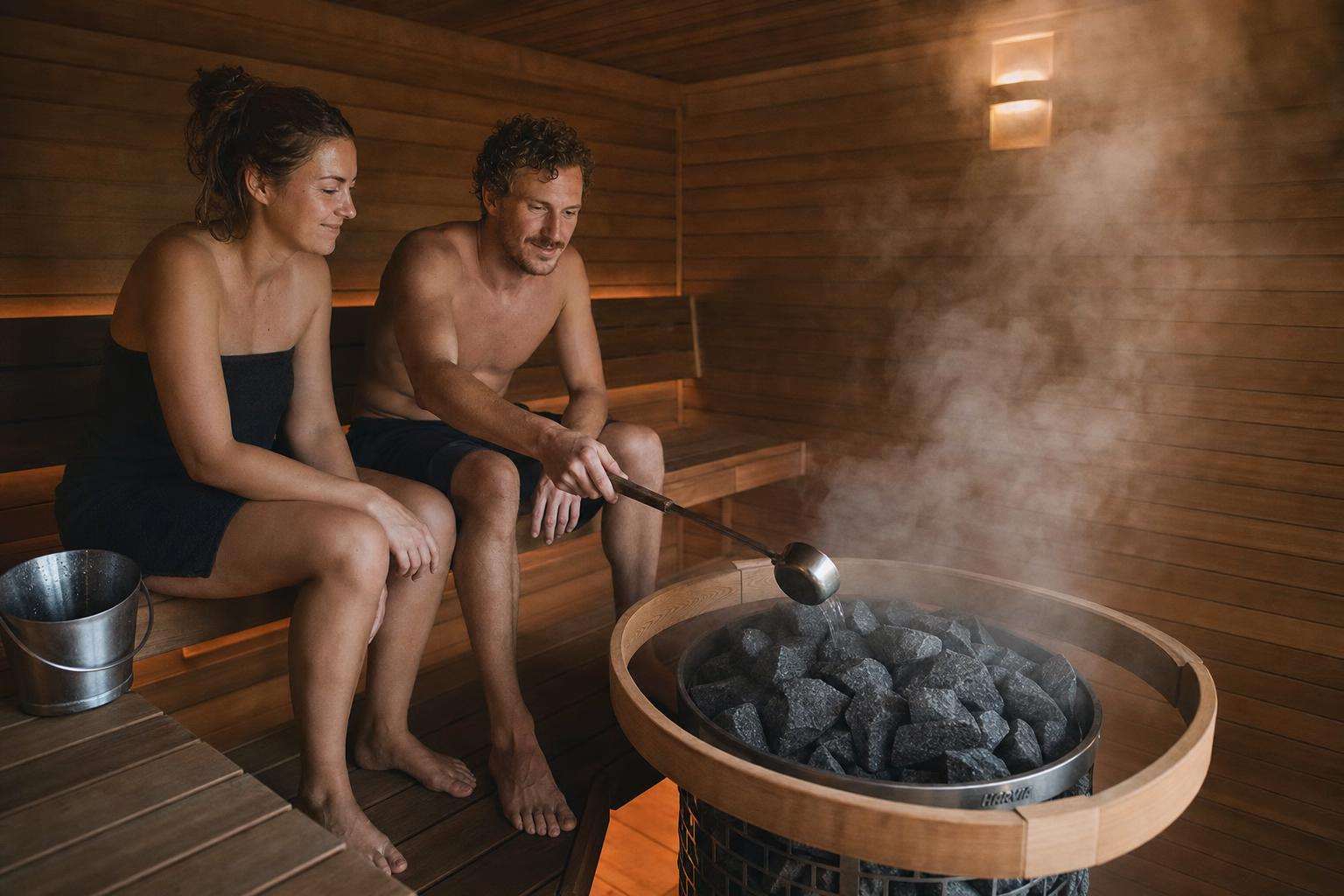
Light & Recovery Traditional wooden sauna interior with stove rocks and soft steam light, no people
Illustration: Health Canon

Finnish saunaKIHD studysauna frequencyheat therapyinfrared limits

Bottom line

Finnish dry-sauna frequency and duration drive the hard-outcome literature—infrared is a different modality. Rank protocols by evidence, not spa marketing.

  • Habitual Finnish dry sauna 4–7×/week — KIHD men show the steepest multivariable associations for SCD, fatal CVD, and all-cause mortality at 4–7 vs 1 session weekly—observational, not a prescription.
  • Session duration ~15–20+ minutes (tolerated) — Within the KIHD dataset, sessions longer than 19 minutes associated with lower sudden cardiac death risk versus under 11 minutes—no equipment upgrade required.
  • Acute heat bout ~30 min Finnish-style (supervised tolerance) — Controlled studies show acute SBP/DBP and pulse-wave velocity reductions after traditional heat; still not a drug substitute.

How we built this guide

We ranked sauna-related protocol patterns by human outcome evidence quality, modality honesty (Finnish dry vs infrared vs Waon vs hot tub), dose-response clarity, and safety gates. Observational associations are labeled as such.

  • Outcome strength. Hard outcomes (mortality, stroke, HTN incidence) weighted above surrogates and marketing.
  • Modality match. Whether the cited dataset matches Finnish dry, IR, or water immersion.
  • Dose clarity. Frequency, duration, temperature band, and population sex tags.
  • Safety. Alcohol, pregnancy, unstable CVD, syncope, and detox myth rejection.

Key takeaways

  1. Habitual Finnish dry sauna, four to seven times a week
  2. Sessions of roughly 15-20+ minutes, as tolerated
  3. Acute heat bouts for blood-pressure and stiffness markers
  4. Post-exercise sauna for endurance adaptation, as an adjunct
  5. Consumer infrared sauna: a comfort modality, not a KIHD clone
  6. A safety-first session routine: alcohol-off, cool-down, screening

Habitual Finnish dry sauna, four to seven times a week

The frequency cell with the strongest KIHD mortality associations

The landmark Laukkanen et al. analysis in JAMA Internal Medicine (2015) followed 2,315 middle-aged Finnish men in the KIHD cohort for a median 20.7 years and compared traditional sauna bathing frequency. Relative to one session per week, men reporting four to seven sessions had multivariable-adjusted hazard ratios of about 0.37 for sudden cardiac death, 0.50 for fatal cardiovascular disease, and 0.60 for all-cause mortality. Two to three sessions weekly sat in between on several endpoints, supporting a graded pattern rather than a binary “any sauna” effect. Temperatures in traditional Finnish practice are typically in the roughly 80–100°C dry range with low humidity and optional löyly steam—very different from consumer infrared cabins at roughly 45–60°C air temperature. Later KIHD-linked papers extended associations to incident hypertension, stroke in mixed-sex samples, and dementia/Alzheimer outcomes in men, still within observational designs. Joint analyses with cardiorespiratory fitness suggest frequent sauna and higher fitness together associate with lower risk than either alone, which argues for complementarity—not replacement—of exercise. Residual confounding remains possible: frequent bathers may differ in lifestyle, social patterns, and undiagnosed illness. Randomized mortality trials do not exist at this scale. Editorial use: treat 4–7×/week Finnish dry sauna as the best-evidenced habitual pattern in the literature base, sex-tag the 2015 mortality paper as male-only, and refuse to paste those hazard ratios onto infrared product pages. Medical clearance matters for unstable coronary disease, severe aortic stenosis, recent MI patterns per clinician judgment, and pregnancy (hyperthermia neural-tube risk early). Never combine with alcohol.

Who this is for: Healthy adults seeking an evidence-anchored habitual Finnish dry-sauna pattern after medical screening

Do

  • Largest hard-outcome observational dose-response for traditional sauna frequency
  • Multiple related KIHD endpoints move in the same direction
  • Complements rather than replaces cardiorespiratory fitness signals
  • Clear modality: Finnish dry heat, not IR marketing

Watch out

  • Observational; residual confounding possible; landmark mortality cohort is men-only

Sessions of roughly 15-20+ minutes, as tolerated

Duration signal inside KIHD for sudden cardiac death

Inside the same KIHD sauna program, duration stratified analyses found that sessions longer than 19 minutes associated with lower sudden cardiac death risk than sessions under 11 minutes, with intermediate patterns for some coronary endpoints. All-cause mortality signals for duration were weaker or less consistent than for frequency, so duration should not be oversold as a universal dial. Practically, many habitual bathers use roughly 5–20 minute bouts, sometimes repeated with cool-down intervals; laboratory heat studies often use about 30 minutes for acute vascular measures. The evidence-aligned habit is progressive heat tolerance: build time only if heart rate, orthostatic symptoms, and hydration remain acceptable. Heat raises heart rate into ranges sometimes compared to moderate aerobic work, increases skin blood flow, and can reduce arterial stiffness acutely—but individual blood pressure responses vary. Cool-down periods, seated recovery, and fluid replacement reduce post-sauna syncope risk. Pregnant people should not chase duration records because core temperature elevation is the hazard, not the brand of heater. Infrared marketing that claims “longer is always better” without matching Finnish temperature or humidity is modality confusion. Use duration as a secondary lever after establishing a sustainable weekly frequency, and stop early for dizziness, chest pain, or extreme discomfort. This item ranks high because it costs nothing beyond time already spent in a traditional sauna and is grounded in the same primary dataset as the frequency findings.

Who this is for: People already using Finnish dry saunas who can extend comfortable sessions toward the mid-teens to 20 minutes

Do

  • Anchored in the same primary KIHD dataset as frequency findings
  • No extra equipment—only session structure
  • Aligns with common traditional bathing practice bands
  • Encourages progressive tolerance rather than macho maximalism

Watch out

  • All-cause duration signal weaker than frequency; easy to over-interpret as a hard rule

Acute heat bouts for blood-pressure and stiffness markers

~30-minute traditional heat can lower BP and PWV acutely

Controlled measurements after traditional sauna heat show acute reductions in systolic and diastolic blood pressure and pulse-wave velocity—for example, reports on the order of roughly 7 mm Hg class changes and meaningful PWV drops after about 30 minutes of Finnish-style heat in studied adults. Incident hypertension analyses in KIHD-related work reported lower risk among frequent bathers versus weekly bathers, consistent with a vascular-adaptation story, still observational for the incidence endpoint. Heat therapy literature more broadly—including hot-water immersion protocols from vascular physiology labs—demonstrates improved flow-mediated dilation over multi-week interventions, but those protocols are not identical to spa sauna. Clinically, acute BP lowering does not license stopping antihypertensives. People on BP drugs can become hypotensive post-heat; medication timing and cool-down matter. The ranked protocol pattern is: medically appropriate adults, traditional heat as tolerated, monitor symptoms, recheck home BP patterns with a clinician if using heat as a lifestyle adjunct. Infrared may feel comfortable for heat-intolerant users but does not inherit the Finnish mortality hazard ratios and has thinner hard-outcome data. Pair heat with aerobic and resistance training for foundational CVD risk reduction; sauna is complementary. Avoid if unstable angina patterns, severe aortic stenosis, or clinician-advised restrictions apply. This ranks below habitual frequency because surrogate and incidence evidence, while supportive, is one step removed from the SCD mortality headline—and individual responses vary.

Who this is for: Adults with clinician-aligned lifestyle BP programs who tolerate traditional heat

Do

  • Human physiologic data for acute BP and stiffness improvements
  • Coherent with lower incident HTN associations in frequent bathers
  • Actionable session structure for vascular research translation
  • Complements exercise-based BP programs

Watch out

  • Not a medication substitute; post-heat hypotension risk on antihypertensives

Post-exercise sauna for endurance adaptation, as an adjunct

Scoon-type post-training heat can expand plasma volume

A classic small trial in runners (Scoon et al., 2007) found that adding post-exercise sauna bathing improved endurance performance markers consistent with plasma volume expansion—an adaptation also targeted by heat acclimation research. The protocol idea is simple: complete the key workout, then use a tolerable traditional heat bout while hydrated, several times per week during a training block. Mechanistically, repeated heat stress can increase blood volume and reduce cardiovascular strain at a given workload in the heat, which may transfer to temperate performance in some athletes. Evidence grade is B-class: promising, small samples, sport-specific, not a mortality claim. Programming notes: do not destroy the quality of the main session with excessive pre-workout heat; post-session timing is the usual research pattern. Monitor for excessive fatigue when stacking hard intervals, calorie deficits, and daily heat—especially in athletes at risk for low energy availability. Women and men share the plasma-volume mechanism class, but sex-specific trial counts are limited; pregnancy remains a hyperthermia red line. Infrared cabins are sometimes used for comfort recovery, yet the performance trial cited used traditional sauna conditions—keep modality labels honest. Rank this highly for recreational endurance athletes with access to dry sauna, lower than public-health frequency patterns for general mortality-interested readers. Hydrate, add sodium per sport-nutrition practice when sweat losses are high, and stop for orthostatic symptoms.

Who this is for: Endurance athletes adding heat acclimation-style stress after key sessions

Do

  • Direct performance-oriented human trial support
  • Clear placement after training rather than random spa use
  • Mechanistic coherence via blood volume
  • Useful periodization tool in heat-acclimation blocks

Watch out

  • Small-study evidence; easy to over-fatigue when stacked with hard training

Consumer infrared sauna: a comfort modality, not a KIHD clone

Useful heat for some users; invalid for pasting Finnish mortality HRs

Consumer infrared cabins typically heat the body with radiant panels at lower air temperatures than Finnish rooms. They can raise core temperature and heart rate, produce sweating, and feel more tolerable for people who dislike intense dry heat. What they do not automatically inherit is the KIHD hazard-ratio package for sudden cardiac death and cardiovascular mortality. Those associations were generated in a culture of traditional high-temperature sauna bathing, not plug-in IR tents. Far-infrared Waon therapy is a distinct, often clinically supervised Japanese protocol for certain heart-failure research contexts; it is not a license for unsupervised IR marketing claims about “detox” or mortality. Evidence-aligned use of IR: heat-intolerant users seeking relaxation and gentle heat stress, mobility-limited people who cannot access gym Finnish rooms, or adjunct recovery when traditional sauna is unavailable—with modest expectations. Detoxification marketing that claims sweat eliminates the toxic modern world is Grade D relative to hepatic and renal clearance biology. Safety still applies: hydration, alcohol avoidance, pregnancy caution, and cardiovascular screening. If a product page shows an IR cabin beside a “63% lower cardiac death” statistic, that is modality laundering—reject it. Rank IR lower for evidence-based protocol lists precisely to protect readers from false equivalence, not to deny that radiant heat can feel good. Prefer measured goals (relaxation, gentle heat exposure) over disease-prevention claims unless future IR-specific hard-outcome cohorts appear.

Who this is for: Users who want gentle heat exposure without claiming Finnish mortality results

Do

  • Lower air temperature may improve adherence for heat-intolerant users
  • Home units can increase weekly heat-session consistency
  • May support relaxation and sleep routines subjectively
  • Distinct clinical IR protocols exist in research settings (not consumer clone)

Watch out

  • Lacks KIHD-class mortality evidence; heavily marketed beyond data

A safety-first session routine: alcohol-off, cool-down, screening

The protocol that prevents the dumbest heat injuries

The highest-ROI “protocol” in real life is the safety stack that keeps people from turning a healthy habit into an ED visit. Alcohol and sauna is a classic bad combination: vasodilation plus impaired judgment plus arrhythmias risk. Post-heat syncope occurs when people stand abruptly, shower in extreme cold immediately, or are volume depleted—sit, cool gradually, rehydrate. Early pregnancy hyperthermia is linked to neural-tube defect risk in teratology literature; hot tubs and saunas are commonly restricted in prenatal guidance for that reason. Unstable coronary syndromes, severe aortic stenosis, and uncontrolled arrhythmias need clinician-specific rules, not podcast bravado. Children require supervision and shorter exposures. Older adults may need longer cool-downs and medication review for antihypertensives and diuretics. Detox narratives that encourage extreme multi-hour sessions should be rejected; liver and kidneys clear xenobiotics far more than sweat does. This item ranks as essential infrastructure beneath every frequency and duration recommendation. A practical session checklist: medical red-flag screen, no alcohol, water bottle, timed bout, seated recovery, cancel if chest pain or severe dizziness. Evidence grade is mixed (guideline-level safety + physiology), but editorial necessity is maximal—without it, ranking “best protocols” is irresponsible.

Who this is for: Every sauna user, especially beginners, older adults, and people on cardiovascular medications

Do

  • Prevents common, serious heat-related harms
  • Applies across Finnish and IR modalities
  • Aligns with obstetric hyperthermia caution
  • Counters detox maximalism culture

Watch out

  • Not a performance or longevity protocol by itself; easy to ignore because it is unglamorous

Frequently asked

Is infrared sauna the same as Finnish sauna for heart benefits?

No. The landmark mortality and many cardiovascular associations come from traditional Finnish dry sauna bathing in cohort research. Consumer infrared cabins use lower air temperatures and radiant heating. They may still produce sweating and comfort, but pasting KIHD hazard ratios onto IR product marketing is a modality error. Treat IR as a separate evidence class unless IR-specific hard-outcome studies are cited.

How often should I sauna based on the studies?

In KIHD men, four to seven sessions per week associated with the lowest sudden cardiac death and cardiovascular mortality risks versus once weekly, with intermediate results for two to three sessions. That is an observational pattern in a specific population—not a universal medical prescription. Start lower if you are heat-naïve, prioritize safety screening, and build frequency only if you recover well.

Can sauna replace exercise?

No. Joint analyses suggest frequent sauna and higher cardiorespiratory fitness together associate with better risk profiles than either alone. Sauna can complement training and may aid heat acclimation or acute blood-pressure physiology, but it does not replace aerobic conditioning, resistance training, smoking cessation, or indicated medications.

Is sauna safe in pregnancy?

Early pregnancy hyperthermia is a neural-tube-defect concern in teratology and obstetric guidance contexts. Many clinicians advise avoiding high-heat saunas and hot tubs in pregnancy, especially first trimester. This is not a place for personal experimentation. Discuss any heat practices with an obstetric clinician; do not chase duration or frequency targets from male cohort studies.

Does sweating detox toxins?

Sweat is not a primary detoxification pathway for modern chemical body burden compared with hepatic metabolism and renal excretion. “Detox sauna” marketing is Grade D relative to physiology. Sauna can still be valuable for cardiovascular associations, relaxation, and heat acclimation without the detox story. Focus on exposure reduction (water, air, products) for chemical risk.