Fitness
Strength Program Templates for Women: Full-Body, Upper/Lower, and Minimum Effective Dose
Pick templates by days available: full-body 3×, upper/lower 4×, or 2× minimum. Progression and adherence beat branded complexity.
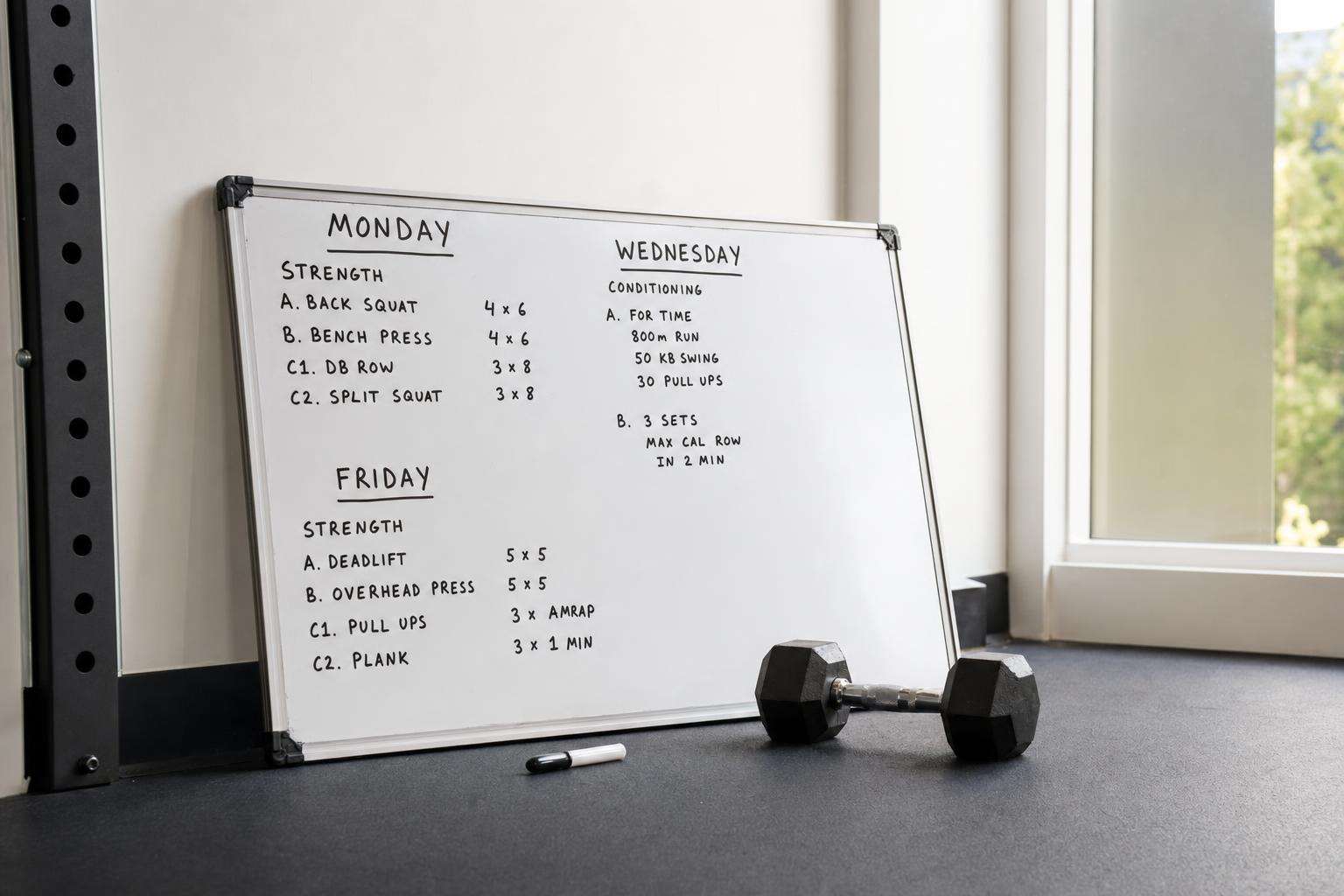
Templates that work: FB 3× default, UL 4× for volume, FB 2× floor. Progress load/reps; adherence > Instagram complexity.
Program design is a calendar problem before it is an aesthetics problem. Match days you will actually train, then progress simple patterns relentlessly.
This article is informational and editorial only. It is not medical advice, diagnosis, or a treatment plan. Numbers and literature ranges cited here are not personal prescriptions. Consult a qualified clinician before changing medications, supplements, diet, equipment, or management of a diagnosed condition. Seek urgent care for emergencies.
What public guidance constrains templates?
Muscle-strengthening ≥2 days/week plus 150–300 minutes moderate aerobic activity (CDC/AHA-class adult guidance).
ACSM 2026 emphasis: best program is one you adhere to; major muscles ≥2×/week.
Hypertrophy-focused lifters may target ~10 sets/muscle/week.
How do the main templates differ?
Full-body 3×: high frequency per muscle, great default.
Upper/lower 4×: more weekly volume capacity for growth.
Full-body 2×: health floor for busy seasons; still progressive.
| Template | Days/wk | Best fit |
|---|---|---|
| Full body | 3 | General strength + recomp |
| Upper/lower | 4 | Hypertrophy volume |
| Full body min | 2 | Health floor / busy |
| Home DB/band | 2–4 | Same patterns, tempo progress |
What lifts belong in every template?
Squat/lunge, hinge, horizontal push/pull, vertical push or pull, carry or anti-rotation core.
Posterior chain and unilateral work for real-world function.
Mix strength (≈5–8) and hypertrophy (≈8–12) rep ranges across the week.
How should progression and deloads work?
Add load or reps when form is solid; log sessions.
Deload every 4–8 weeks or by autoregulation.
Pair with protein/energy targets; templates fail when under-fueled.
Sources: ACSM RT guidelines 2026; CDC adult activity guidelines; AHA adult activity recs.
Readers should dual-source primary literature, translate slogans into exposure units and effect sizes, and rank interventions by expected value under uncertainty. Cheap reversible steps often outrank extreme protocols. Opportunity cost is real: hours spent on unvalidated tests are hours not spent on sleep, training, protein adequacy, and primary care. Sex, life stage, comorbidities, medications, and geography change interpretation. Prefer falsifiable claims with named endpoints over multi-disease cure lists. Update beliefs when stronger trials appear rather than freezing identity around a single paper or influencer narrative. Measured curiosity beats both panic and complacency. Further reading should prioritize primary sources and consensus documents over secondary social summaries. When evidence is mixed, state both the signal and the limits in the same paragraph. When evidence is strong, still avoid overclaiming universality across populations.
Context, dose, endpoint, and population must travel together; slogans that drop any of those four are not finished claims.
Context, dose, endpoint, and population must travel together; slogans that drop any of those four are not finished claims.
Context, dose, endpoint, and population must travel together; slogans that drop any of those four are not finished claims.
Context, dose, endpoint, and population must travel together; slogans that drop any of those four are not finished claims.
Context, dose, endpoint, and population must travel together; slogans that drop any of those four are not finished claims.
Context, dose, endpoint, and population must travel together; slogans that drop any of those four are not finished claims.
Context, dose, endpoint, and population must travel together; slogans that drop any of those four are not finished claims.
Context, dose, endpoint, and population must travel together; slogans that drop any of those four are not finished claims.
Context, dose, endpoint, and population must travel together; slogans that drop any of those four are not finished claims.
Context, dose, endpoint, and population must travel together; slogans that drop any of those four are not finished claims.
Context, dose, endpoint, and population must travel together; slogans that drop any of those four are not finished claims.
Context, dose, endpoint, and population must travel together; slogans that drop any of those four are not finished claims.
Context, dose, endpoint, and population must travel together; slogans that drop any of those four are not finished claims.
Context, dose, endpoint, and population must travel together; slogans that drop any of those four are not finished claims.
Context, dose, endpoint, and population must travel together; slogans that drop any of those four are not finished claims.
Context, dose, endpoint, and population must travel together; slogans that drop any of those four are not finished claims.
Context, dose, endpoint, and population must travel together; slogans that drop any of those four are not finished claims.
Context, dose, endpoint, and population must travel together; slogans that drop any of those four are not finished claims.
Context, dose, endpoint, and population must travel together; slogans that drop any of those four are not finished claims.
Context, dose, endpoint, and population must travel together; slogans that drop any of those four are not finished claims.
Context, dose, endpoint, and population must travel together; slogans that drop any of those four are not finished claims.
Context, dose, endpoint, and population must travel together; slogans that drop any of those four are not finished claims.
Context, dose, endpoint, and population must travel together; slogans that drop any of those four are not finished claims.
Context, dose, endpoint, and population must travel together; slogans that drop any of those four are not finished claims.
Sources & citations
Frequently asked