Evidence-dense health optimization

Health Canon

Fitness

Deloads and Strength Recovery: The Rules (2026)

Planned deloads, RPE auto-regulation, sleep, pain vs DOMS triage, protein during easy weeks, and return ramps—progress without martyrdom.
14 MIN READ 3 SOURCES
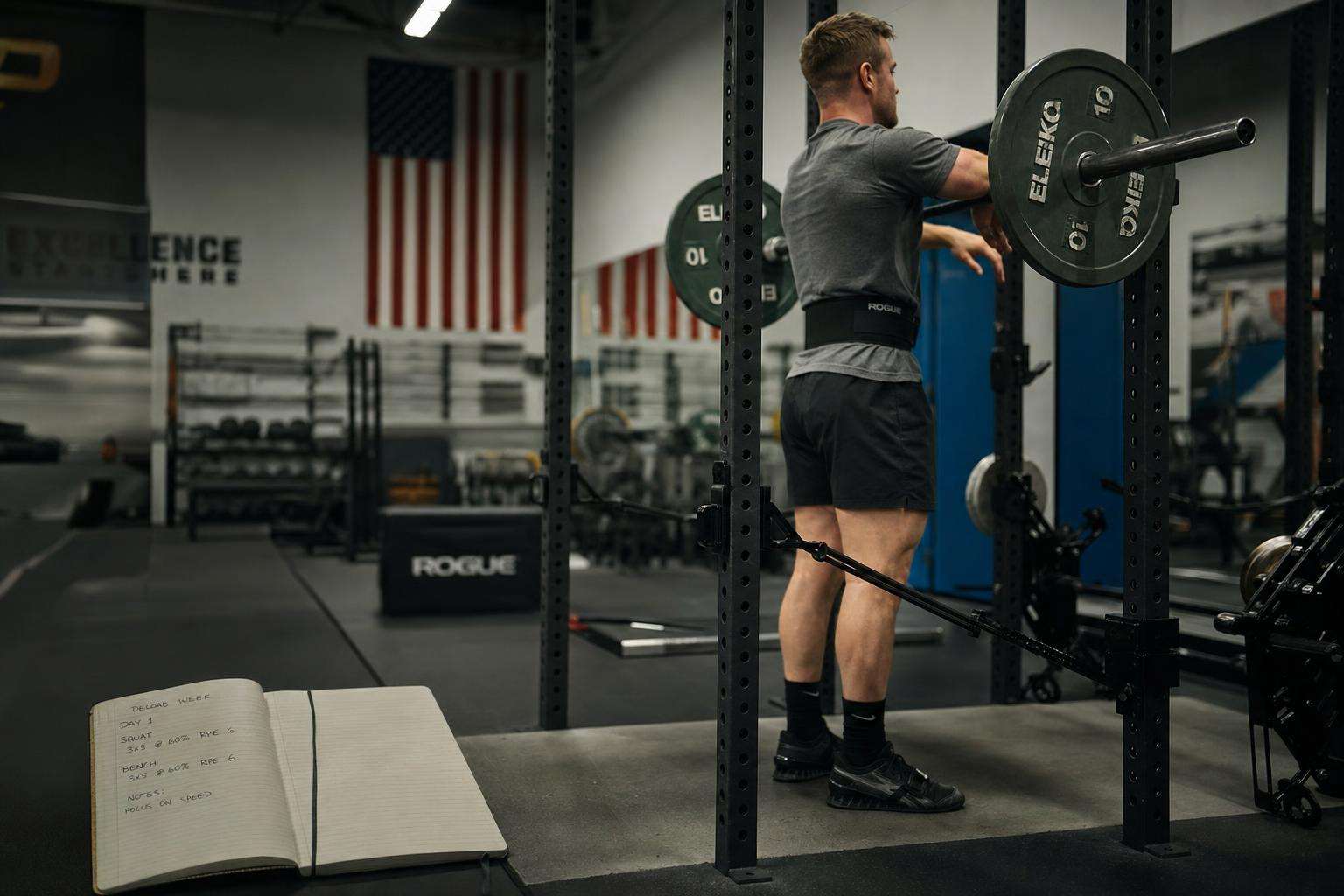
Fitness Notebook training log with lighter weights written beside a water bottle, no people
Illustration: Health Canon

deloadRPEsleepDOMSprogressive overload

Bottom line

Planned easy weeks, sleep, pain triage, ramp back—ego optional.

  • Schedule planned deloads every 4–8 hard weeks — Proactive volume/intensity cuts prevent quality collapse better than waiting for burnout.
  • Protect sleep as recovery infrastructure — Free relative to gadgets; sleep restriction reliably degrades performance and injury resilience.
  • Triage pain vs DOMS and modify patterns — Training through joint red flags creates layoffs longer than a smart deload.

How we built this guide

Ranked recovery rules by injury prevention, sustainable progressive overload, and adherence realism for intermediate lifters—not peaking peaking-only elites.

  • Dose / clinical impact. Likely effect on exposure or health decision quality.
  • Evidence base. Agency guidance, trials, or consensus statements.
  • Adherence cost. Money, time, and household friction.
  • Harm of misuse. Whether bad execution creates new risks.

Key takeaways

  1. Schedule planned deloads every four to eight hard weeks
  2. Autoregulate intensity with RPE or bar-speed honesty
  3. Protect sleep duration and regularity as recovery infrastructure
  4. Tell DOMS apart from joint pain and neural red flags
  5. Keep protein high on deloads; cut junk volume, not raw materials
  6. Ramp volume back over several sessions after a layoff

Schedule planned deloads every four to eight hard weeks

Recovery is a programming variable

A deload is a deliberate reduction in training stress—commonly cutting set volume by roughly forty to fifty percent, reducing load, or both—for about a week while maintaining movement patterns. Ranked first because waiting until sleep, mood, and bar speed collapse is a reactive strategy that costs more time than proactive easy weeks. Novices progressing on simple linear programs may deload less often; intermediates accumulating volume need them more. Life stress counts as load—exams, new babies, and work crunches are deload triggers even if the spreadsheet disagrees. Active recovery days are not the same as a structured deload week. Keep some practice of main lifts to maintain skill rather than disappearing from the gym entirely unless injured. Log how you feel entering and exiting deloads to personalize frequency. Bodybuilders, powerlifters, and general strength trainees can all use the tool with different cosmetics. Skipping deloads to “earn” them is backwards. Put them on the calendar like meetings.

Who this is for: Intermediate lifters on progressive programs

Do

  • Prevents chronic quality decay
  • Maintains lift skill
  • Adapts to life stress
  • Works across strength sports cosmetics

Watch out

  • Ego resistance; unclear rules for true beginners still recovering between sessions

Autoregulate intensity with RPE or bar-speed honesty

The plan serves the lifter

Rate of perceived exertion and similar auto-regulation tools let you drop load when warm-ups feel unexpectedly heavy due to poor sleep or stress, preserving technique and joints. Ranked high because rigid percentages ignore human variability. True failure training every set is rarely required for hypertrophy or strength in non-advanced lifters and increases recovery cost. Leave reps in reserve on most work sets, especially for spinal loading patterns. If bar speed slows dramatically across a cycle despite sleep, consider an early deload. Wearables that estimate readiness are optional inputs, not oracles—your warm-up sets often tell truth faster. Coaches should teach honest RPE rather than performative toughness. Women and men both benefit; hormonal cycles and life stress are data, not excuses. Documenting RPE next to loads builds a personal database. This rule prevents many injuries that start as “I hit the number anyway.” Document changes and reassess after several weeks so habits stick rather than cycling novelty.

Who this is for: Lifters following percentage programs who sleep variably

Do

  • Matches stress to readiness
  • Protects technique under fatigue
  • Teaches body literacy
  • Reduces pointless failure grinding

Watch out

  • RPE inflation/ego; beginners need calibration coaching

Protect sleep duration and regularity as recovery infrastructure

No pill replaces sleep debt

Muscle repair, motor learning, and injury resilience all degrade when sleep is chronically short or irregular. Ranked as best value because it costs planning rather than equipment: consistent bed and wake times, dark cool rooms, and caffeine timing discipline. Sauna and supplements cannot offset a five-hour sleep average during a high-volume block. Shift workers need pragmatic damage control rather than perfect hygiene dogma—see circadian habits coverage. Track whether missed lifts cluster after late nights; use that as non-negotiable feedback. Naps can help but rarely fully replace nocturnal sleep for hard training. Alcohol near bedtime fragments sleep architecture even when total hours look adequate. If snoring and daytime sleepiness suggest apnea, seek medical evaluation rather than buying another magnesium powder. Training earlier in the day can help some night owls wind down. This rule is the recovery backbone under every deload scheme. Document changes and reassess after several weeks so habits stick rather than cycling novelty.

Who this is for: All hard-training adults, especially under-slept parents and professionals

Do

  • High leverage on performance and mood
  • Low financial cost
  • Stacks with all programs
  • Surfaces medical sleep disorders

Watch out

  • Work and caregiving constraints; apnea care access

Tell DOMS apart from joint pain and neural red flags

Sore muscles ≠ injured joints

Delayed-onset muscle soreness is common after novel eccentric work and usually eases with light movement over days. Joint pain that sharpens under specific angles, swelling, instability, night pain of concern, or neurological symptoms like numbness radiating down a limb deserve load reduction and often professional assessment. Ranked high because the internet confuses productive discomfort with injury denial. Deload or exercise-swap early when joint red flags appear; pushing through “for discipline” creates months off. Keep adjacent pain-free patterns to maintain fitness—swap back squats for leg presses temporarily if needed under guidance. Ice and random anti-inflammatory habits are not diagnoses. Youth athletes need extra attention to growth-plate and overuse patterns. Return-to-lift criteria should include pain-free technique through full training ranges at submaximal loads. Ego cultures in some gyms punish honesty; find better rooms. This triage rule saves careers of recreational lifters who still want to train at sixty. Document changes and reassess after several weeks so habits stick rather than cycling novelty.

Who this is for: Lifters experiencing new or worsening pain

Do

  • Prevents chronic injuries
  • Preserves training via intelligent swaps
  • Teaches symptom literacy
  • Counters toxic gym culture

Watch out

  • Ambiguous mid-zone pains exist; access to PTs varies

Keep protein high on deloads; cut junk volume, not raw materials

Easy week is not a crash diet

During deloads, total energy needs may fall slightly with lower training volume, but aggressive diet breaks stacked on recovery weeks can impair repair and mood. Ranked mid because nutrition supports the recovery you programmed. Maintain a protein-forward pattern distributed across meals; exact grams vary by body size and goals, commonly discussed in ranges around 1.6–2.2 g/kg for many lifters pursuing hypertrophy—individualize with professionals when needed. Hydration and micronutrient-dense foods still matter when sweat drops. Avoid “earning” binge eating that disrupts sleep. Creatine monohydrate, if you use it, generally continues through deloads. Special populations—pregnancy, clinical kidney disease—need clinician-guided nutrition, not gym-bro defaults. Track waist and performance rather than daily scale obsession during glycogen and water shifts. This rule stops the failure mode where deload becomes an accidental semi-starvation week. Document changes and reassess after several weeks so habits stick rather than cycling novelty. Coordinate with household members when shared products or schedules determine adherence. Prefer primary agency and clinical guidance over social-media summaries when stakes are high.

Who this is for: Lifters who under-eat on easy weeks

Do

  • Supports tissue repair
  • Prevents stacked stressors
  • Simple adherence message
  • Compatible with most diets

Watch out

  • Protein targets vary; disordered eating risk if rigid

Ramp volume back over several sessions after a layoff

Do not PR on the first day back

After a deload, planned vacation, or illness layoff, jumping straight to prior peak volume invites injury and ugly technique. Ranked as the closing rule: restore intensity thoughtfully while volume climbs across one to three weeks depending on layoff length. Reintroduce hard sets gradually and keep RPE honest. Illness with fever should fully resolve before hard training; cardiac complications of some infections make early return dangerous—follow medical guidance. Travel deloads can double as mental breaks; return with movement quality checks. Log the ramp so you do not rely on memory of “what I used to do.” Coaches should write return templates into programs rather than leaving athletes to guess. Older lifters often need longer ramps—that is intelligent, not weak. Celebrate consistency of return rather than a single ego lift. This rule turns deloads into sustainable careers instead of boom-bust cycles. Document changes and reassess after several weeks so habits stick rather than cycling novelty. Coordinate with household members when shared products or schedules determine adherence.

Who this is for: Anyone returning from deload, travel, or illness

Do

  • Reduces post-layoff injuries
  • Systematizes return
  • Respects illness physiology
  • Scales by age and layoff length

Watch out

  • Impatience after rest; unclear for very short deloads

Frequently asked

How often should I deload?

Many intermediate lifters do well with a lighter week every four to eight hard weeks, sooner under high life stress. True beginners recovering fully between sessions may need them less often. Use performance, sleep, and joint feel—not only a fixed app timer.

Should a deload be zero training?

Usually no. Keeping lighter technique work maintains skill and routine. Complete rest may fit acute illness or injury. Most planned deloads cut volume or load while you still practice main patterns. Confirm details with a qualified clinician or primary guidance document when your situation is high-stakes.

Is soreness a sign I should deload?

Mild DOMS after new work is common and not automatically a deload trigger. Persistent performance drops, poor sleep, rising joint pain, or accumulating fatigue across weeks are better signals. Learn the difference between muscle soreness and joint warning signs. Confirm details with a qualified clinician or primary guidance document when your situation is high-stakes.

Can I cut calories hard during a deload?

Large stacked deficits can undermine recovery. Slightly lower energy needs are fine; crash dieting on easy weeks is counterproductive for most lifters. Keep protein adequate and prioritize sleep. Confirm details with a qualified clinician or primary guidance document when your situation is high-stakes.

What if joint pain does not resolve with a deload?

Stop forcing the painful pattern and seek qualified clinical evaluation—physical therapy or sports medicine as appropriate. Persistent joint pain is not a motivation problem. Early care beats months of compensatory injuries. Confirm details with a qualified clinician or primary guidance document when your situation is high-stakes.