Environmental Health
PFAS Removal: Reverse Osmosis vs Activated Carbon Filters
GAC handles many long-chain PFAS until breakthrough; RO is the more consistent barrier for short- and long-chain compounds when certified and maintained.
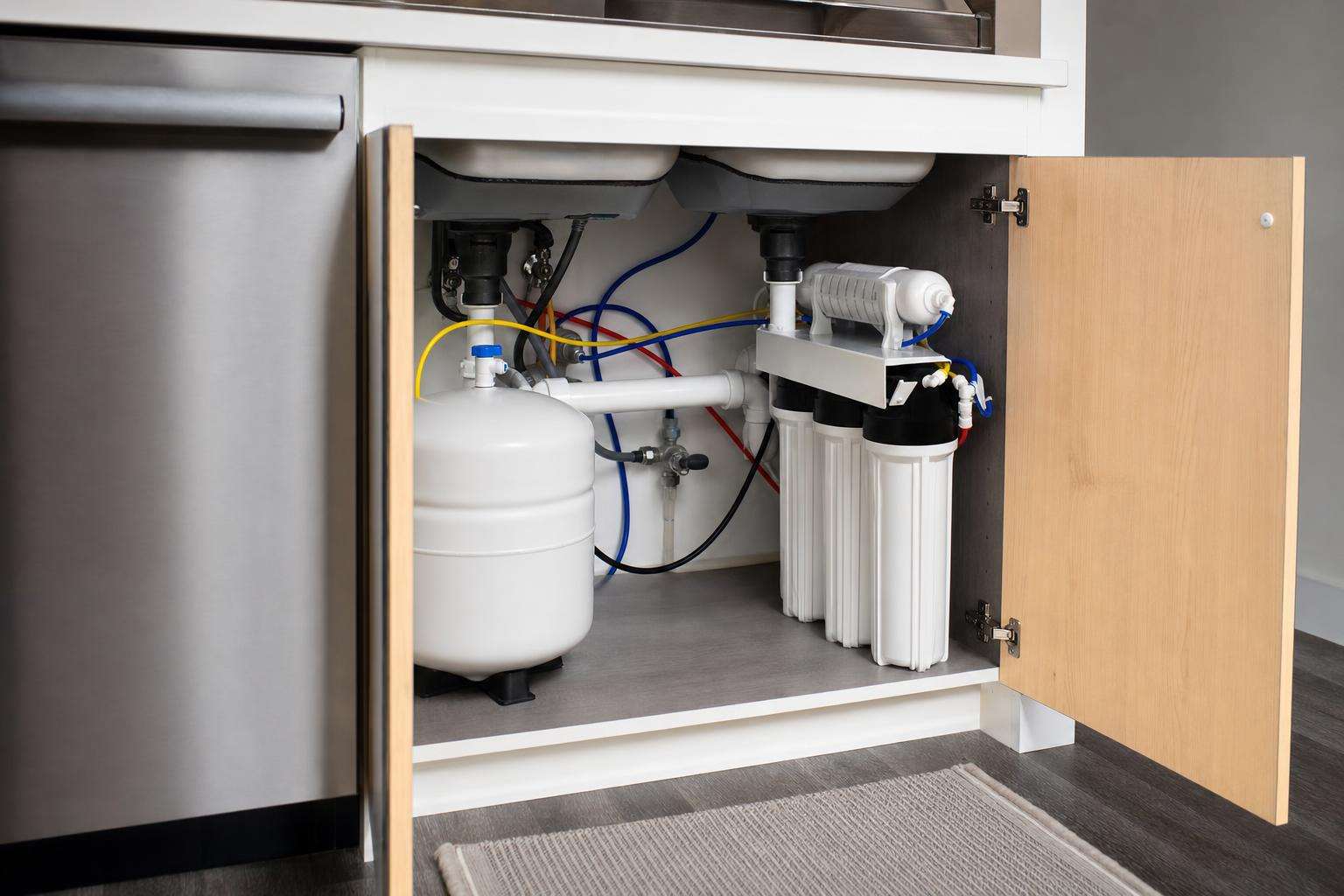
Granular activated carbon (GAC) removes many long-chain PFAS well until media age and short-chain breakthrough. Reverse osmosis (RO) is generally the more consistent household barrier across chain lengths when NSF/ANSI 53 or 58 PFAS claims are verified and maintenance is real. Boiling does not remove PFAS.
Buying a “PFAS filter” is really buying a claim, a capacity, and a maintenance schedule. EPA Science Matters and consumer filter guidance emphasize technologies that actually reduce PFAS—and certification marks that match those claims—rather than generic pitcher marketing.
This article is informational and editorial only. It is not medical advice, diagnosis, or a treatment plan. Numbers and literature ranges cited here are not personal prescriptions. Consult a qualified clinician before changing medications, supplements, diet, equipment, or management of a diagnosed condition. Seek urgent care for emergencies.
What treatment technologies actually reduce PFAS in drinking water?
At municipal scale, the workhorses are granular activated carbon (GAC), anion exchange (IX), and reverse osmosis (RO). Conventional coagulation and chlorination are not reliable PFAS solutions. EPA notes that GAC performs well for longer-chain compounds such as PFOA and PFOS, while shorter-chain PFAS are less well removed and break through earlier as carbon ages. See EPA’s treatment technologies overview.
RO removes a broad suite of dissolved contaminants via a semi-permeable membrane. Reviews of drinking-water applications report strong removal of both short- and long-chain PFAS when systems are properly designed and operated. For clinicians advising patients, ATSDR emphasizes filtration shown to reduce PFAS, alternative tested water for drinking, cooking, and formula, and attention to NSF-listed devices—with the asterisk that maintenance matters.
| Technology | Strengths for PFAS | Failure modes | Certification path |
|---|---|---|---|
| GAC / carbon block | Strong on many long-chain PFAS; lower wastewater than RO | Short-chain breakthrough; exhausted media | NSF/ANSI 53 PFAS reduction claim |
| Reverse osmosis | Broad barrier; better short-chain consistency | Membrane fouling; reject water; mineral removal | NSF/ANSI 58 + PFAS claim where listed |
| Anion exchange | Targets anionic PFAS; utility-scale workhorse | Resin selection/regeneration complexity | System-specific engineering |
| Generic pitcher (no PFAS claim) | Taste/chlorine only in many models | No validated PFAS reduction | Often NSF 42 only |
How should you compare reverse osmosis and carbon for PFAS at home?
Choose carbon (NSF/ANSI 53 with PFAS claim) when your lab profile is dominated by long-chain PFOA/PFOS, you want lower wastewater, and you will replace media on the rated gallon schedule. Field literature often shows high double-digit to near-complete percent removals for long-chain species depending on empty-bed contact time and carbon age—then performance slides as media load.
Choose RO (NSF/ANSI 58 with PFAS claim) when short-chain PFAS are present or unknown, when you want a single barrier that also addresses other dissolved concerns, or when you prefer size exclusion over adsorption kinetics. RO systems need prefilters, membrane care, and acceptance of concentrate wastewater.
EPA’s consumer guidance: look for certification to NSF/ANSI 53 or 58 for PFAS (PFOA/PFOS) reduction via ANSI-accredited bodies. Listings demonstrate reduction under standard challenge conditions; they may not guarantee finished water at EPA’s 4.0 ppt MCL in every real-world matrix—re-testing remains ground truth.
What maintenance mistakes erase PFAS removal?
- Leaving carbon past rated gallons so short-chain PFAS break through first.
- Ignoring prefilter changes until RO membranes foul and reject rates collapse.
- Installing treatment on one bathroom sink while cooking with untreated kitchen water.
- Assuming whole-house softener carbon “also does PFAS” without a PFAS claim.
- Skipping post-install laboratory testing when baseline PFAS were high.
What is a practical decision sequence for households?
- Test source water with a certified multi-PFAS panel (ppt reporting).
- Map results against EPA MCLs and any stricter state standards.
- Prioritize ingestion points (kitchen drinking and cooking).
- Select a model with a listed PFAS claim under 53 or 58; verify the exact model in a certifier directory.
- Install, label the cartridge date, and re-test finished water.
- Maintain on schedule; re-test after major media changes if risk remains high.
Technology choice is secondary to verified claims and maintenance. A maintained certified RO system will usually beat an exhausted “PFAS marketing” cartridge—and an exhausted RO membrane will underperform a fresh certified carbon block.
What should careful readers do with this evidence?
Use primary sources linked in this article before changing household systems, training plans, or clinical conversations. Prefer measurements—lab panels, water tests, training logs, or certified product listings—over marketing claims. When evidence is observational, say so out loud: associations can guide research priorities and low-regret habits without becoming promises of disease prevention. When guidance bodies publish cutoffs or MCLs, treat them as the public reference layer and verify whether your situation is inside that legal or clinical scope (for example private wells versus public water systems, or research surrogates versus diagnostic criteria). Re-check living agency pages because regulations and practice guidelines update. If two reputable sources disagree, dual-source the claim and prefer the document that states methods, units, and populations clearly. Finally, keep sex, age, pregnancy, and comorbidity modifiers in view whenever the underlying literature is limited to one demographic group.
Health Canon’s editorial standard is evidence grades in plain language: large controlled trials and codified regulations rank above single cohorts; cohorts rank above mechanism speculation; marketing ranks last. The goal of densifying this topic cluster is not content volume for its own sake—it is enough depth that a reader can act without outsourcing judgment to a headline. If you only remember one habit from this page, make it the habit of asking for units, sample, and maintenance or adherence conditions before trusting a number.
Sources & citations
Frequently asked