Environmental Health
PFAS EPA MCLs Explained: What 4.0 ppt Means for Drinking Water
A units-first decode of EPA’s 2024 PFAS National Primary Drinking Water Regulation—MCL vs MCLG, Hazard Index math, and why 70 ppt is obsolete.
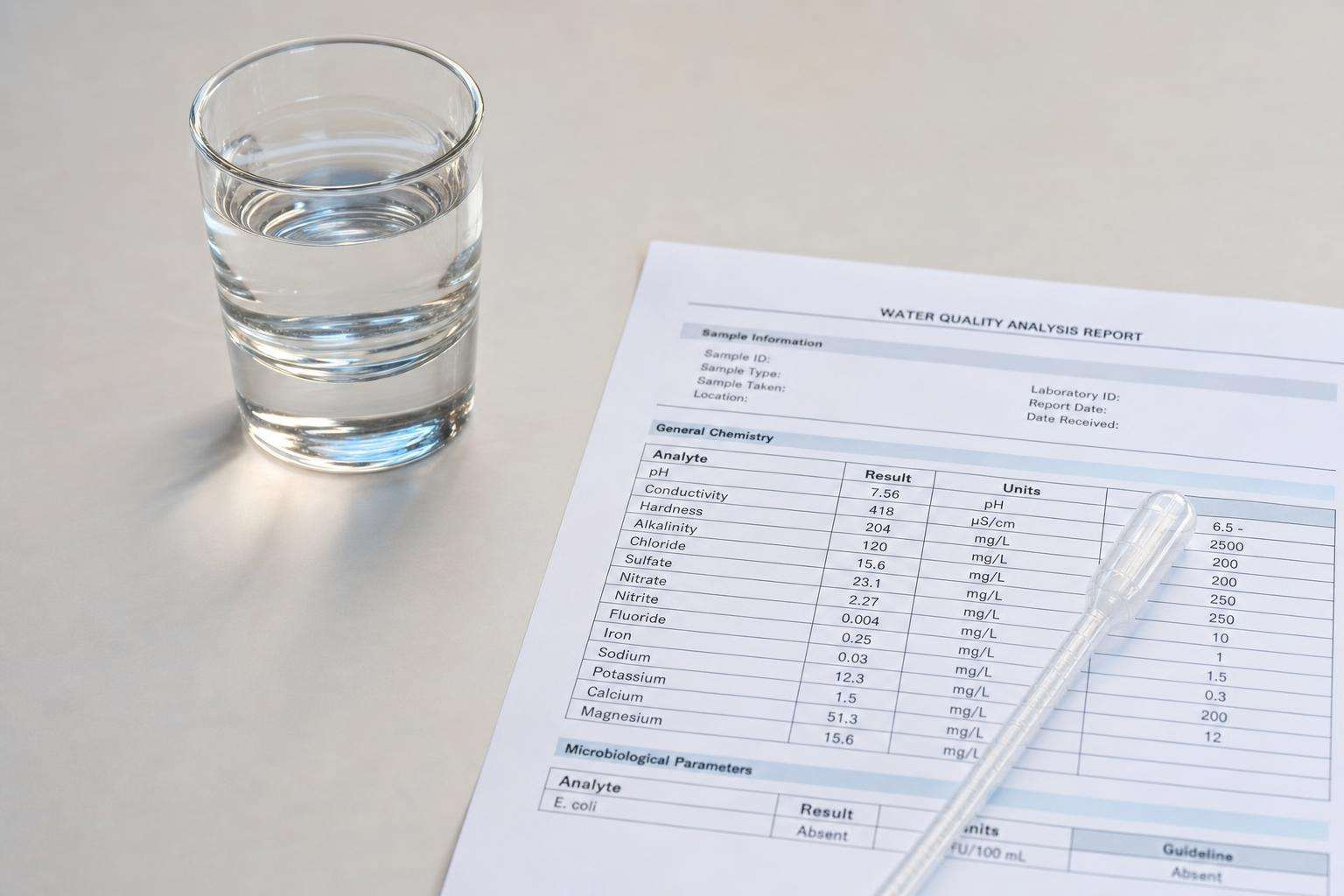
EPA’s April 2024 PFAS rule sets enforceable MCLs of 4.0 ppt for PFOA and PFOS, 10 ppt for PFHxS, PFNA, and HFPO-DA (GenX), plus a mixture Hazard Index of 1.0. MCLGs for PFOA/PFOS are zero. The old 70 ppt advisory is not the current federal limit. Private wells are outside SDWA MCLs.
Forever-chemical headlines often collapse three different things: health advisories, enforceable MCLs, and state rules. This deep dive stays on the regulatory ladder—units, analytes, mixture math, and scope—so readers can parse a consumer confidence report or lab PDF without mistaking a historical advisory for today’s federal floor.
This article is informational and editorial only. It is not medical advice, diagnosis, or a treatment plan. Numbers and literature ranges cited here are not personal prescriptions. Consult a qualified clinician before changing medications, supplements, diet, equipment, or management of a diagnosed condition. Seek urgent care for emergencies.
What did EPA finalize for PFAS in drinking water in 2024?
On April 10, 2024, the U.S. Environmental Protection Agency finalized the first National Primary Drinking Water Regulation for six PFAS under the Safe Drinking Water Act. Authoritative details live on EPA’s PFAS NPDWR hub and the accompanying technical overview for utilities.
Individual enforceable maximum contaminant levels (MCLs) are 4.0 ppt for PFOA, 4.0 ppt for PFOS, and 10 ppt each for PFHxS, PFNA, and HFPO-DA (GenX), with MCLGs of zero for PFOA and PFOS and 10 ppt for the three 10-ppt compounds. A mixture Hazard Index of 1.0 covers co-occurring PFHxS, PFNA, HFPO-DA, and PFBS. EPA framed the rule as reducing exposure for on the order of 100 million people served by public systems.
| Analyte | MCLG | MCL / rule | Notes |
|---|---|---|---|
| PFOA | 0 ppt | 4.0 ppt | Individual MCL |
| PFOS | 0 ppt | 4.0 ppt | Individual MCL |
| PFHxS | 10 ppt | 10 ppt | Also in Hazard Index |
| PFNA | 10 ppt | 10 ppt | Also in Hazard Index |
| HFPO-DA (GenX) | 10 ppt | 10 ppt | Also in Hazard Index |
| PFBS | — | HI component | HBWC often cited as 2000 ppt in HI math |
| Mixture HI | — | 1.0 (unitless) | ≥2 of the four HI PFAS |
How do ppt, MCL, and MCLG differ—and why does 70 ppt keep appearing?
Parts per trillion (ppt) equals nanograms per liter. Do not confuse ppt with parts per billion (ppb): 1 ppb = 1,000 ppt. A lab result of “0.004 ppb” is 4 ppt. An MCLG is a non-enforceable health goal; for PFOA and PFOS it is zero. An MCL is the enforceable number—here, 4.0 ppt each—described as as close to the zero goal as feasible with treatment and analytics.
The widely remembered 70 ppt figure is the 2016 lifetime health advisory for combined PFOA+PFOS. It was never an MCL, and it is not the current federal legal limit after the 2024 NPDWR. Separate 2022 interim health advisories used still-lower non-enforceable concentrations; do not paste those into a compliance checklist as if they were MCLs.
How does the Hazard Index work when multiple PFAS co-occur?
Some waters can look “fine” if you only scan PFOA and PFOS while PFHxS, PFNA, GenX, and PFBS stack. EPA’s Hazard Index addresses additive mixture risk: each of the four chemicals contributes a ratio of measured concentration to a health-based water concentration; those ratios sum. If the sum is at or above 1.0, the mixture MCL is exceeded. EPA’s technical overview presents HBWCs including 10, 10, 10, and 2000 ppt for PFHxS, PFNA, HFPO-DA, and PFBS respectively.
Who must comply—and who is left out?
SDWA MCLs bind public water systems (generally ≥15 connections or ≥25 people). Private wells are excluded. Bottled water falls under different FDA frameworks. States may set stricter or broader standards—always check your state primacy agency. CERCLA designations interact with the broader EPA PFAS roadmap, but Superfund liability is not the same question as whether your kitchen tap meets an MCL.
Practically: read utility reports; test private wells near high-risk land uses; interpret results in ppt against the 4.0 / 10 / HI ladder; treat with certified point-of-use devices when elevated; do not boil water to remove PFAS.
What should careful readers do with this evidence?
Use primary sources linked in this article before changing household systems, training plans, or clinical conversations. Prefer measurements—lab panels, water tests, training logs, or certified product listings—over marketing claims. When evidence is observational, say so out loud: associations can guide research priorities and low-regret habits without becoming promises of disease prevention. When guidance bodies publish cutoffs or MCLs, treat them as the public reference layer and verify whether your situation is inside that legal or clinical scope (for example private wells versus public water systems, or research surrogates versus diagnostic criteria). Re-check living agency pages because regulations and practice guidelines update. If two reputable sources disagree, dual-source the claim and prefer the document that states methods, units, and populations clearly. Finally, keep sex, age, pregnancy, and comorbidity modifiers in view whenever the underlying literature is limited to one demographic group.
Health Canon’s editorial standard is evidence grades in plain language: large controlled trials and codified regulations rank above single cohorts; cohorts rank above mechanism speculation; marketing ranks last. The goal of densifying this topic cluster is not content volume for its own sake—it is enough depth that a reader can act without outsourcing judgment to a headline. If you only remember one habit from this page, make it the habit of asking for units, sample, and maintenance or adherence conditions before trusting a number.
Sources & citations
Frequently asked