Environmental Health
HVAC, Filtration, and Indoor Mold: What Helps and What Doesn’t
Filters reduce particles; they do not replace leak repair. HVAC can distribute spores if wet. Control moisture first, then filtration and maintenance.
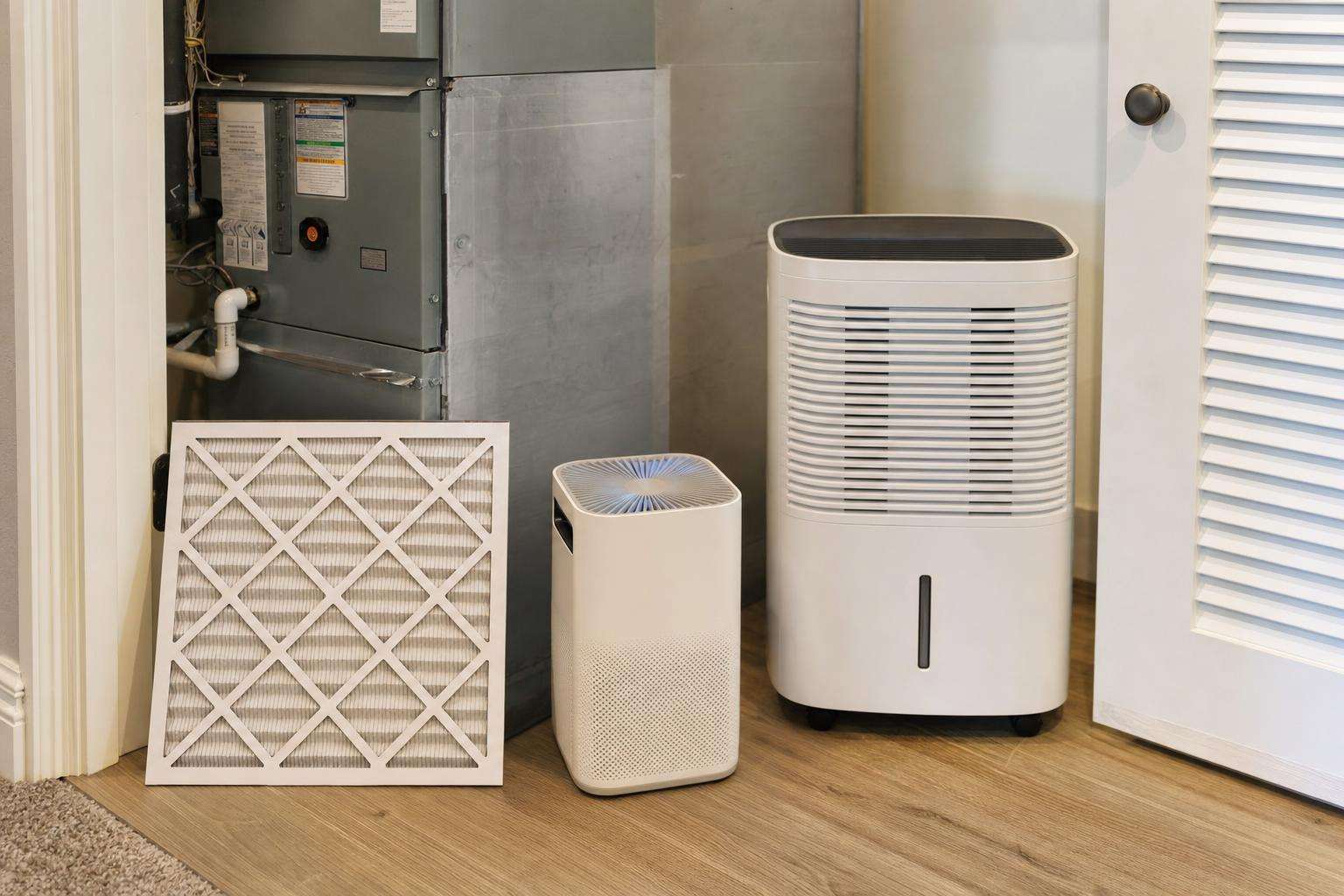
HVAC filtration is an adjunct to moisture control. Wet systems can spread mold; dry, maintain, then filter. HEPA does not rebuild a wet wall.
Air cleaners are popular because they plug in. Buildings get better when water stops—less photogenic, more effective.
This article is informational and editorial only. It is not medical advice, diagnosis, or a treatment plan. Numbers and literature ranges cited here are not personal prescriptions. Consult a qualified clinician before changing medications, supplements, diet, equipment, or management of a diagnosed condition. Seek urgent care for emergencies.
What filtration can and cannot do?
Reduce airborne particulate including some biological fragments.
Not remove settled contamination inside wall cavities.
Not replace remediation of porous moldy materials.
Where HVAC becomes a contamination amplifier?
Chronic coil wetness, clogged drains, humidifiers with dirty reservoirs.
Return pathways pulling from damp crawlspaces.
Poorly designed closures after water events.
| Tool | Helps | Does not replace |
|---|---|---|
| MERV/HEPA | Airborne particles | Wet materials removal |
| Dehumidifier | RH control | Active leak repair |
| UV gadget | Niche coil uses | Whole remediation |
| Inspection | Find water | Wishful spraying |
What maintenance checklist is high yield?
Change filters on schedule with compatible MERV.
Clean pans/drains; inspect for leaks after storms.
Service by qualified techs; document water history.
How to combine with building science?
Fix exterior water management and plumbing leaks first.
Dry within 24–48 hours after wetting when possible.
Use filtration while remediating for occupant comfort—not as sole control.
Sources: EPA mold; CDC mold; WHO dampness and mould.
Readers should dual-source primary literature, translate slogans into exposure units and effect sizes, and rank interventions by expected value under uncertainty. Cheap reversible steps often outrank extreme protocols. Opportunity cost is real: hours spent on unvalidated tests are hours not spent on sleep, training, protein adequacy, and primary care. Sex, life stage, comorbidities, medications, and geography change interpretation. Prefer falsifiable claims with named endpoints over multi-disease cure lists. Update beliefs when stronger trials appear rather than freezing identity around a single paper or influencer narrative. Measured curiosity beats both panic and complacency. Further reading should prioritize primary sources and consensus documents over secondary social summaries. When evidence is mixed, state both the signal and the limits in the same paragraph. When evidence is strong, still avoid overclaiming universality across populations. Pattern quality, dose, and adherence dominate most household decisions more than brand seals.
Context, dose, endpoint, and population must travel together; slogans that drop any of those four are not finished claims. Household decisions should favor reversible experiments with measurable outcomes over identity diets or unvalidated testing cascades.
Context, dose, endpoint, and population must travel together; slogans that drop any of those four are not finished claims. Household decisions should favor reversible experiments with measurable outcomes over identity diets or unvalidated testing cascades.
Context, dose, endpoint, and population must travel together; slogans that drop any of those four are not finished claims. Household decisions should favor reversible experiments with measurable outcomes over identity diets or unvalidated testing cascades.
Context, dose, endpoint, and population must travel together; slogans that drop any of those four are not finished claims. Household decisions should favor reversible experiments with measurable outcomes over identity diets or unvalidated testing cascades.
Context, dose, endpoint, and population must travel together; slogans that drop any of those four are not finished claims. Household decisions should favor reversible experiments with measurable outcomes over identity diets or unvalidated testing cascades.
Context, dose, endpoint, and population must travel together; slogans that drop any of those four are not finished claims. Household decisions should favor reversible experiments with measurable outcomes over identity diets or unvalidated testing cascades.
Context, dose, endpoint, and population must travel together; slogans that drop any of those four are not finished claims. Household decisions should favor reversible experiments with measurable outcomes over identity diets or unvalidated testing cascades.
Context, dose, endpoint, and population must travel together; slogans that drop any of those four are not finished claims. Household decisions should favor reversible experiments with measurable outcomes over identity diets or unvalidated testing cascades.
Context, dose, endpoint, and population must travel together; slogans that drop any of those four are not finished claims. Household decisions should favor reversible experiments with measurable outcomes over identity diets or unvalidated testing cascades.
Context, dose, endpoint, and population must travel together; slogans that drop any of those four are not finished claims. Household decisions should favor reversible experiments with measurable outcomes over identity diets or unvalidated testing cascades.
Context, dose, endpoint, and population must travel together; slogans that drop any of those four are not finished claims. Household decisions should favor reversible experiments with measurable outcomes over identity diets or unvalidated testing cascades.
Context, dose, endpoint, and population must travel together; slogans that drop any of those four are not finished claims. Household decisions should favor reversible experiments with measurable outcomes over identity diets or unvalidated testing cascades.
Context, dose, endpoint, and population must travel together; slogans that drop any of those four are not finished claims. Household decisions should favor reversible experiments with measurable outcomes over identity diets or unvalidated testing cascades.
Context, dose, endpoint, and population must travel together; slogans that drop any of those four are not finished claims. Household decisions should favor reversible experiments with measurable outcomes over identity diets or unvalidated testing cascades.
Sources & citations
Frequently asked