Environmental Health
Microplastics in Tap vs Bottled Water: Intake Comparison
Both can contain microplastics; 2024 bottled-water work found ~240,000 plastic particles/L on average, ~90% nanoplastics. Prefer quality tap (optionally filtered) over single-use bottles as a high-leverage step.
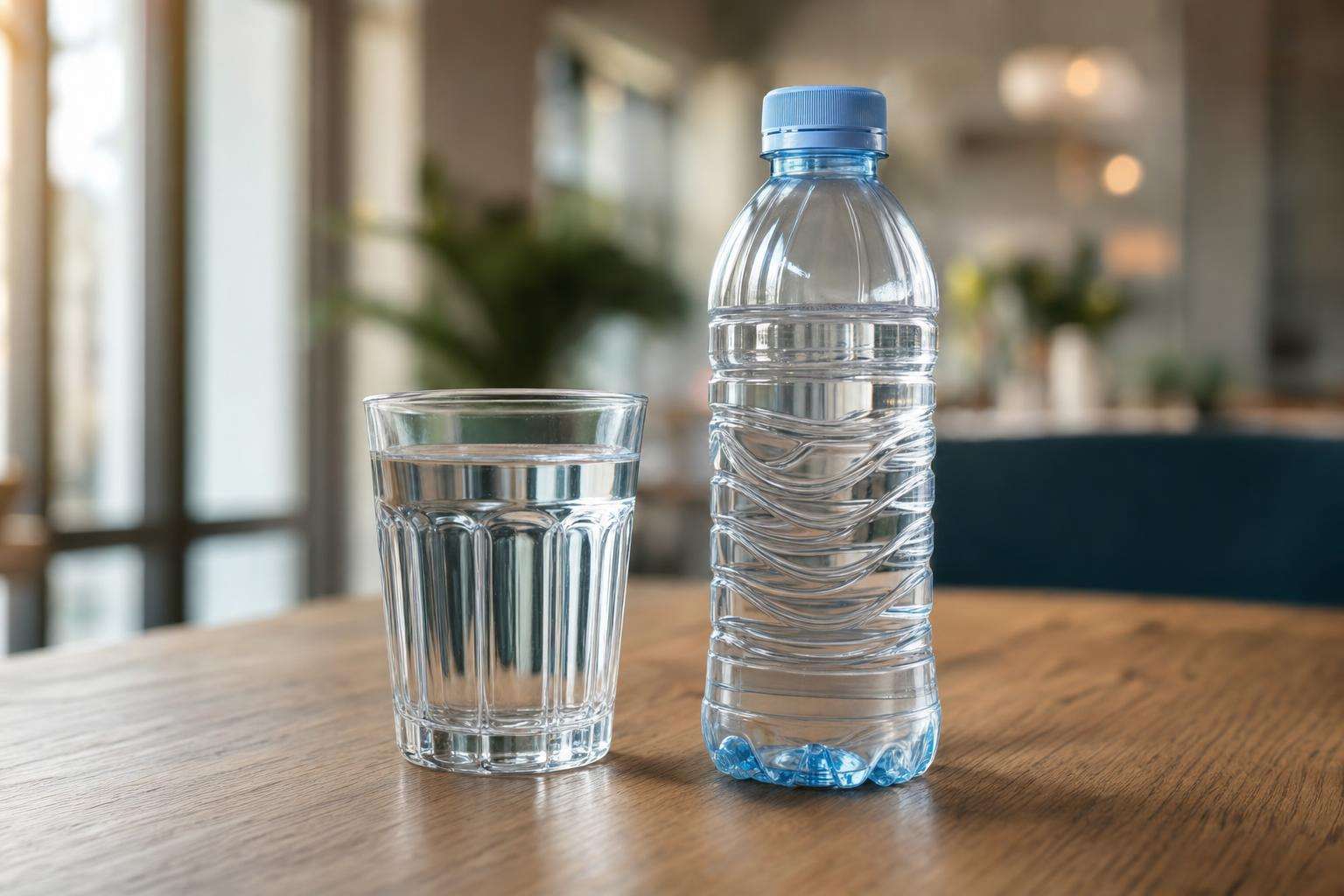
Bottled water can deliver ~10⁵ particles/L in nano-era measurements. Tap is not MP-free but is often the better default. WHO: evidence gaps; pathogens still primary DW risk.
The purest-looking bottle can be a particle generator. Occurrence science flipped a consumer intuition that bottled equals cleaner.
This article is informational and editorial only. It is not medical advice, diagnosis, or a treatment plan. Numbers and literature ranges cited here are not personal prescriptions. Consult a qualified clinician before changing medications, supplements, diet, equipment, or management of a diagnosed condition. Seek urgent care for emergencies.
What the 2024 bottled-water numbers mean
Mean ~2.4×10⁵ particles/L with large nano fraction.
Polymers include PET and others consistent with packaging systems.
Method advances explain jumps versus older MP-only counts.
How tap compares
Global reviews document MPs in both TW and BW.
Concentrations are method-dependent.
Conventional treatment removes many larger particles; nano fate is less settled.
| Source | Occurrence note | Action |
|---|---|---|
| Bottled (2024 nano methods) | ~2.4e5 particles/L avg class | Reduce single-use |
| Tap | MPs present; method-variable | Default if quality OK |
| WHO 2019 | Insufficient health concern proof then | Research + proportion |
| Home filter | Claim-specific | Match pore/cert to goal |
Agency posture
WHO 2019: no routine MP monitoring mandate then; research needed.
WHO 2022 expands multi-route dietary/inhalation context.
Keep microbial safety first in any switch advice.
Household playbook
Tap + certified filter if local risks warrant.
Reuse durable bottles; avoid heat-soaked PET.
Do not claim clinical disease cures from bottle avoidance alone.
Sources: Qian et al. 2024 PNAS; WHO 2019 microplastics in DW; Gambino et al. review.
Readers should dual-source primary literature, translate slogans into exposure units and effect sizes, and rank interventions by expected value under uncertainty. Cheap reversible steps often outrank extreme protocols. Opportunity cost is real: hours spent on unvalidated tests are hours not spent on sleep, training, protein adequacy, and primary care. Sex, life stage, comorbidities, medications, and geography change interpretation. Prefer falsifiable claims with named endpoints over multi-disease cure lists. Update beliefs when stronger trials appear rather than freezing identity around a single paper or influencer narrative. Measured curiosity beats both panic and complacency. Further reading should prioritize primary sources and consensus documents over secondary social summaries. When evidence is mixed, state both the signal and the limits in the same paragraph. When evidence is strong, still avoid overclaiming universality across populations. Pattern quality, dose, and adherence dominate most household decisions more than brand seals.
Context, dose, endpoint, and population must travel together; slogans that drop any of those four are not finished claims. Household decisions should favor reversible experiments with measurable outcomes over identity diets or unvalidated testing cascades. When numbers conflict across agencies, report both the public-health target and the regulatory ceiling, then place personal labs on that ladder explicitly.
Context, dose, endpoint, and population must travel together; slogans that drop any of those four are not finished claims. Household decisions should favor reversible experiments with measurable outcomes over identity diets or unvalidated testing cascades. When numbers conflict across agencies, report both the public-health target and the regulatory ceiling, then place personal labs on that ladder explicitly.
Context, dose, endpoint, and population must travel together; slogans that drop any of those four are not finished claims. Household decisions should favor reversible experiments with measurable outcomes over identity diets or unvalidated testing cascades. When numbers conflict across agencies, report both the public-health target and the regulatory ceiling, then place personal labs on that ladder explicitly.
Context, dose, endpoint, and population must travel together; slogans that drop any of those four are not finished claims. Household decisions should favor reversible experiments with measurable outcomes over identity diets or unvalidated testing cascades. When numbers conflict across agencies, report both the public-health target and the regulatory ceiling, then place personal labs on that ladder explicitly.
Context, dose, endpoint, and population must travel together; slogans that drop any of those four are not finished claims. Household decisions should favor reversible experiments with measurable outcomes over identity diets or unvalidated testing cascades. When numbers conflict across agencies, report both the public-health target and the regulatory ceiling, then place personal labs on that ladder explicitly.
Context, dose, endpoint, and population must travel together; slogans that drop any of those four are not finished claims. Household decisions should favor reversible experiments with measurable outcomes over identity diets or unvalidated testing cascades. When numbers conflict across agencies, report both the public-health target and the regulatory ceiling, then place personal labs on that ladder explicitly.
Context, dose, endpoint, and population must travel together; slogans that drop any of those four are not finished claims. Household decisions should favor reversible experiments with measurable outcomes over identity diets or unvalidated testing cascades. When numbers conflict across agencies, report both the public-health target and the regulatory ceiling, then place personal labs on that ladder explicitly.
Context, dose, endpoint, and population must travel together; slogans that drop any of those four are not finished claims. Household decisions should favor reversible experiments with measurable outcomes over identity diets or unvalidated testing cascades. When numbers conflict across agencies, report both the public-health target and the regulatory ceiling, then place personal labs on that ladder explicitly.
Sources & citations
Frequently asked