Environmental Health
Microplastic Polymer Types, Additives, and Leachables Explained
PET, PE, PVC, PS, and PP show up in blood, water, plaque, and organs—but additives like phthalates are a separate toxicology story from solid particles.
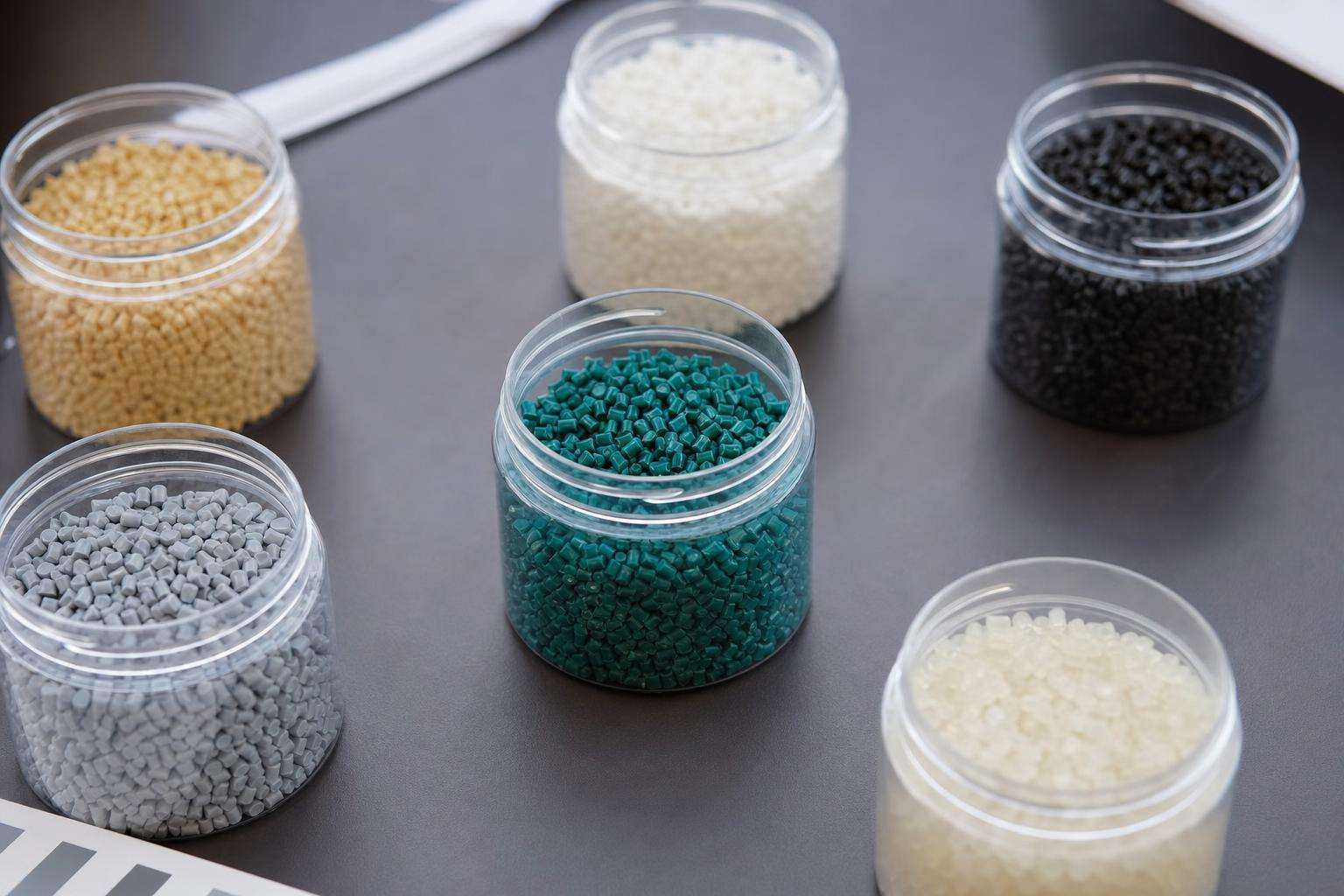
Human studies detect polymers such as PET, PE, PVC, PS, PP, and PMMA in blood, beverages, plaque, and organs. Additives and leachables are a parallel toxicology track. Never treat urinary EDC metabolites as proof of particle toxicity—or ignore chemicals when discussing plastics.
This article is informational and editorial only. It is not medical advice, diagnosis, or a treatment plan. Numbers and literature ranges cited here are not personal prescriptions. Consult a qualified clinician before changing medications, supplements, diet, equipment, or management of a diagnosed condition. Seek urgent care for emergencies.
Which polymers show up in landmark human matrices?
Leslie et al. 2022 reported quantifiable plastic polymers in whole blood for a majority of donors studied, including PET, polyethylene, styrene polymers, PMMA, and polypropylene among species above limits of quantification. Qian et al. 2024 identified PET, polyamide, polystyrene, PVC, PMMA, and polyethylene among bottled-water particles. Marfella et al. 2024 found PE and PVC signals in carotid plaque. Nihart et al. 2025 reported higher polymer mass in decedent brain tissue than in some other organs, with polyethylene among dominant species in communications around the paper.
These matrices are not interchangeable dose units. Blood mass, plaque presence, and brain polymer mass answer different scientific questions. Method blanks, digestion artifacts, and marker specificity remain central to interpretation.
What is the particle versus leachable decision rule?
If the endpoint is classic endocrine disruption and the exposure metric is urinary metabolites of phthalates or bisphenols, that is chemical co-exposure evidence. If the endpoint is foreign-body inflammation at particle sites such as atheroma or lung tissue, particle physics is a more plausible primary driver. Many real-world plastics present both problems at once. Editorial and clinical communication should name which pathway a claim is actually about.
| Signal | Typical metric | Primary interpretation caution |
|---|---|---|
| Blood polymer mass | Py-GC/MS µg/mL-class sums | Contamination, LOQ, not particle count |
| Plaque polymers | Presence + clinical follow-up | Association ≠ proven causation |
| Bottled-water polymers | Particle ID + counts | Method nano-capability dominates totals |
| Urinary phthalates/BPA | Metabolite concentrations | Chemical pathway, not particle proof |
How should additives change household priorities?
Additive packages include plasticizers, flame retardants, antioxidants, and colorants. Some are regulated as substances of concern independent of microplastic particle debates. Practical households can reduce heat-driven migration, choose simpler packaging for hot foods, and address indoor air and dust where fibers and semi-volatile chemicals co-travel. Polymer chemistry literacy prevents both additive-blind particle panic and particle-blind chemical denial.
What should readers refuse in popular coverage?
Refuse silent conversion of polymer mass to particle counts without density and size assumptions. Refuse claims that one blood study proves a specific disease. Refuse the idea that BPA-free equals inert plastic. Accept that multi-polymer detection across matrices strengthens the case for exposure research and proportionate exposure reduction without inventing completed human dose-response curves that the literature has not yet delivered.
Readers should treat this explainer as a map of mechanisms, measurements, and decision rules rather than a personal protocol. Local water quality, travel history, diet pattern, pregnancy status, and occupational exposures change priorities. When evidence grades are mixed, prefer certified products, clinician-directed testing, and agency primary sources over social media absolute claims. Revisit guidance as methods and regulations update, because microplastics analytics, parasite diagnostics, water standards, and nutrition meta-analyses continue to evolve. Practical exposure reduction and accurate terminology remain useful even when clinical dose-response curves are incomplete. Document your sources, test before you buy expensive gear, and keep food safety, infection control, and established medical care in the first tier of decisions.
Readers should treat this explainer as a map of mechanisms, measurements, and decision rules rather than a personal protocol. Local water quality, travel history, diet pattern, pregnancy status, occupational exposures, and baseline medical conditions change priorities week to week. When evidence grades are mixed, prefer certified products, clinician-directed testing, and primary agency sources over social media absolute claims. Revisit guidance as analytics, regulations, and clinical guidelines update, because measurement science and public-health standards continue to evolve.
Practical exposure reduction and accurate terminology remain useful even when clinical dose-response curves are incomplete. Document your sources, test before you buy expensive gear, and keep food safety, infection control, and established medical care in the first tier of decisions. Secondary wellness products that promise detox, parasite purge, or total plastic elimination without diagnostic confirmation deserve skepticism proportional to their marketing intensity.
For households, the highest-yield pattern is usually measure what matters, match a certified or clinically indicated control to the finding, and avoid stacking redundant gadgets that address the wrong contaminant class. For travelers and people planning pregnancy, timeline-sensitive risks such as infection, lead, nitrate, and heat deserve earlier attention than low-probability exotic hazards. For readers following nutrition debates, distinguish food-matrix fats from repeatedly heated industrial oils and from biomarker studies that do not measure fryer oxidation.
Editorial standards on this site favor named organisms, named polymers, named filter certifications, and named study designs. Vague toxin language, unisex fertility scares without sex stratification, and silent unit conversions between mass and particle counts are treated as quality failures. Where human randomized evidence is thin, we say so and still offer proportionate precautions that do not require unproven supplements or extreme elimination diets.
Sources & citations
Frequently asked