Environmental Health
Laundry Microfibers: Filters, Fleece, and Indoor Dust Pathways
Synthetic textiles shed microfibers to wastewater and indoor air. Capture devices claim high removal; wash habits and HEPA dust control complete the stack.
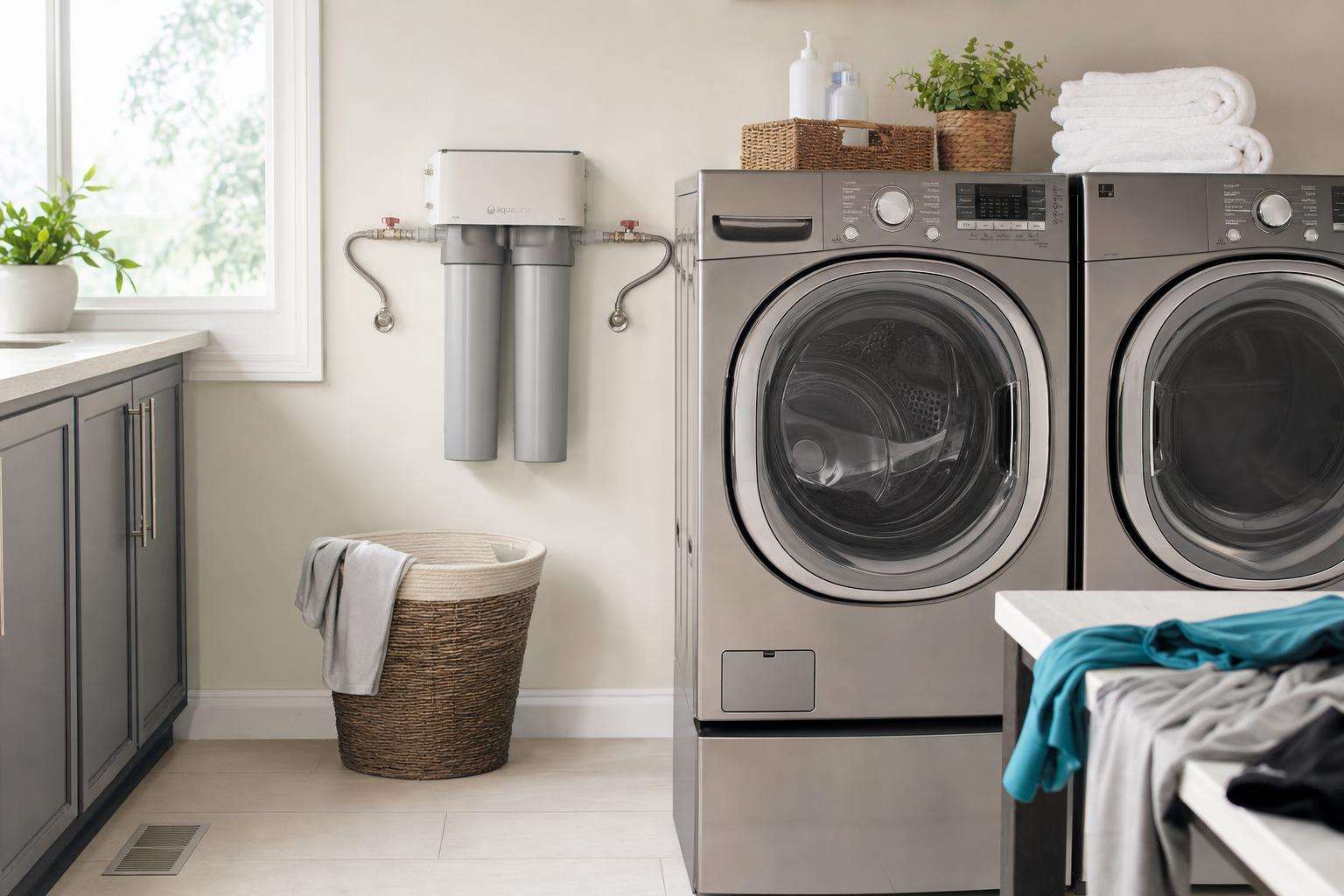
Synthetic laundry sheds microfibers to wastewater and indoor dust. Quality external filters can capture a large fiber fraction (claims up to ~98%). Full loads, cooler washes, HEPA dust control, and fewer disposable bottles complete a realistic stack.
Microplastics coverage often fixates on ocean gyres while the washing machine runs in the next room. Textile microfibers are among the most actionable secondary microplastic sources for households because the release point is indoors, scheduled, and filterable.
This article is informational and editorial only. It is not medical advice, diagnosis, or a treatment plan. Numbers and literature ranges cited here are not personal prescriptions. Consult a qualified clinician before changing medications, supplements, diet, equipment, or management of a diagnosed condition. Seek urgent care for emergencies.
How do textiles become microfiber pollution?
Mechanical agitation in washers and dryers breaks and sheds synthetic filaments—especially from fleece, knits, and aged garments. Fibers travel with graywater to municipal plants that remove many solids yet still discharge a fraction to surface waters. Separately, dryer exhaust and household handling loft fibers into indoor air where they settle as dust. Children crawling on floors experience a different dust-ingestion dose than adults.
Morphology matters: fibers behave differently from spheres or fragments in airways and in environmental transport. Indoor air studies repeatedly find synthetic fibers among dominant particle types. That does not automatically equal a proven disease incidence rate at ambient doses, but it does identify a controllable source. Reviews of human health evidence still grade many particle endpoints as suspected rather than settled, while additive chemistry (phthalates, flame retardants) can ride along on dust.
| Intervention | Target | Notes |
|---|---|---|
| External laundry filter | Wastewater fibers | High capture when maintained |
| Full cool washes | Shedding rate | Less mechanical/thermal stress |
| HEPA vacuum + damp dust | Indoor reservoir | Child exposure relevant |
| Tap > bottle habit | Beverage particles | Separate but complementary |
What does the filter and laundry-habit evidence say?
Independent explainers and engineering tests emphasize that dedicated microfiber filters outperform novelty laundry balls. Capture claims for leading external filters reach the high ninety percent range under test conditions, while real-world performance depends on cleaning schedules and bypass leaks. Advocacy summaries such as PIRG’s filter overview help consumers compare device classes without treating any single percentage as universal law.
Wash settings that reduce mechanical abrasion—full loads, cooler water when appropriate, shorter cycles—lower fiber break rates. Hot dryer cycles can increase brittleness. These are exposure-rate tools, not sterilization. Combining a filter with fewer ultra-cheap fleece purchases usually beats either tactic alone.
How should households build a microfiber reduction stack?
Start with volume: if you wash athletic synthetics daily, a filter pays more than if you mostly wash cotton towels weekly. Add dust control for homes with infants. Keep drinking-water choices in parallel—Qian and colleagues’ 2024 PNAS work using advanced methods reported roughly 2.4×10⁵ particles/L in bottled water with a large nanoplastic fraction (PNAS), a beverage pathway independent of laundry.
Policy notes: intentional microbead bans never solved textile secondary microplastics. Some jurisdictions explore washer standards and filter requirements; household action need not wait. Avoid greenwashing that equates “BPA-free” fleece with microfiber-free fleece—different problems.
Bottom line: laundry microfibers are a high-leverage, engineering-friendly slice of the microplastics problem. Filter the outflow, calm the wash cycle, clean the dust reservoir, and keep beverage plastics on the same checklist.
Across environmental-health topics, the same discipline applies: define the exposure pathway, quote primary numbers with units, separate hazard from individual risk, and choose mitigations that actually touch the dominant dose. Unregulated detox products, extreme avoidance theater, and unit-free headlines consistently underperform simple engineering and clinical basics. When agency pages update, prefer the live primary document over secondary summaries that freeze old advisories as if they were law.
If you are building a household plan, sequence matters. Confirm the hazard with appropriate testing or inspection, reduce the largest ongoing source, maintain any filter or remediation system on schedule, and use standard medical care for symptoms. That order is slower to go viral than a scare list—and far more likely to change body burden, indoor air, or water quality in the real world.
Across environmental-health topics, the same discipline applies: define the exposure pathway, quote primary numbers with units, separate hazard from individual risk, and choose mitigations that actually touch the dominant dose. Unregulated detox products, extreme avoidance theater, and unit-free headlines consistently underperform simple engineering and clinical basics. When agency pages update, prefer the live primary document over secondary summaries that freeze old advisories as if they were law.
If you are building a household plan, sequence matters. Confirm the hazard with appropriate testing or inspection, reduce the largest ongoing source, maintain any filter or remediation system on schedule, and use standard medical care for symptoms. That order is slower to go viral than a scare list—and far more likely to change body burden, indoor air, or water quality in the real world.
Across environmental-health topics, the same discipline applies: define the exposure pathway, quote primary numbers with units, separate hazard from individual risk, and choose mitigations that actually touch the dominant dose. Unregulated detox products, extreme avoidance theater, and unit-free headlines consistently underperform simple engineering and clinical basics. When agency pages update, prefer the live primary document over secondary summaries that freeze old advisories as if they were law.
If you are building a household plan, sequence matters. Confirm the hazard with appropriate testing or inspection, reduce the largest ongoing source, maintain any filter or remediation system on schedule, and use standard medical care for symptoms. That order is slower to go viral than a scare list—and far more likely to change body burden, indoor air, or water quality in the real world.
Sources & citations
Frequently asked