Environmental Health
How to Test Home Water for Fluoride (and What to Do Next)
Certified lab tests beat strip theatrics. Know utility CCR vs well testing, then match treatment to results.
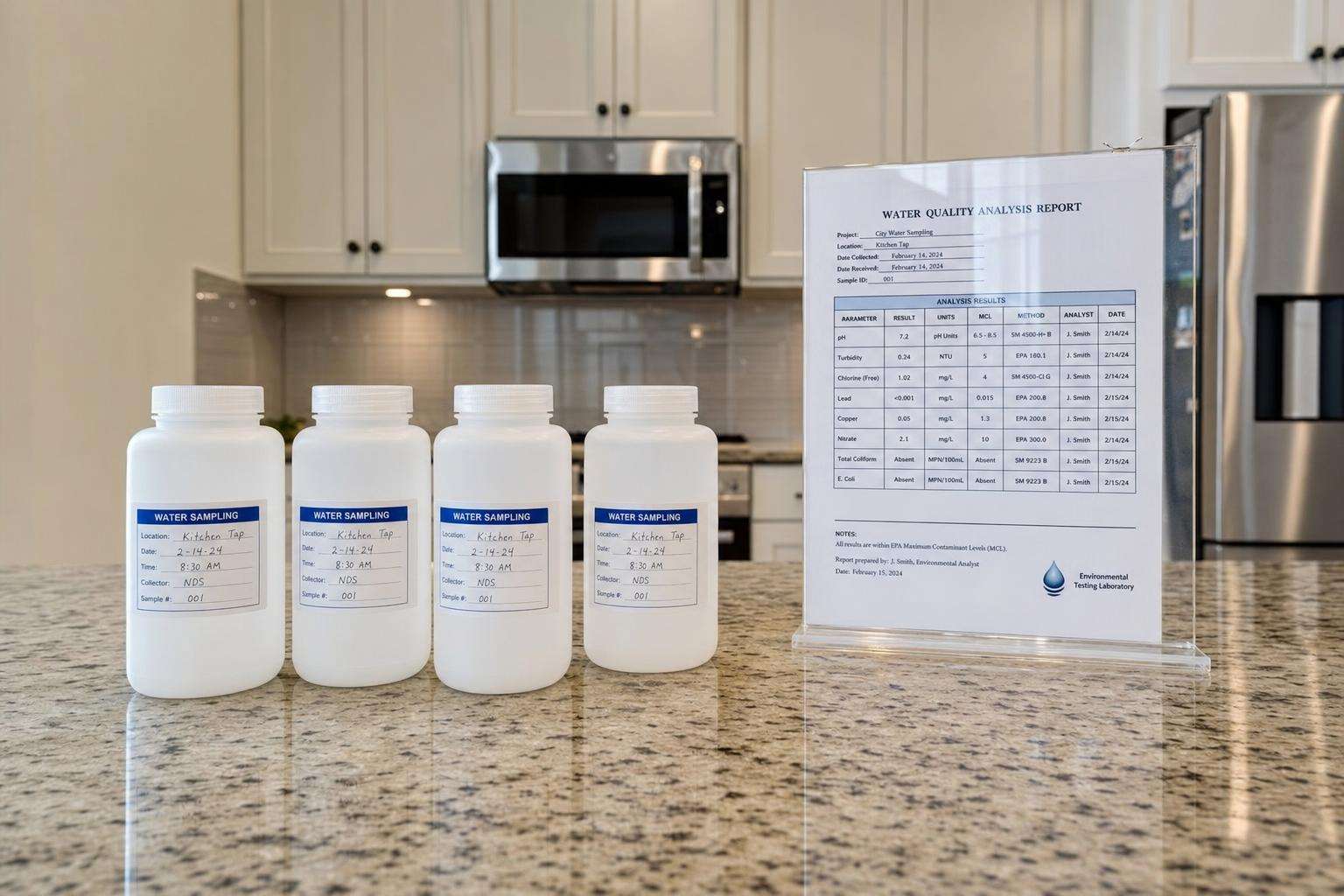
Test with certified labs (wells) or read the CCR (utilities). Match treatment to mg/L: RO/distillation for removal; carbon pitchers usually fail. Numbers first, ideology second.
You cannot manage a concentration you have not measured. Fluoride water decisions start with a number and a method, not a podcast.
This article is informational and editorial only. It is not medical advice, diagnosis, or a treatment plan. Numbers and literature ranges cited here are not personal prescriptions. Consult a qualified clinician before changing medications, supplements, diet, equipment, or management of a diagnosed condition. Seek urgent care for emergencies.
Utility water: what to pull before buying filters
CCR average and range for fluoride. Whether the system fluoridates intentionally or has natural F.
Other contaminants that might dominate risk (lead, PFAS, disinfection byproducts).
If you only dislike taste/odor, diagnose the real cause—fluoride at 0.7 is tasteless for most.
Well water: sampling done right
Follow lab instructions for bottles and hold times. Sample the tap you drink from.
Consider a broad well panel; fluoride is one analyte among many rural risks.
Map results against EPA standards and local geologic expectations.
| Scenario | First step | Typical treatment if removing |
|---|---|---|
| City fluoridated | Read CCR | POU RO optional |
| Private well | Certified lab test | RO / specialized media |
| High tea + water | Sum intake | Reduce sources |
| Infant formula | Check water F | Low-F water if advised |
| Carbon pitcher only | Know limits | Usually not for F |
Treatment matching
Point-of-use RO for drinking/cooking is common when removing F. Maintain membranes and remineralize if advised for taste/corrosion.
Whole-house defluoridation is harder and often unnecessary if only ingestion matters.
Do not pay for “fluoride magnets” or unvalidated media without certification data.
Decision after the number
Low natural / optimal CWF: focus on topical dental care and total intake habits.
High natural: treat drinking water; check children’s dental fluorosis risk and total intake.
Personal preference against CWF: RO is a private choice—still brush with fluoride toothpaste unless a dentist directs otherwise for specific reasons.
Sources: CDC fluoridation recommendations; EPA Consumer Confidence Reports; NSF fluoride water filters info.
Readers should dual-source primary literature, translate slogans into exposure units and effect sizes, and rank interventions by expected value under uncertainty. Cheap reversible steps often outrank extreme protocols. Opportunity cost is real: hours spent on unvalidated tests are hours not spent on sleep, training, protein adequacy, and primary care. Sex, life stage, comorbidities, medications, and geography change interpretation. Prefer falsifiable claims with named endpoints over multi-disease cure lists. Update beliefs when stronger trials appear rather than freezing identity around a single paper or influencer narrative. Measured curiosity beats both panic and complacency. Further reading should prioritize primary sources and consensus documents over secondary social summaries. When evidence is mixed, state both the signal and the limits in the same paragraph. When evidence is strong, still avoid overclaiming universality across populations.
Context, dose, endpoint, and population must travel together; slogans that drop any of those four are not finished claims.
Context, dose, endpoint, and population must travel together; slogans that drop any of those four are not finished claims.
Context, dose, endpoint, and population must travel together; slogans that drop any of those four are not finished claims.
Context, dose, endpoint, and population must travel together; slogans that drop any of those four are not finished claims.
Context, dose, endpoint, and population must travel together; slogans that drop any of those four are not finished claims.
Context, dose, endpoint, and population must travel together; slogans that drop any of those four are not finished claims.
Context, dose, endpoint, and population must travel together; slogans that drop any of those four are not finished claims.
Context, dose, endpoint, and population must travel together; slogans that drop any of those four are not finished claims.
Context, dose, endpoint, and population must travel together; slogans that drop any of those four are not finished claims.
Context, dose, endpoint, and population must travel together; slogans that drop any of those four are not finished claims.
Context, dose, endpoint, and population must travel together; slogans that drop any of those four are not finished claims.
Context, dose, endpoint, and population must travel together; slogans that drop any of those four are not finished claims.
Context, dose, endpoint, and population must travel together; slogans that drop any of those four are not finished claims.
Context, dose, endpoint, and population must travel together; slogans that drop any of those four are not finished claims.
Context, dose, endpoint, and population must travel together; slogans that drop any of those four are not finished claims.
Context, dose, endpoint, and population must travel together; slogans that drop any of those four are not finished claims.
Context, dose, endpoint, and population must travel together; slogans that drop any of those four are not finished claims.
Context, dose, endpoint, and population must travel together; slogans that drop any of those four are not finished claims.
Context, dose, endpoint, and population must travel together; slogans that drop any of those four are not finished claims.
Context, dose, endpoint, and population must travel together; slogans that drop any of those four are not finished claims.
Context, dose, endpoint, and population must travel together; slogans that drop any of those four are not finished claims.
Sources & citations
Frequently asked