Environmental Health
Practical EMF Reduction at Home: Distance, Speakers, and Weak-Signal Myths
NCI-aligned steps cut RF dose without pseudoscience: speakerphone, shorter calls, avoid weak-signal boosts, and skip metal “shield” cases that make phones transmit harder.
Lower RF dose with distance, shorter calls, speaker/headset, and avoiding weak-signal power boosts. Bluetooth << cellular power. Skip metal “shield” cases that force higher transmit. ELF fields fall within ~1 foot.
EMF advice online splits into agency-quiet pragmatism and product-driven panic. This guide stays on reversible engineering controls aligned with NCI consumer fact sheets.
This article is informational and editorial only. It is not medical advice, diagnosis, or a treatment plan. Numbers and literature ranges cited here are not personal prescriptions. Consult a qualified clinician before changing medications, supplements, diet, equipment, or management of a diagnosed condition. Seek urgent care for emergencies.
Which phone habits actually change RF dose?
Specific absorption rate energy deposition in tissue falls quickly as the handset moves away from the body. NCI’s cell-phone fact sheet lists practical steps: shorter calls, speakerphone or headsets, texting instead of holding a call to the ear, and avoiding weak-signal environments where phones raise transmit power (NCI cell phones). Those steps work regardless of whether one believes the residual risk debate is settled.
Bluetooth accessories typically operate at much lower power than cellular uplinks—often summarized as roughly 10–400× lower in educational materials—while wired headsets remove RF from the head entirely for the audio path. Neither eliminates network RF entirely; both change the geometry of the highest local exposure during calls.
| Tactic | Primary effect | Anti-pattern |
|---|---|---|
| Speaker / headset | ↑ distance from head | Metal shield case detuning antenna |
| Shorter calls / text | ↓ time at power | All-day weak-signal voice calls |
| Strong signal location | ↓ uplink power | Basement marathon calls |
| Appliance distance | ELF field falloff | Unverified “harmonizer” stickers |
What about home infrastructure: Wi-Fi, meters, appliances?
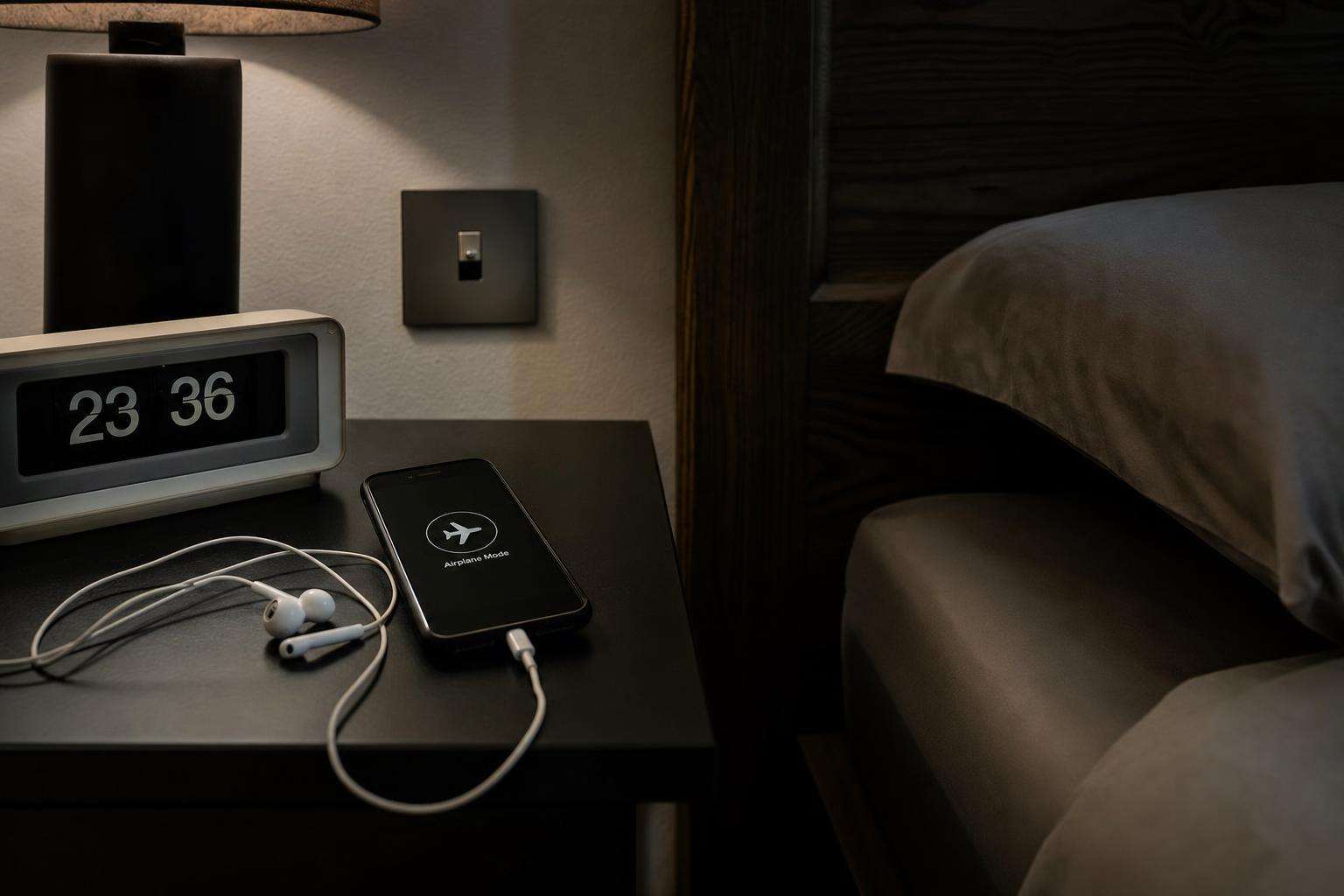
NCI’s electromagnetic fields fact sheet notes school Wi-Fi measurements far below maxima and no agency basis for blanket classroom bans from those data, and describes smart-meter fields as very low—sometimes indistinguishable from background (NCI EMF). Magnetic fields from appliances drop sharply by about a foot. Airplane mode at night is an optional exposure-minimization comfort measure if devices would otherwise beacon; it is not a validated treatment for electromagnetic hypersensitivity diagnoses, which remain scientifically contentious.
ICNIRP and FCC limits are thermal-protection frameworks for RF; they are not personal optimization targets. Staying far below limits is normal for consumer devices under intended use. Mitigation theater that ignores sleep, stress, and ergonomics often misattributes symptoms to fields alone.
How should a household build a sane policy?
Write three rules: (1) long voice calls use speaker or headset; (2) do not buy antenna-blocking cases; (3) keep baby monitors and high-draw appliances at modest distance during sleep if it costs nothing. Skip unaccredited meters sold with detox packages. If symptoms are severe, seek clinical evaluation for established conditions rather than only EMF forums.
Bottom line: practical EMF reduction is mostly geometry and time—distance, duration, and avoiding weak-signal power ramps—not copper wallpaper.
Across environmental-health topics, the same discipline applies: define the exposure pathway, quote primary numbers with units, separate hazard from individual risk, and choose mitigations that actually touch the dominant dose. Unregulated detox products, extreme avoidance theater, and unit-free headlines consistently underperform simple engineering and clinical basics. When agency pages update, prefer the live primary document over secondary summaries that freeze old advisories as if they were law.
If you are building a household plan, sequence matters. Confirm the hazard with appropriate testing or inspection, reduce the largest ongoing source, maintain any filter or remediation system on schedule, and use standard medical care for symptoms. That order is slower to go viral than a scare list—and far more likely to change body burden, indoor air, or water quality in the real world.
Across environmental-health topics, the same discipline applies: define the exposure pathway, quote primary numbers with units, separate hazard from individual risk, and choose mitigations that actually touch the dominant dose. Unregulated detox products, extreme avoidance theater, and unit-free headlines consistently underperform simple engineering and clinical basics. When agency pages update, prefer the live primary document over secondary summaries that freeze old advisories as if they were law.
If you are building a household plan, sequence matters. Confirm the hazard with appropriate testing or inspection, reduce the largest ongoing source, maintain any filter or remediation system on schedule, and use standard medical care for symptoms. That order is slower to go viral than a scare list—and far more likely to change body burden, indoor air, or water quality in the real world.
Across environmental-health topics, the same discipline applies: define the exposure pathway, quote primary numbers with units, separate hazard from individual risk, and choose mitigations that actually touch the dominant dose. Unregulated detox products, extreme avoidance theater, and unit-free headlines consistently underperform simple engineering and clinical basics. When agency pages update, prefer the live primary document over secondary summaries that freeze old advisories as if they were law.
If you are building a household plan, sequence matters. Confirm the hazard with appropriate testing or inspection, reduce the largest ongoing source, maintain any filter or remediation system on schedule, and use standard medical care for symptoms. That order is slower to go viral than a scare list—and far more likely to change body burden, indoor air, or water quality in the real world.
Sources & citations
Frequently asked