Environmental Health
How Well Do Wastewater Plants Remove EE2 Birth-Control Estrogen?
Conventional plants partially remove ethinylestradiol—often ~50–80% depending on process—leaving ecological ng/L residues. Human drinking-water doses remain far below contraceptive pills.
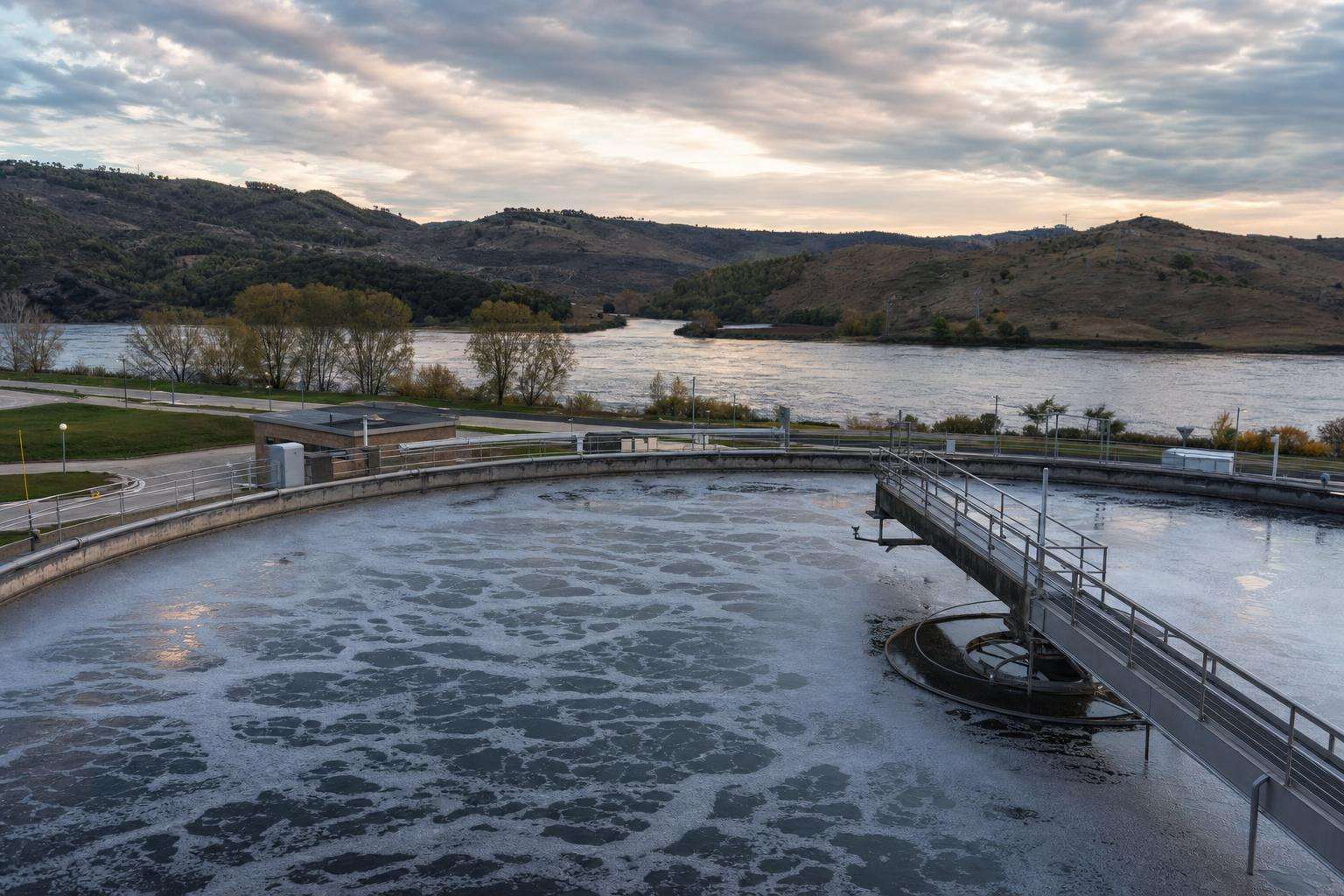
Conventional WWTPs partially remove EE2: Tang 2021 averages ~48% primary → ~72% activated sludge (wide ranges). Fish can respond at ng/L; human drinking-water intakes remain far below pill doses. Advanced ozone/GAC/RO polish further.
Birth-control-in-water headlines often skip the plant. Ethinylestradiol (EE2) removal is an engineering performance story before it is a pharmacy story.
This article is informational and editorial only. It is not medical advice, diagnosis, or a treatment plan. Numbers and literature ranges cited here are not personal prescriptions. Consult a qualified clinician before changing medications, supplements, diet, equipment, or management of a diagnosed condition. Seek urgent care for emergencies.
How much EE2 do different wastewater processes remove?
Tang et al. 2021 reviewed global EE2 wastewater data and reported average removals of approximately 47.5% primary, 55.3% biological filter, 59.4% lagoon, and 71.5% activated sludge, with extremes from apparent negative removal to 100% (PubMed 33453480). Negative removal can reflect deconjugation of metabolites back to free EE2 or sampling variability—not magical creation of drug mass from nothing.
U.S. exposure-characterization work summarized by Laurenson and colleagues has used secondary-treatment removal assumptions on the order of roughly 80% for EE2 in some modeling contexts, illustrating that reviews and models occupy a similar partial-removal band rather than zero or total elimination (PMC3933577). Natural estrogens such as 17β-estradiol often show high removal (commonly cited ~85–99% in comparative plant studies), while estrone can be more variable because of transformation pathways.
| Process | Approx. average EE2 removal | Note |
|---|---|---|
| Primary only | ~47.5% | Tang 2021 average |
| Biological filter | ~55.3% | Tang 2021 |
| Lagoon | ~59.4% | Tang 2021 |
| Activated sludge | ~71.5% | Tang 2021; SRT matters |
| Advanced ozone/GAC/RO | Higher, design-specific | Capital upgrades |
Why do fish risk and human dose diverge?
EE2 is among the most potent synthetic estrogens in aquatic endocrine assays. Surface-water concentrations in the low nanograms per liter can induce vitellogenin and intersex signals in fish downstream of incomplete treatment—documented in environmental monitoring literature. Human finished drinking water, when EE2 is detected at all, typically sits far below a single oral contraceptive tablet when converted to daily intake. Public communication fails when those two truths are collapsed into “the water is a birth-control pill.”
Solids retention time, temperature, and plant loading change biodegradation. Ziels et al. reported EE2 removal roughly 60–80% at SRT 5–12 days in studied conditions, with wider scatter outside optimal windows. Cold winters and overloaded plants are real-world underperformance modes that utilities track in process control.
What upgrades and household actions matter?
Utilities targeting residual micropollutants may add ozone, advanced oxidation, or GAC contactors; potable reuse trains often include RO. Those decisions are ratepayer and regulatory projects guided by ambient monitoring—not viral detox lists. Households should use pharmaceutical take-back programs, avoid toilet disposal of unused hormones when alternatives exist, and interpret home filtration choices against their full lab panel (lead, PFAS, pathogens) rather than EE2 fear alone.
Bottom line: conventional wastewater treatment removes much—but not all—EE2, with activated sludge outperforming primary processes on average. Ecology can still see ng/L effects; human contraceptive-dose equivalence in tap water does not follow.
Across environmental-health topics, the same discipline applies: define the exposure pathway, quote primary numbers with units, separate hazard from individual risk, and choose mitigations that actually touch the dominant dose. Unregulated detox products, extreme avoidance theater, and unit-free headlines consistently underperform simple engineering and clinical basics. When agency pages update, prefer the live primary document over secondary summaries that freeze old advisories as if they were law.
If you are building a household plan, sequence matters. Confirm the hazard with appropriate testing or inspection, reduce the largest ongoing source, maintain any filter or remediation system on schedule, and use standard medical care for symptoms. That order is slower to go viral than a scare list—and far more likely to change body burden, indoor air, or water quality in the real world.
Across environmental-health topics, the same discipline applies: define the exposure pathway, quote primary numbers with units, separate hazard from individual risk, and choose mitigations that actually touch the dominant dose. Unregulated detox products, extreme avoidance theater, and unit-free headlines consistently underperform simple engineering and clinical basics. When agency pages update, prefer the live primary document over secondary summaries that freeze old advisories as if they were law.
If you are building a household plan, sequence matters. Confirm the hazard with appropriate testing or inspection, reduce the largest ongoing source, maintain any filter or remediation system on schedule, and use standard medical care for symptoms. That order is slower to go viral than a scare list—and far more likely to change body burden, indoor air, or water quality in the real world.
Across environmental-health topics, the same discipline applies: define the exposure pathway, quote primary numbers with units, separate hazard from individual risk, and choose mitigations that actually touch the dominant dose. Unregulated detox products, extreme avoidance theater, and unit-free headlines consistently underperform simple engineering and clinical basics. When agency pages update, prefer the live primary document over secondary summaries that freeze old advisories as if they were law.
If you are building a household plan, sequence matters. Confirm the hazard with appropriate testing or inspection, reduce the largest ongoing source, maintain any filter or remediation system on schedule, and use standard medical care for symptoms. That order is slower to go viral than a scare list—and far more likely to change body burden, indoor air, or water quality in the real world.
Sources & citations
Frequently asked