Evidence-dense health optimization

Health Canon

Environmental Health

Best Water Filters for PFAS in 2026: RO, Carbon, Pitchers

Evidence-ranked household PFAS treatment: NSF 58 RO, NSF 53 carbon, pitcher limits, anion exchange, distillation, and whole-house realism.
14 MIN READ 3 SOURCES
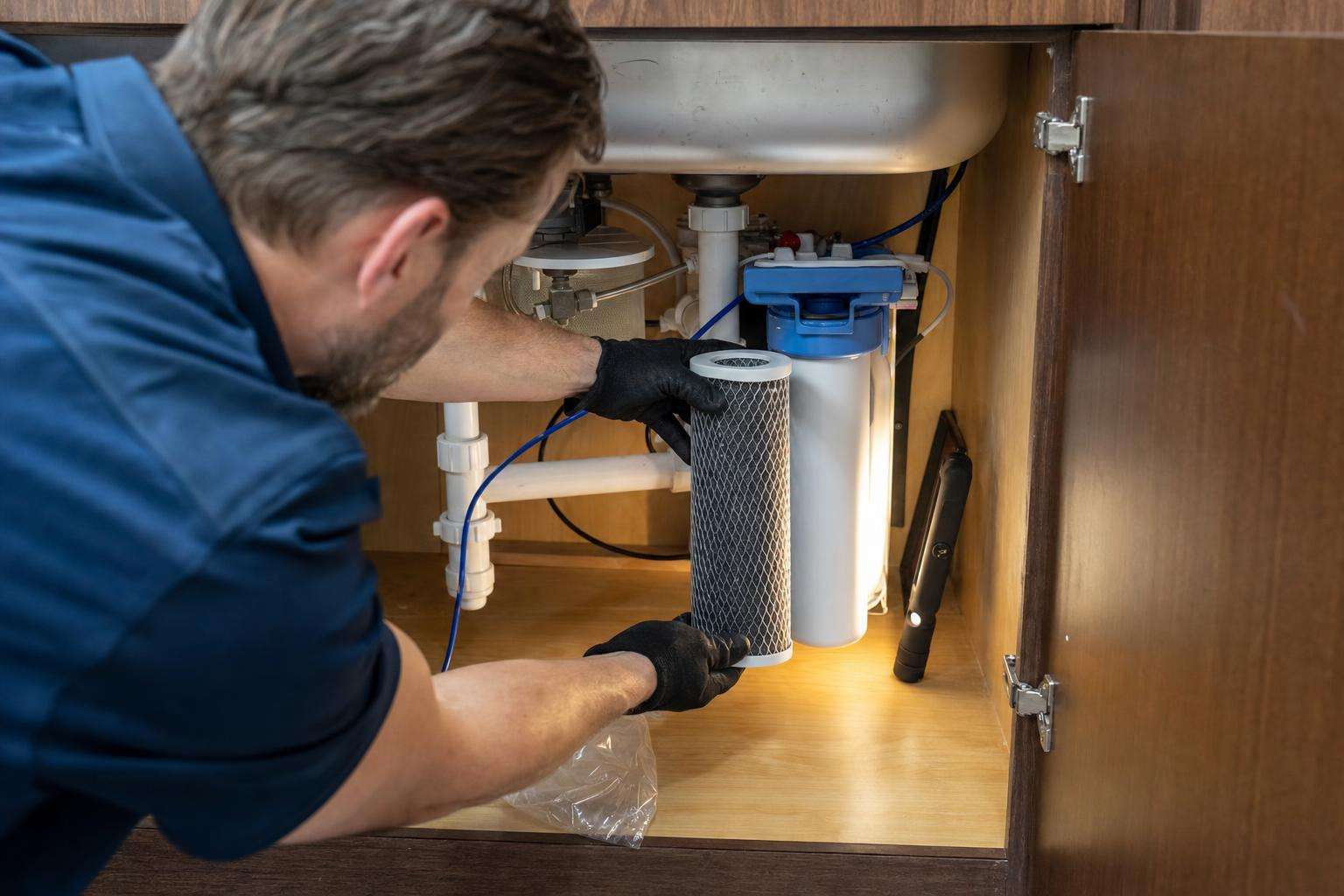
Environmental Health Under-sink reverse osmosis system and carbon cartridges on a clean utility shelf, no people or brands
Illustration: Health Canon

PFAS filtersNSF 58 RONSF 53 GACshort-chain PFASunder-sink RO

The quick verdict

Match the barrier to the chemistry: RO and certified carbon beat pitchers for forever chemicals—when models, claims, and maintenance are real.

Best overall
Under-sink reverse osmosis (NSF/ANSI 58 + PFAS claim) — Size-exclusion plus carbon stages give the most consistent short- and long-chain PFAS reduction when the exact model is certified and maintained.
Best value
NSF/ANSI 53 PFAS-certified carbon block (POU) — Lower CAPEX than RO for homes with long-chain-dominated profiles and documented PFOA/PFOS reduction claims—if media are replaced on schedule.
Best for Private well or mixed short-chain PFAS plume
Under-sink reverse osmosis (NSF/ANSI 58 + PFAS claim) — Short-chain PFAS break through GAC earlier; RO literature and EPA filter guidance favor membrane barriers for broad PFAS suites.

How we evaluated

We ranked household PFAS treatment options by published treatment performance, EPA/ATSDR consumer guidance, NSF/ANSI claim specificity, short-chain breakthrough risk, CAPEX/OPEX realism, and maintenance failure modes—not brand marketing.

  • Contaminant match. Documented reduction for PFOA/PFOS and relevance to short-chain/ether PFAS where data exist.
  • Certification integrity. Model-specific NSF/ANSI 53 or 58 PFAS claims from accredited directories over vague “tested to NSF” language.
  • Operational honesty. Wastewater, mineral removal, media life, and re-test discipline after install.
  • Use-case fit. Renters vs owners, city vs well, ingestion-only vs whole-house myths.

Rating scale: 1–5 stars for practical PFAS risk reduction when correctly specified and maintained; not a product endorsement list.

At a glance

Best Water Filters for PFAS in 2026: RO, Carbon, Pitchers — quick comparison
# Name Rating Best for Pricing
1 Under-sink reverse osmosis (NSF/ANSI 58 + PFAS claim) Homes with confirmed or suspected mixed PFAS profiles, private wells, or anyone wanting the strongest POU barrier Typical under-sink RO kits roughly $150–$950 plus annual filter kits
2 NSF/ANSI 53 PFAS-certified activated carbon (under-sink or faucet) Budget-conscious households with long-chain-dominated water and reliable filter-change habits Often $50–$400 hardware plus recurring cartridges
3 Pitcher and refrigerator carbon filters (claim-limited) Interim or renter scenarios after verifying a specific PFAS-listed model Hardware often $20–$80; filters recurring every 1–3 months
4 Anion-exchange PFAS treatment (POU/POE specialty) Wells and complex water chemistries after professional design and lab characterization Mid-to-high CAPEX; professional design and media replacement drive cost
5 Countertop distillation (NSF/ANSI 62 class) Small-volume users in rental units who need high purity without under-sink plumbing Countertop units often roughly $100–$400 plus electricity
6 Whole-house (POE) carbon or hybrid trains — know the limits Homes needing POE comfort/well treatment paired with separate certified POU PFAS control Installed POE systems often $500 to several thousand dollars

Under-sink reverse osmosis (NSF/ANSI 58 + PFAS claim)

The most consistent household PFAS barrier when certified and maintained

Under-sink reverse osmosis is the default high-confidence option for households that need broad PFAS reduction at the kitchen tap. RO membranes reject dissolved contaminants by size and charge exclusion; peer-reviewed and agency syntheses routinely report greater than 90 percent rejection for many PFAS when systems operate correctly. EPA materials on identifying PFAS-reducing filters point consumers to devices certified under NSF/ANSI 58 (RO) or 53 (adsorption) with explicit PFAS claims—not generic “purifier” stickers. Typical residential configurations stack sediment and carbon prefilters, the RO membrane, a storage tank, and a post-carbon polish stage. That multi-stage design helps with chlorine and taste while the membrane carries the PFAS load. Short-chain PFAS and high-mobility replacements are the reason RO often outranks carbon alone: granular activated carbon can remove long-chain PFOA and PFOS well until breakthrough, but shorter chains tend to break through earlier as sites fill. RO is not magic: reject water (brine) is generated, TDS and hardness drop sharply, and neglected prefilters or fouled membranes degrade performance. Whole-house RO is rarely justified for PFAS because of flow, waste, and cost; point-of-use drinking water is the rational locus for ingestion risk. Best practice is test source water, select a directory-listed model with a PFAS reduction claim and stated capacity, install with a dedicated faucet, replace media on the manufacturer schedule, and re-test finished water when risk is high (private wells near AFFF sites, industrial plumes, or elevated utility notices). Remineralization cartridges address taste and corrosion concerns; they are not multivitamin therapy. Boiling does not remove PFAS and can concentrate them.

Strengths

  • Broad short- and long-chain PFAS reduction potential when membrane is healthy
  • Clear NSF/ANSI 58 certification path with model-specific PFAS claims
  • Pairs well with post-install lab re-testing for high-risk homes
  • Under-sink POU design avoids whole-house RO economics and waste scale

Trade-offs

  • Produces reject water; removes beneficial minerals unless remineralized; higher CAPEX/OPEX than simple carbon
Best for
Homes with confirmed or suspected mixed PFAS profiles, private wells, or anyone wanting the strongest POU barrier
Pricing
Typical under-sink RO kits roughly $150–$950 plus annual filter kits

Source: EPA — Identifying drinking water filters certified to reduce PFAS · Visit Under-sink reverse osmosis (NSF/ANSI 58 + PFAS claim)

NSF/ANSI 53 PFAS-certified activated carbon (under-sink or faucet)

Strong long-chain performance when claim, contact time, and media life are real

Granular or carbon-block devices certified to NSF/ANSI 53 for PFAS reduction are the main non-membrane path for household PFOA and PFOS control. Adsorption works best with adequate empty-bed contact time, fresh media, and influent chemistry that favors longer-chain carboxylates and sulfonates. EPA and NSF consumer materials emphasize that certification is claim- and model-specific: a unit listed only for chlorine under NSF/ANSI 42 does not inherit a PFAS health claim. In practice, under-sink or faucet-mounted 53 systems with published PFOA/PFOS reduction data and gallon-rated capacity are far more defensible than unlisted pitchers. The honesty gate is breakthrough. As carbon sites saturate, effluent PFAS can rise—sometimes abruptly for mobile short-chain species—so replacement intervals are safety-critical, not optional. ATSDR clinical guidance frames water filtration as a practical exposure-reduction step when drinking water is a driver of body burden; it does not claim filters eliminate all PFAS sources (food packaging, dust, occupation). Carbon alone may be a rational best-value choice when utility data show mainly long-chain legacy PFAS, budgets exclude RO, or renters need a less invasive install. It is weaker when short-chain or ether PFAS dominate, when flow rates are high and contact time short, or when households never change cartridges. Verify listings in NSF, WQA, IAPMO, UL, or CSA directories, open the performance data sheet for percent reduction and capacity, and re-test if you are on a well or under a public notice. Pair carbon with source testing—never buy hardware before mapping the contaminant.

Strengths

  • Often lower cost and less water waste than RO for drinking-water PFAS
  • Strong documented performance for many long-chain PFAS when certified
  • Wide product availability in under-sink and faucet form factors
  • Clear claim language when shoppers use accredited directories

Trade-offs

  • Earlier breakthrough risk for short-chain PFAS; performance collapses if media are overdue
Best for
Budget-conscious households with long-chain-dominated water and reliable filter-change habits
Pricing
Often $50–$400 hardware plus recurring cartridges

Source: NSF — PFAS in drinking water and filtration

Pitcher and refrigerator carbon filters (claim-limited)

Convenient aesthetics devices—only a few carry real PFAS claims

Pitcher and refrigerator filters are the most common household water devices and the most frequently oversold for forever chemicals. Most are NSF/ANSI 42 aesthetic products aimed at chlorine taste and odor. Without a model-specific health-effects claim for PFAS under NSF/ANSI 53 (or an equivalent accredited listing), they should not be treated as PFAS solutions. A minority of pitcher designs have sought PFAS reduction claims; those must be verified by exact model number, not brand reputation. Even when a claim exists, capacity in gallons is modest, contact time is limited, and late-life breakthrough is easy to miss because taste may still improve after PFAS adsorption falters. Refrigerator filters add another failure mode: installers rarely re-check the data sheet when the OEM swaps media formulations under the same exterior shell. EPA’s public PFAS filter fact sheet and directory guidance repeatedly stress looking up the model, reading the performance data sheet, and matching the analyte. Pitchers remain useful for renters who need chlorine improvement, travel kits, or interim use while arranging under-sink treatment—but they sit low on a PFAS risk stack. Do not boil water to “help” the pitcher; boiling concentrates non-volatile PFAS. If your only option is a listed PFAS pitcher, change filters early rather than late, use it only for cold drinking and cooking water, and plan an upgrade if lab results show elevated short-chain species or high total PFAS. Treat unlisted pitchers as taste tools, not health-effects devices.

Strengths

  • Low cost and no plumbing for renters
  • Easy daily compliance for cold drinking water
  • A few models carry genuine PFAS reduction listings
  • Useful bridge while installing POU RO or 53 systems

Trade-offs

  • Most units lack PFAS claims; short contact time and small capacity raise breakthrough risk
Best for
Interim or renter scenarios after verifying a specific PFAS-listed model
Pricing
Hardware often $20–$80; filters recurring every 1–3 months

Source: EPA water filter fact sheet (PFAS)

Anion-exchange PFAS treatment (POU/POE specialty)

Strong ion-exchange path for many anionic PFAS when engineered correctly

Anion-exchange resins can remove many PFAS that carry negative charge, including species that challenge exhausted carbon beds. Municipal and industrial literature treats anion exchange as a major PFAS treatment class alongside GAC and high-pressure membranes; residential products exist but are less commoditized than RO kits. Selectivity depends on resin chemistry, competing anions (sulfate, nitrate, bicarbonate), contact time, and regeneration or replacement strategy. For private wells with complex mixed plumes—PFAS plus nitrate, for example—engineered anion exchange or hybrid trains can outperform consumer carbon pitchers by a wide margin. The trade-offs are real: spent resin becomes a concentrated waste stream, system design is not plug-and-play, and certification claims must still be model-specific rather than class-assumed. Point-of-entry (whole-house) anion systems address shower and laundry water but are expensive; most household health prioritization still centers on ingestion dose from drinking and cooking water. EPA treatment-technology pages discuss GAC, ion exchange, and RO/nanofiltration as leading PFAS removal approaches at scale—useful context even when shopping residential analogs. Homeowners should involve a water-treatment professional and state-certified labs rather than mail-order resin without influent characterization. Pair any install with raw and finished PFAS panels (methods such as EPA 533/537.1 suites) and a maintenance contract. Anion exchange is not a substitute for fixing an obvious source or for medical evaluation when serum PFAS is clinically managed under NASEM-tier frameworks.

Strengths

  • Effective for many anionic PFAS including some that stress carbon
  • Can address co-contaminants like nitrate in engineered trains
  • Scalable from specialty POU to POE with professional design
  • Supported by municipal treatment evidence base

Trade-offs

  • Higher design complexity, waste-resin handling, and cost than standard RO/carbon kits
Best for
Wells and complex water chemistries after professional design and lab characterization
Pricing
Mid-to-high CAPEX; professional design and media replacement drive cost

Source: EPA — Reducing PFAS in drinking water: treatment technologies

Countertop distillation (NSF/ANSI 62 class)

Phase-change purity for small volumes—energy-heavy, VOC caveats apply

Distillation boils water and condenses steam, leaving many dissolved salts, metals, and non-volatile organics—including many PFAS—in the boiling chamber. NSF/ANSI 62 covers distillation systems; as always, claims are product-specific. Distillers can produce very low-TDS water useful for small-volume drinking needs, laboratories, or CPAP-type use cases. They are energy-intensive, slow (often batches of a few liters), and hot-surface hazards. Some volatile organic compounds can co-distill if not managed with carbon vents or pre/post treatment, so “distilled” is not a universal purity word. For PFAS specifically, non-volatile perfluoroalkyl acids tend to remain in the still bottoms rather than the distillate when systems are operated correctly, but households should still prefer devices with relevant certifications and should not assume every countertop gadget is validated. Compared with under-sink RO, distillation usually loses on convenience and operating cost for family-scale cooking water, yet it can serve apartments that forbid plumbing modifications. Maintenance includes cleaning scale, discarding concentrated waste water from the boiling chamber (which may hold contaminants), and replacing any carbon components. Distillation does not replace source testing. If your well has microbes, pair with disinfection strategy; distillation can inactivate pathogens when properly run, but system design and handling matter. Do not use distillation as a “detox” medical therapy narrative—it is an engineering control for water quality. Rank it as a legitimate niche tool: strong on many inorganics and many PFAS for small volumes, weak as a whole-home solution, and inferior to certified RO for most multi-person households that can plumb a dedicated faucet.

Strengths

  • Strong removal of many dissolved contaminants including many PFAS for batch water
  • No membrane to foul; simple phase-change principle
  • Useful where plumbing changes are forbidden
  • Can address microbes when correctly operated

Trade-offs

  • Slow, energy-intensive, small throughput; some VOCs may co-distill without carbon stages
Best for
Small-volume users in rental units who need high purity without under-sink plumbing
Pricing
Countertop units often roughly $100–$400 plus electricity

Source: NSF/ANSI standards overview for water treatment systems

Whole-house (POE) carbon or hybrid trains — know the limits

Comfort and residual chlorine ≠ full PFAS solution at the kitchen glass

Whole-house point-of-entry systems excel at sediment, scale control (softeners), residual chlorine/chloramine aesthetics, and some well-water problems—but they are frequently misunderstood as automatic PFAS solutions. A large GAC tank can reduce many organic chemicals if sized for contact time and replaced or rebedded correctly; however, short-chain PFAS breakthrough, channeling, and multi-year neglect are common failure modes. Softening (cation exchange) does not remove PFAS. UV disinfection does not remove chemicals. Sediment filters protect downstream gear only. For PFAS risk driven by drinking and cooking water, EPA-aligned consumer strategy still prioritizes certified POU devices at the kitchen. POE may still be rational: reducing chlorine for skin comfort, handling iron/manganese, or providing a first barrier before POU RO. Hybrid designs (POE carbon + POU RO) are common in engineer-designed homes near contaminated sites. Capital cost ranges from hundreds to many thousands of dollars installed. Media disposal and bypass valves for outdoor hose spigots add complexity. If a vendor promises “removes all forever chemicals whole home” without influent data, empty-bed contact calculations, and a re-test plan, treat the pitch as marketing. Private-well owners remain outside EPA SDWA MCL enforcement—testing cadence (at least annual baseline panels, plus PFAS when risk factors exist) is the owner’s job. Rank whole-house as supporting infrastructure, not as a substitute for verified drinking-water PFAS treatment. Combine POE comfort treatment with POU ingestion protection when PFAS is the primary concern.

Strengths

  • Improves whole-home water aesthetics and protects plumbing when correctly specified
  • Can reduce some organics at scale with large GAC beds
  • Useful pre-treatment ahead of POU RO in dirty feed water
  • Addresses non-PFAS well issues (sediment, iron, hardness) in one design conversation

Trade-offs

  • Easy to oversell for PFAS; short-chain breakthrough and maintenance neglect undermine claims
Best for
Homes needing POE comfort/well treatment paired with separate certified POU PFAS control
Pricing
Installed POE systems often $500 to several thousand dollars

Source: EPA — Reducing PFAS in drinking water: treatment technologies

Frequently asked

Does boiling water remove PFAS?

No. Boiling does not destroy typical PFAS and can concentrate them as water evaporates. Effective household options center on reverse osmosis, certified activated carbon devices with PFAS claims, and engineered anion exchange. Choose products listed for PFAS reduction under NSF/ANSI 53 or 58 by an accredited certifier, replace media on schedule, and re-test finished water when exposure risk is high. Boiling remains appropriate for many microbes, not for forever chemicals.

Is a refrigerator filter enough for PFAS?

Only if the exact model is certified for PFAS reduction and maintained. Many refrigerator and pitcher filters are NSF/ANSI 42 aesthetic devices for chlorine taste and odor without a health-effects PFAS claim. Look up the model number in NSF, WQA, IAPMO, UL, or CSA directories and open the performance data sheet for PFOA/PFOS reduction, capacity in gallons, and replacement interval. When in doubt, upgrade to an under-sink RO or 53-listed carbon unit for drinking and cooking water.

When is reverse osmosis better than carbon for PFAS?

Carbon often removes long-chain PFAS such as PFOA and PFOS well when contact time is adequate and media are fresh. Short-chain PFAS tend to break through carbon earlier. Reverse osmosis provides a size-exclusion barrier that treatment reviews describe as more consistent across chain lengths when the membrane is operating correctly. Homes with mixed or short-chain-dominated profiles often prioritize NSF/ANSI 58 RO with a PFAS claim plus post-install testing.

Do I need whole-house PFAS treatment?

Usually not as the first step. Most chronic ingestion dose comes from drinking and cooking water, which point-of-use kitchen systems address efficiently. Whole-house treatment can help with chlorine residual, sediment, and some organic loads, but it is costly and still requires correct media selection and maintenance. Many households use hybrid designs: POE for comfort contaminants and certified POU RO or carbon for PFAS at the tap.

What should I test for before buying a filter?

Start with your water source. Public-system customers can review consumer confidence reports and any PFAS notices; private-well owners should use state-certified labs. For PFAS, methods aligned with EPA 533/537.1 style suites capture dozens of analytes. Also map co-contaminants that change technology choice—nitrate, arsenic, hardness, iron, microbes—so you do not buy a PFAS-only story for a multi-hazard well. Test, treat, maintain, re-test.