Evidence-dense health optimization

Health Canon

Environmental Health

Reducing Household Toxins: The Steps (2026)

Dose-ranked household mitigations: water filters, fragrance cuts, mold moisture, plastics heat, dust hygiene, cookware—without detox theater.
14 MIN READ 3 SOURCES
Environmental Health Sunny kitchen with glass water carafe and open window ventilation, no people
Illustration: Health Canon

home detox mythsPFAS waterfragrance freemicroplasticsmold dampness

Bottom line

Rank mitigations by dose impact: water, air/damp, fragrances, plastics heat, dust—then stop panic-cleaning.

  • Fix drinking-water chemistry match (test → filter) — Contaminated water is often the highest chronic ingestion lever for PFAS and several metals; certification-matched POU treatment beats product panic.
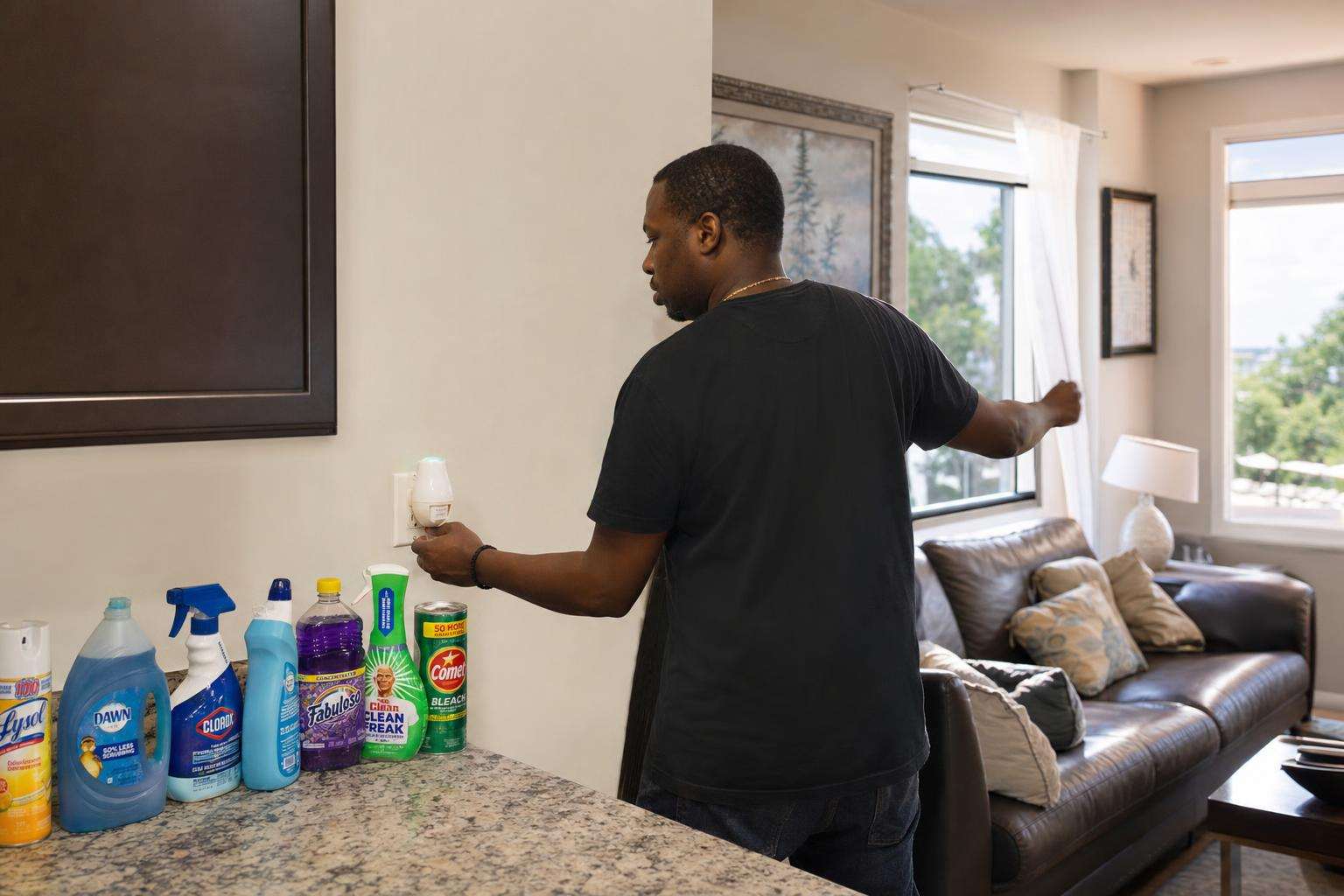
  • Fragrance and phthalate load cut — Free or cheap swaps (unscented detergents, skip plug-ins) reduce indoor VOC/fragrance chemical load without capital projects.
  • Dampness and mold moisture control — WHO dampness frameworks prioritize moisture remediation over bleach-only theater for respiratory risk.

How we built this guide

We ranked household exposure-reduction steps by likely dose impact, evidence grade, cost, and irreversibility of bad advice (e.g., bleach-only mold “fixes”). Not a detox cleanse list.

  • Dose impact. Contribution to chronic exposure for common household contaminants.
  • Evidence base. Agency guidance and peer-reviewed exposure science.
  • Cost/adherence. Realistic for renters and owners.
  • Harm of misuse. Whether the step can create new risks if done wrong.

Key takeaways

  1. Match drinking-water treatment to your test results
  2. Cut fragrance and phthalate loads
  3. Control dampness and mold moisture
  4. Reduce heat-plus-plastic food contact
  5. Use dust, floor, and hand hygiene for semi-volatiles
  6. Choose cookware and packaging without purity spirals

Match drinking-water treatment to your test results

Highest-yield ingestion control for many chemical stories

For PFAS, arsenic, nitrate, lead, and several other contaminants, drinking and cooking water can dominate household ingestion dose when levels are elevated. The correct sequence is always test or review utility data, map technology to chemistry, install a claim-matched device, maintain media, and re-test when risk is high. EPA materials on PFAS filters point to NSF/ANSI 53 or 58 devices with explicit reduction claims; boiling concentrates many non-volatile chemicals including PFAS. Private wells sit outside EPA SDWA MCL enforcement—owners must test. Public-system customers should read consumer confidence reports and notices rather than guessing from social media maps alone. Ranked first because few other home steps match water’s continuous daily liters of intake. Under-sink RO or certified carbon at the kitchen covers ingestion without whole-house fantasy pricing for most families. Do not buy a random detox pitcher before knowing the analyte. Lead requires different emphasis on premise plumbing than PFAS; technology match still rules. This is engineering control, not a cleanse—pair with hand hygiene and dust control for multimedia PFAS and lead pathways in the same home.

Who this is for: Households on wells, aging plumbing, or PFAS/utility notices

Do

  • High chronic dose leverage when water is contaminated
  • Clear certification pathways for several contaminants
  • Actionable for renters via POU devices
  • Re-testing provides feedback loops

Watch out

  • Upfront testing and filter costs; maintenance neglect erases benefits

Cut fragrance and phthalate loads

Stop paying to aerosolize unnecessary chemicals indoors

Fragranced consumer products—air fresheners, scented detergents, candles, and perfume laundry boosters—can emit complex mixtures including solvents, terpenes that form indoor secondary pollutants, and fragrance allergens. Phthalates used as solvents or fixatives in some fragranced mixtures are endocrine-active chemicals of concern in biomonitoring literature, with exposure routes including air and dust. The mitigation is delightfully boring: choose unscented cleaning and laundry products, ventilate when cooking, skip plug-in fresheners, and prefer opening windows over masking odors. Ranked as best value because many swaps cost less than the scented versions they replace. Asthma and allergy households often notice symptom changes when fragrance load drops—an adherence bonus beyond chemical theory. Natural essential-oil diffusers are not automatically safe; high airborne terpene loads can still irritate airways and generate secondary pollutants. EU cosmetic allergen labeling is stricter than many U.S. trade-secret fragrance disclosures—read labels anyway and treat fragrance as optional. This step does not require perfection: removing the continuous emitters such as plug-ins and daily aerosols yields most of the gain. Combine with dust control because semi-volatiles partition to particles that settle on floors where children play. Avoid shame framing; make unscented the default purchase rule for the household cart.

Who this is for: Any household, especially with asthma, children, or fragrance sensitivity

Do

  • Often free or cost-saving
  • Reduces continuous indoor chemical emitters
  • Helps many fragrance-sensitive and asthma households
  • Simple adherence rules

Watch out

  • Does not address industrial or water contaminants; social pressure to keep scented homes

Control dampness and mold moisture

Fix water first—bleach theater is not remediation

WHO and public-health frameworks on indoor dampness link moisture problems to respiratory symptoms, asthma exacerbation, and other outcomes; mold is a visible signal of a moisture problem, not a mystical toxin independent of water. Best steps: stop leaks, dry wet materials within twenty-four to forty-eight hours when possible, run exhaust fans, maintain reasonable indoor humidity, and remediate damaged porous materials rather than perfume them. Small areas may be cleanable by careful homeowners with protection; larger contamination, sewage, or HVAC involvement needs professionals. Bleach on porous moldy drywall without drying is a recurring failure mode that frustrates occupants and can irritate lungs. Ranked high for homes with musty odors, past flooding, or basement humidity that never quite dries. Renters should document problems and escalate to landlords because persistent damp is a housing quality issue, not a personal failing. Avoid fogging mold detox chemicals as a substitute for moisture control and material removal. People with severe asthma or immunosuppression need lower thresholds for professional help and temporary relocation during major jobs. Pair with outdoor-air ventilation strategy appropriate to climate and outdoor air quality days. This is environmental health fundamentals, not a standalone diagnosis of complex chronic syndromes—symptom clusters still need clinical evaluation.

Who this is for: Musty, leak-prone, or post-flood homes and allergy-asthma households

Do

  • Strong public-health evidence linking dampness to respiratory outcomes
  • Clear physical hierarchy: moisture then materials then clean
  • Protects building integrity as well as lungs
  • Scales from DIY small areas to professional remediation

Watch out

  • Can be costly for major leaks; landlords may resist; non-mold illness can be misattributed

Reduce heat-plus-plastic food contact

Don’t microwave takeout boxes; prefer glass/steel for hot foods

Microplastics research is evolving quickly, with detections in various human tissues and ongoing debate about dose-response and clinical endpoints. Regardless of where epidemiology lands, engineering hygiene is cheap: avoid heating food in plastic, prefer glass or stainless for hot storage, do not pour boiling liquids into soft plastic, and reduce single-use bottle dependence when water quality allows. Many plastics also contribute additive chemicals such as plasticizers with endocrine-activity concerns depending on polymer and use conditions. Ranked mid-high because daily hot-contact behaviors are modifiable without perfectionism about every credit-card receipt or every carpet fiber. Black plastic utensils and heavily worn nonstick raise separate additive and wear conversations; replace degraded cookware rather than scraping it forever. Tea bags, cutting boards, and bottle abrasion are active research topics—treat dramatic headlines as hypotheses, still prefer less unnecessary plastic abrasion when easy swaps exist. Do not panic about every particle; do not ignore controllable heat-contact habits that cost almost nothing to improve. Filter drinking water if indicated for other contaminants; microplastic filtration claims need technology-specific scrutiny rather than brand slogans. This step stacks with water and fragrance controls for a coherent kitchen exposure stack that renters can execute immediately. Measure success by habit change, not by unvalidated blood microplastic kits sold online.

Who this is for: Households ready to change kitchen heat-and-storage habits

Do

  • Low cost behavioral changes
  • Reduces heat-driven polymer and additive migration opportunities
  • Aligns with general food-safety container sense
  • Works for renters immediately

Watch out

  • Human clinical endpoints for microplastics still uncertain; easy to over-anxiety beyond dose

Use dust, floor, and hand hygiene for semi-volatiles

HEPA vacuum + wet dust; wash hands—toddler pathway realism

House dust is a reservoir for semi-volatile chemicals including some PFAS from textiles, flame retardants in older foams, lead in pre-1978 housing, and pesticide track-in from outdoors. Toddlers have higher dust ingestion via hand-to-mouth behavior, which is why floor cleanliness and handwashing punch above their boring reputation in exposure science. Practical stack: vacuum with HEPA when possible, wet-dust instead of dry feather-dusting that resuspends particles, use doormats, remove shoes, and wash hands before eating. Replace crumbling foam furniture when feasible rather than living with open polyurethane dust sources indefinitely. Ranked as a multimedia complement to water filtration for PFAS and lead stories because serum and body burden reflect more than taps alone. Avoid extreme never-leave-the-house dust orthorexia; ordinary cleaning cadence already helps most households. Professional lead cleaning protocols differ from ordinary housekeeping after renovations—know when you need specialized work and clearance testing. Skip unvalidated detox binders sold for ordinary dust exposure without clinical indication. This is especially high yield in older housing stock and homes with occupational take-home dust when work clothes are not managed carefully. Combine with fragrance reduction so you are not masking dust problems with continuous aerosols.

Who this is for: Families with young children, older housing, or renovation dust

Do

  • Targets toddler-relevant pathways
  • Low-tech and evidence-aligned for lead and dust chemicals
  • Complements water treatment for multimedia exposures
  • Improves general indoor cleanliness

Watch out

  • Incomplete alone for waterborne contaminants; easy to under-do after renovations that need pro protocols

Choose cookware and packaging without purity spirals

Replace degraded nonstick; cut greasy takeout packaging frequency

Grease-resistant packaging has historically been a PFAS use case; many jurisdictions and manufacturers have been shifting chemistries, but old stocks and overseas supply chains still vary. Practical reduction: cut frequency of hot greasy foods stored long-term in coated wrappers, prefer ceramic, glass, or stainless for cooking, and retire scratched nonstick pans that shed coating flakes into food. Cast iron and stainless require technique and maintenance, not moral superiority contests on social media. Ranked lower than water and dampness because for most people packaging is a smaller dose than contaminated wells—but it is still a controllable edge worth taking when easy. Avoid fear of every receipt and every pan brand without evidence, which burns attention better spent on testing water. Do not burn empty nonstick pans at high heat; follow temperature guidance on any new nonstick and replace when degraded rather than cooking on flaking surfaces. This step pairs with microplastics heat rules in the kitchen stack for a coherent set of food-contact habits. Occupational cooks have different cumulative exposures than home users and may need workplace controls beyond consumer tips. Spend first dollars on water testing if you have not—pans are secondary for many chemical risk profiles. Reassess packaging habits as local PFAS packaging policies and store offerings change over time.

Who this is for: Home cooks ready to refresh degraded cookware and cut packaging-heavy habits

Do

  • Concrete product retirement rules
  • Reduces unnecessary food-contact chemical edge cases
  • Aligns with PFAS packaging narratives without absolutism
  • One-time swaps last years

Watch out

  • Lower average dose impact than water for many homes; marketing noise is high

Frequently asked

What is the first home toxin step if budget is tiny?

Start with free or cheap high-yield moves: unscented cleaning products, ventilation when cooking, wet dusting, handwashing, and not heating food in plastic. If you suspect water issues—well ownership, old lead pipes, utility PFAS notices—prioritize testing next because water can dominate chronic ingestion dose. Avoid buying piles of detox supplements before measurements.

Do I need a whole-house air purifier for chemicals?

HEPA filtration helps with particles and some particle-bound contaminants; it is not a universal gas-phase chemical solution. Source control for fragrance emitters, combustion, and dampness usually outranks a single box purifier. Activated-carbon stages can adsorb some VOCs with maintenance needs. Match the tool to the problem after you identify sources.

Is bleach the right mold solution?

Moisture control is the primary intervention. Bleach may discolor surfaces and can create respiratory irritants, and it does not fix wet drywall cavities. Small non-porous surfaces can be cleaned carefully; porous moldy materials often need removal. Large areas, sewage, or HVAC contamination warrant professionals. Perfume and fogging are not remediation.

Should I test my blood for PFAS or mold toxins?

PFAS serum testing can be appropriate in clinical or high-exposure contexts using validated labs and structured interpretation frameworks—not random wellness kits. Mold toxin panels marketed online are often poorly validated for clinical decision-making. Start with environmental assessment and standard clinical care for symptoms. Discuss biomonitoring with a clinician who understands limitations.

Does a home detox cleanse work?

Sweating, juice cleanses, and unprescribed binders are not substitutes for exposure control and normal hepatic and renal clearance. The ranked steps here are engineering and behavioral controls: water, air moisture, product chemistry, dust, and food-contact heat. If you have acute poisoning concerns, emergency care—not a cleanse kit—is the correct path.