Evidence-dense health optimization

Health Canon

Environmental Health

Going Fragrance-Free: The Swap List (2026)

High-yield fragrance-free swaps: laundry, air fresheners, personal care, cleaners, candles/diffusers, and shared-space negotiation—unscented as default.
14 MIN READ 3 SOURCES
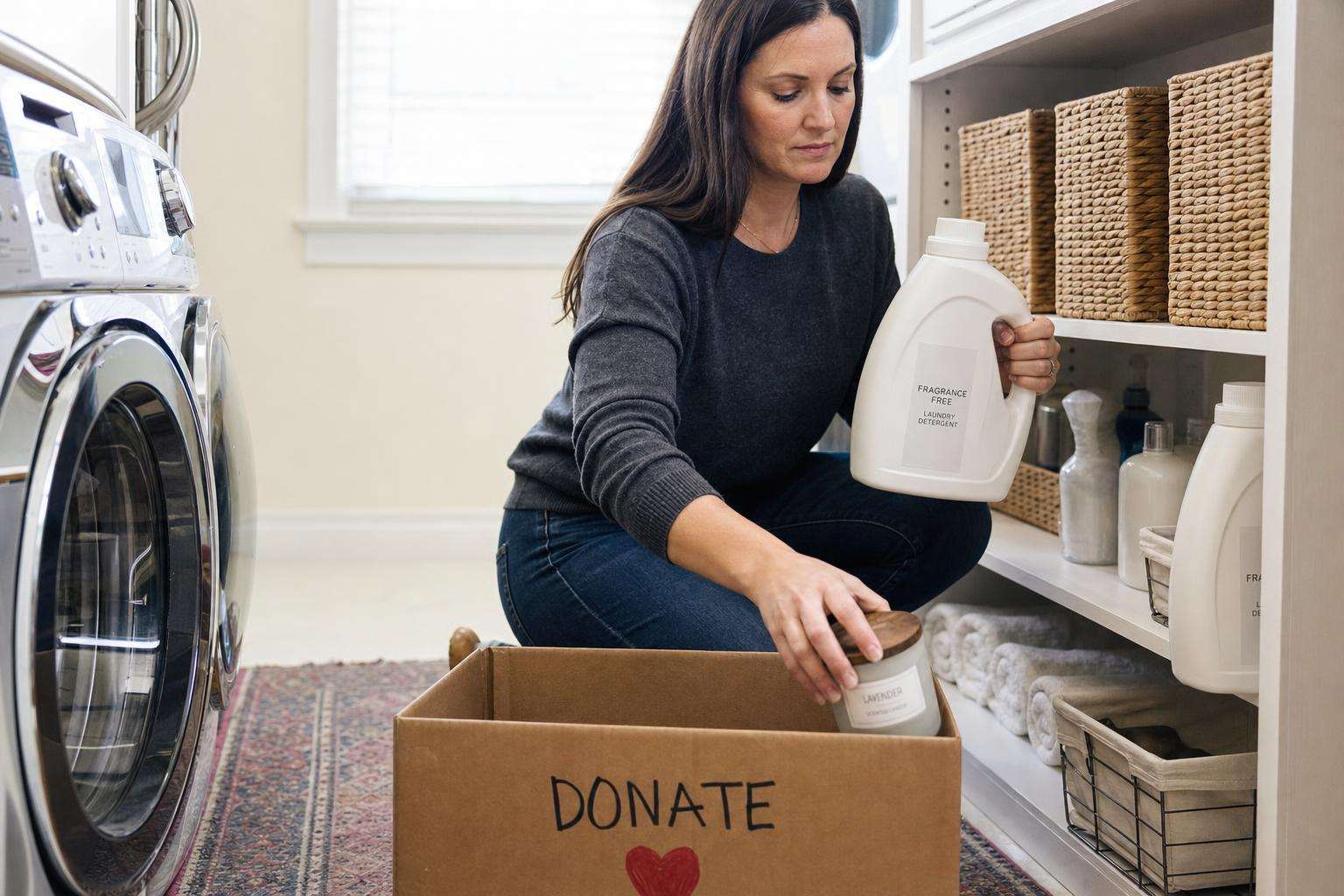
Environmental Health Unscented laundry detergent bottle beside folded towels near an open window, no people
Illustration: Health Canon

unscentedplug-insVOCsphthalatesessential oils

Bottom line

Laundry, plug-ins, personal care, cleaners—unscented defaults that stick.

  • Switch laundry and fabric care to unscented — Detergent and dryer chemistry coat textiles you live in all day—high contact time, easy swap.
  • Eliminate plug-in and spray air fresheners — Often saves money while removing continuous indoor emitters.
  • True fragrance-free personal care restock — Daily skin and hair products sit in the breathing zone; fragrance allergens matter for many.

How we built this guide

Ranked swaps by indoor emitter continuity, contact time, cost savings, and label literacy—including essential-oil false safety.

  • Dose / clinical impact. Likely effect on exposure or health decision quality.
  • Evidence base. Agency guidance, trials, or consensus statements.
  • Adherence cost. Money, time, and household friction.
  • Harm of misuse. Whether bad execution creates new risks.

Key takeaways

  1. Switch laundry detergent, softener, and dryer products to unscented
  2. Remove plug-in warmers, sprays, and continuous air fresheners
  3. Restock personal care with true fragrance-free options
  4. Choose fragrance-free cleaning products and ventilate
  5. Limit candles, incense, and essential-oil diffusion
  6. Negotiate fragrance norms in shared homes and workplaces

Switch laundry detergent, softener, and dryer products to unscented

Your clothes are a mobile diffuser

Scented detergents, softener liquids, scent booster beads, and dryer sheets can leave fragrance chemicals on textiles that off-gas near the breathing zone all day. Ranked first because laundry is high contact time and the swap is usually one-to-one on the shelf. Choose products labeled fragrance-free when possible; “unscented” can sometimes mean masking fragrances—read ingredient lists for parfum/fragrance. Skip beads entirely if reducing load is the goal. Wash new synthetic clothes before wearing when practical. Shared laundry machines in apartments may leave residues—an extra rinse helps some sensitive people. This swap often costs the same or less than premium scented lines. Pair with lower dryer heat when fabrics allow to extend textile life. If family members resist, start with the allergic person’s bedding and work outward. Measure success by symptom diaries and fewer headaches, not by laboratory VOC perfection. Laundry is the load-bearing fragrance habit for most homes. Document changes and reassess after several weeks so habits stick rather than cycling novelty.

Who this is for: Any household, especially scent-sensitive members

Do

  • High contact-time leverage
  • Usually cost-neutral
  • Simple one-shelf swap
  • Helps shared air for roommates

Watch out

  • Label loopholes; household resistance to scent loss

Remove plug-in warmers, sprays, and continuous air fresheners

Stop paying to emit

Plug-in warmers, aerosol sprays, incense, and automatic misting devices are intentional continuous chemical emitters. Ranked as best value because removing them is free going forward and often improves perceived air quality for asthma and migraine-prone people. Ventilate to address odors at the source—cooking exhaust fans, trash management, and dampness control—rather than masking. Ozone-generating gadgets marketed as purifiers can create respiratory irritants; skip them. Essential-oil diffusers still deliver high airborne terpene loads that can irritate airways and form secondary indoor pollutants. If you love occasional candles for ritual, ventilate and limit frequency rather than running emitters twelve hours daily. Offices and cars deserve the same rule—dangling scent trees are concentrated exposure chambers. Landlord-provided hallway fresheners may need polite negotiation. Track how often you “need” spray; it usually signals a source problem. Deletion beats substitution with a different perfume brand. Document changes and reassess after several weeks so habits stick rather than cycling novelty. Coordinate with household members when shared products or schedules determine adherence.

Who this is for: Asthma, migraine, and fragrance-sensitive households

Do

  • Removes continuous emitters
  • Saves money
  • Immediate indoor air change
  • Applies to cars and offices

Watch out

  • Social norms about “smelling clean”; source odors must still be fixed

Restock personal care with true fragrance-free options

Breathing zone chemistry matters

Shampoos, lotions, deodorants, and hair sprays sit inches from the nose. Fragrance mixes can include allergens and solvents; some related chemicals appear in biomonitoring literature depending on product class. Ranked high for daily dose. Look for fragrance-free claims and short ingredient lists; beware “natural fragrance” as automatic safety. FDA notes fragrance ingredients may be declared simply as “fragrance” in cosmetics, limiting transparency—another reason to prefer explicitly fragrance-free lines when reduction is the goal. Patch-test new products if you have contact dermatitis history. Makeup and perfume used occasionally are personal tradeoffs; continuous leave-on lotions are higher leverage to swap first. Men’s “sport” scented products are not exempt. Children’s products marketed as fruity still count. Keep a small kit for travel so hotels’ scented samples do not hijack your routine. This restock can be gradual as bottles empty to avoid waste. Document changes and reassess after several weeks so habits stick rather than cycling novelty. Coordinate with household members when shared products or schedules determine adherence.

Who this is for: Daily product users with sensitivity or reduction goals

Do

  • Daily breathing-zone relevance
  • Gradual restock limits waste
  • Helps contact allergy management
  • Improves label literacy

Watch out

  • “Fragrance” trade-secret opacity; product performance preferences

Choose fragrance-free cleaning products and ventilate

Clean is a state, not a lemon scent

Many household cleaners add fragrance unnecessary to disinfection or degreasing performance. Ranked mid: pick fragrance-free versions of products you actually need, ventilate during use, and never mix bleach and ammonia. Disinfectants have contact-time rules—scent does not equal kill claims. Microfiber and mechanical cleaning reduce chemical need for ordinary dirt. Keep disinfectants for appropriate surfaces and illness contexts rather than fogging the whole house daily. Occupational cleaners face higher cumulative exposures and need workplace controls beyond consumer tips. If you prefer simple ingredients like detergent and vinegar for some tasks, still respect material compatibility and never invent dangerous chemical cocktails from social media. Store chemicals safely away from children. This swap pairs with dampness control so musty smells are not fought with perfume. Read hazard labels even on green-marketed bottles. Document changes and reassess after several weeks so habits stick rather than cycling novelty. Coordinate with household members when shared products or schedules determine adherence. Prefer primary agency and clinical guidance over social-media summaries when stakes are high.

Who this is for: Households doing routine cleaning several times weekly

Do

  • Reduces unnecessary cleaning VOCs
  • Improves task ventilation habits
  • Supports safer disinfectant use
  • Cheap product substitutes exist

Watch out

  • Some disinfecting contexts need specific actives; greenwashing persists

Limit candles, incense, and essential-oil diffusion

Ritual less often; ventilate always

Combustion from candles and incense emits particles and complex organics; essential-oil diffusers aerosolize concentrated plant volatiles that can trigger asthma and form secondary pollutants indoors. Ranked as a frequency rule rather than lifelong ban for people who value ritual: use occasionally, keep wicks short, avoid lead-core antique wicks, and open windows when outdoor air allows. “Natural” is not a toxicology endpoint. Pets may be more sensitive to some essential oils—check veterinary guidance. Yoga studios and spas can be high-exposure workplaces for instructors. If scent-free is medical necessity, communicate needs before entering scented commercial spaces. LED candles deliver ambiance without combustion for many use cases. This rule prevents the failure mode of removing plug-ins then running a diffuser all night. Track triggers in a diary if headaches cluster around scent rituals. Document changes and reassess after several weeks so habits stick rather than cycling novelty. Coordinate with household members when shared products or schedules determine adherence.

Who this is for: Homes using daily candles or diffusers

Do

  • Cuts particle and VOC peaks
  • Allows intentional rare use
  • Pet and asthma relevant
  • Easy LED substitutions

Watch out

  • Cultural and religious incense practices need respectful negotiation

Negotiate fragrance norms in shared homes and workplaces

Your air is communal

Roommates, partners, and coworkers may not share your sensitivity. Ranked last because it is social, not a product SKU: propose fragrance-free zones (bedrooms), shared unscented laundry defaults, and advance notice before guests wear heavy cologne to small gatherings. Workplace accommodations for disability-related fragrance issues may involve HR processes depending on jurisdiction—document symptoms and medical advice when appropriate. Schools and clinics increasingly post scent-aware requests. Avoid moralizing; offer specific product swaps that smell neutral rather than demanding perfection. Cars driven by multiple people need a no-tree policy. Hotels and rideshares are less controllable—carry a plan for short exposures. Success is fewer surprise emitters, not winning arguments. This soft skill determines whether household swaps stick after the first shopping trip. Document changes and reassess after several weeks so habits stick rather than cycling novelty. Coordinate with household members when shared products or schedules determine adherence. Prefer primary agency and clinical guidance over social-media summaries when stakes are high.

Who this is for: Shared homes, offices, and sensitive individuals

Do

  • Makes home swaps durable
  • Addresses secondhand fragrance
  • Workplace pathway awareness
  • Reduces conflict via specifics

Watch out

  • Not fully controllable; social friction

Frequently asked

Is unscented the same as fragrance-free?

Not always. Fragrance-free generally means no fragrance ingredients added. Unscented products may use masking fragrances to cover base odors. Read ingredient lists for words like fragrance or parfum when reduction is the goal. Confirm details with a qualified clinician or primary guidance document when your situation is high-stakes.

Are essential oils a safe fragrance alternative?

Not automatically. Diffused oils can irritate airways, trigger asthma, and contribute to indoor secondary pollutants. Occasional ventilated use differs from all-day diffusion. Sensitive individuals may need to avoid them entirely. Confirm details with a qualified clinician or primary guidance document when your situation is high-stakes.

Do fragrances contain phthalates?

Some fragranced mixtures have used phthalates as solvents or fixatives historically and in certain product classes; formulations vary. Transparency is limited when ingredients are listed only as “fragrance.” Choosing fragrance-free reduces this ambiguity. Confirm details with a qualified clinician or primary guidance document when your situation is high-stakes.

Will going fragrance-free cure my asthma?

It can reduce triggers for many people but is not a cure. Keep prescribed asthma plans, address dampness and allergens, and seek medical care for poorly controlled disease. Environmental steps complement clinical care. Confirm details with a qualified clinician or primary guidance document when your situation is high-stakes.

What is the first swap if I can only do one?

Remove continuous emitters like plug-ins and scent beads, and switch laundry detergent to a fragrance-free option. Those changes hit contact time and continuous emission without a full bathroom restock on day one. Confirm details with a qualified clinician or primary guidance document when your situation is high-stakes.