Environmental Health
How to Actually Remove Fluoride From Water (2026)
RO, distillation, and specialty media ranked by fluoride reduction honesty—measure mg/L before buying.
fluorideROdistillationmg/LNSF 58
Bottom line
Measure mg/L, match RO or distillation—carbon pitchers usually fail fluoride.
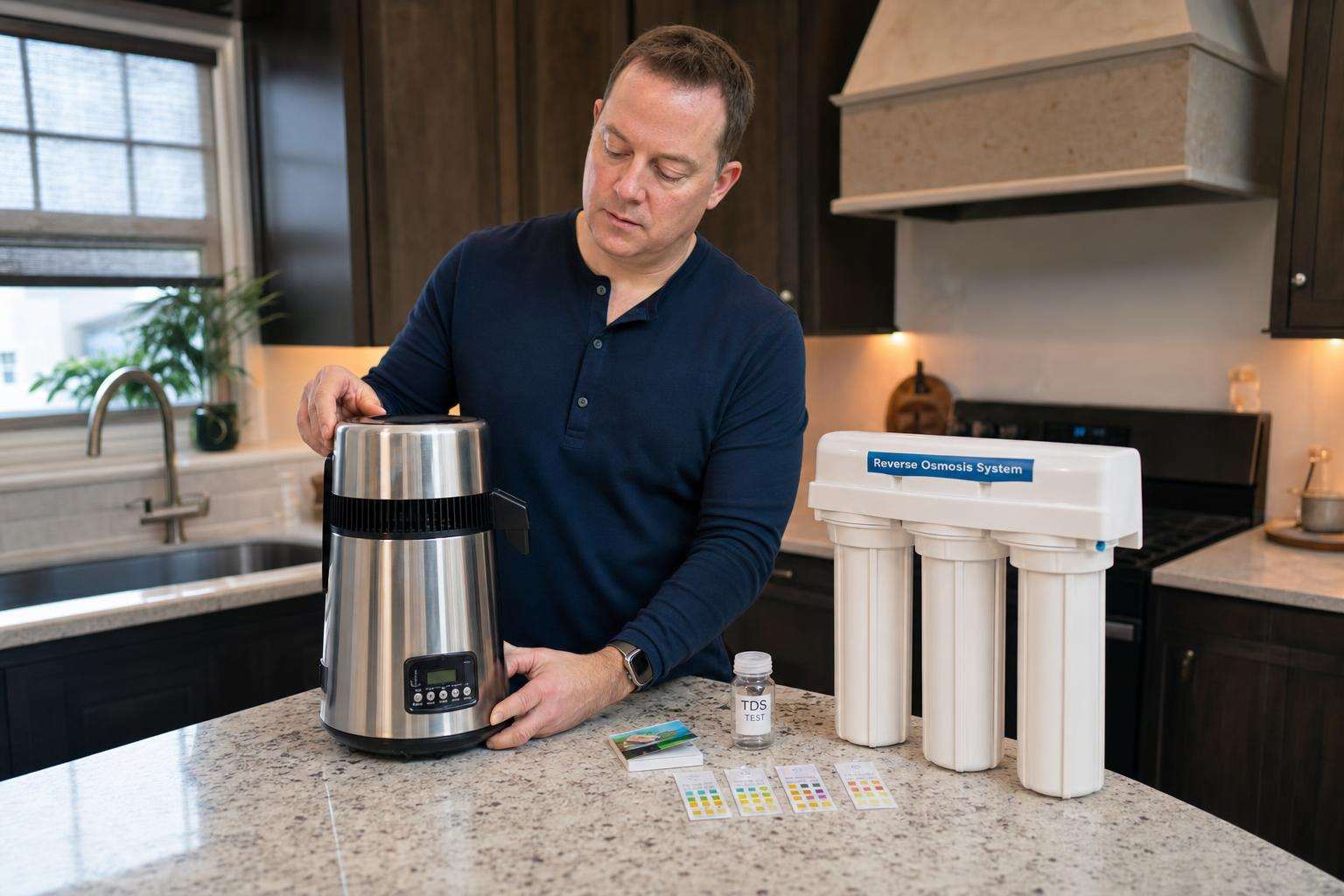
- Point-of-use reverse osmosis with documented fluoride reduction — RO systems with appropriate certification/claims address dissolved fluoride when maintained.
- Test municipal/well fluoride before any CAPEX — Many homes do not need specialty fluoride media; data prevents overbuying.
- Low-fluoride water source or RO product water per pediatric guidance — Intake math for infants differs from adult drinking preferences.
How we built this guide
Ranked by documented fluoride reduction performance, certification honesty, maintenance burden, and risk of buying wrong media.
- Dose / clinical impact. Likely effect on exposure or health decision quality.
- Evidence base. Agency guidance, trials, or consensus statements.
- Adherence cost. Money, time, and household friction.
- Harm of misuse. Whether bad execution creates new risks.
Key takeaways
- Measure your fluoride (mg/L) before shopping for filters
- Use point-of-use reverse osmosis for dissolved fluoride
- Consider distillation when electricity and patience allow
- Weigh specialty media like activated alumina, only with honest specs
- Don't trust standard carbon pitchers for fluoride
- Account for infant formula and total intake
Measure your fluoride (mg/L) before shopping for filters
Dose before devices
Who this is for: Anyone considering fluoride removal
Do
- Prevents mismatched filter purchases
- Frames infant vs adult risk differently
- Uses free or low-cost public data when available
- Creates re-test baseline
Watch out
- Lab fees for wells; CCR lag vs point samples
Use point-of-use reverse osmosis for dissolved fluoride
Membrane rejection beats vague carbon claims
Who this is for: Households with elevated fluoride wanting drinking-water reduction
Do
- Strong match for dissolved fluoride
- Also addresses many co-contaminants
- POU cost often beats whole-house guesses
- Certification pathways exist for RO class
Watch out
- Wastewater, maintenance, install complexity
Consider distillation when electricity and patience allow
Phase change, not sticker claims
Who this is for: Renters or small-volume users avoiding plumbing mods
Do
- Physically sound reduction path for many ions
- No under-sink plumbing required for countertop units
- Transparent process people can understand
- Useful backup when RO install is impossible
Watch out
- Energy, time, batch limits, maintenance cleaning
Weigh specialty media like activated alumina, only with honest specs
Media chemistry is not magic
Who this is for: Buyers comparing non-RO fluoride claims carefully
Do
- Can work when engineered correctly
- Sometimes cheaper than full RO for narrow goals
- Forces specification literacy
- Useful in some point-of-entry designs by pros
Watch out
- Easy to mis-size; capacity and pH sensitivity
Don't trust standard carbon pitchers for fluoride
Wrong tool for F⁻
Who this is for: Anyone comparing pitchers for fluoride fear
Do
- Prevents wasted spending
- Improves media literacy
- Keeps carbon for jobs it does well
- High practical impact on buying errors
Watch out
- People may still want carbon for taste—pair correctly
Account for infant formula and total intake
Body weight changes the math
Who this is for: Caregivers mixing powdered formula
Do
- Aligns tech choice with real exposure math
- Supports clinician conversations
- Avoids adult-only decision frames
- Practical alternatives beyond whole-house CAPEX
Watch out
- Needs pediatric nuance; not DIY medical advice
Frequently asked
Do Brita-style pitchers remove fluoride?
Most standard carbon pitchers are not designed or certified for meaningful fluoride reduction. Always read the contaminant reduction list for fluoride specifically. If fluoride removal is the goal, evaluate reverse osmosis, distillation, or properly specified specialty media instead of assuming any filter works.
Is reverse osmosis always required on city water?
No. Many municipal systems keep fluoride near program targets, and adults may have no personal need for removal. Measure your water, clarify goals (taste, infant formula, medical advice), and buy only if the number and use case justify cost and maintenance. Confirm details with a qualified clinician or primary guidance document when your situation is high-stakes.
What about fluoride in toothpaste if I filter water?
Topical toothpaste exposure is a different route than drinking water. Filtering water does not replace dental hygiene advice, and dental products have their own use instructions for children. Discuss combined exposure questions with a dentist or pediatric clinician when concerned. Confirm details with a qualified clinician or primary guidance document when your situation is high-stakes.
Does boiling water remove fluoride?
Boiling concentrates minerals as water volume decreases; it does not remove fluoride. Distillation (boil + condense separately) is different from simply boiling in an open pot. Use the correct process if distillation is your chosen method. Confirm details with a qualified clinician or primary guidance document when your situation is high-stakes.
Should I install whole-house fluoride removal?
Usually start with point-of-use drinking/cooking treatment when fluoride is the driver. Whole-house systems cost more, waste more or use more media, and are often unnecessary if showering exposure is not the decision driver. Get numbers and goals before whole-house CAPEX. Confirm details with a qualified clinician or primary guidance document when your situation is high-stakes.